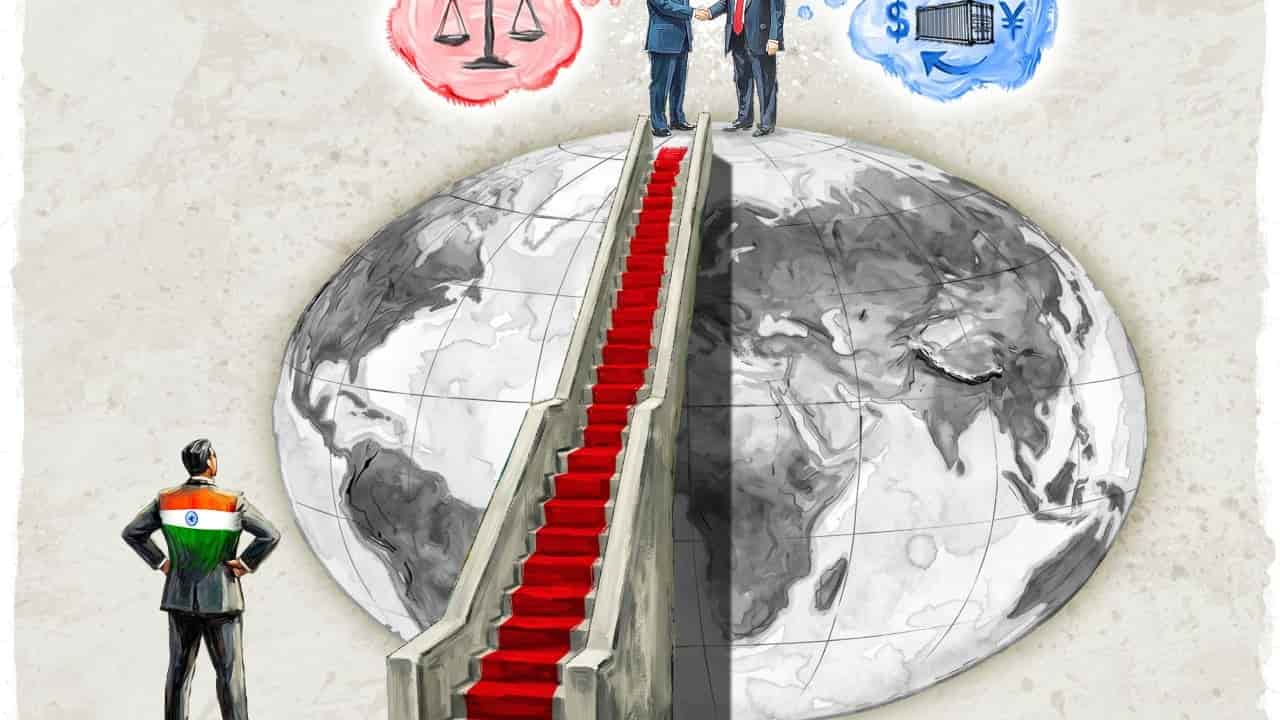
Key facts
- US President Donald Trump revived the idea of "G2" with Chinese President Xi Jinping on October 30, 2025.
- The "G2" concept, first proposed by American scholars in 2005, has evolved due to fundamental shifts in the balance of power between China and the US.
- China has significantly strengthened its position in manufacturing, infrastructure, and high technology, nearing or surpassing the US in some areas.
- The global environment has shifted towards protectionism and de-globalisation, with the US adopting an "America First" approach.
- The Trump administration views China as a key partner for "extracting" resources and sharing economic burdens and global governance costs.
- The US uses tariffs as a tool to pressure trading partners, including China, to invest more in America and accept higher trade costs.
The concept of "G2," referring to a partnership between the United States and China, has resurfaced following a meeting between US President Donald Trump and Chinese President Xi Jinping on October 30, 2025, on the sidelines of the Asia-Pacific Economic Cooperation summit in Busan, South Korea. The idea, originally proposed by American scholars in 2005, has seen its meaning profoundly change due to significant shifts in the global landscape.
One major shift is the altered balance of power between the two nations. Unlike around 2004 when the US held overwhelming advantages, China has since strengthened its position in manufacturing, infrastructure, and high technology, entering a phase of "strategic proximity and mutual shaping" with the US. This new reality means any iteration of "G2" cannot follow the old logic of China taking on responsibilities within a US-led order.