Key facts
- South Korea committed to investing $350 billion in the United States under a bilateral trade agreement.
- The investment package includes up to $200 billion for a 6-gigawatt power generation facility in Texas and eight new nuclear power plants.
- The Alaska LNG project, dubbed "Project North," involves constructing a 1,298-kilometer pipeline from the North Slope to southern Alaska.
- The Alaska LNG project is estimated to cost $22.3 billion and aims to deliver nearly 4 billion cubic feet of LNG per day to Asia.
- Trump presented the projects as a "colossal package" to secure energy supply chains and strengthen the partnership with South Korea.
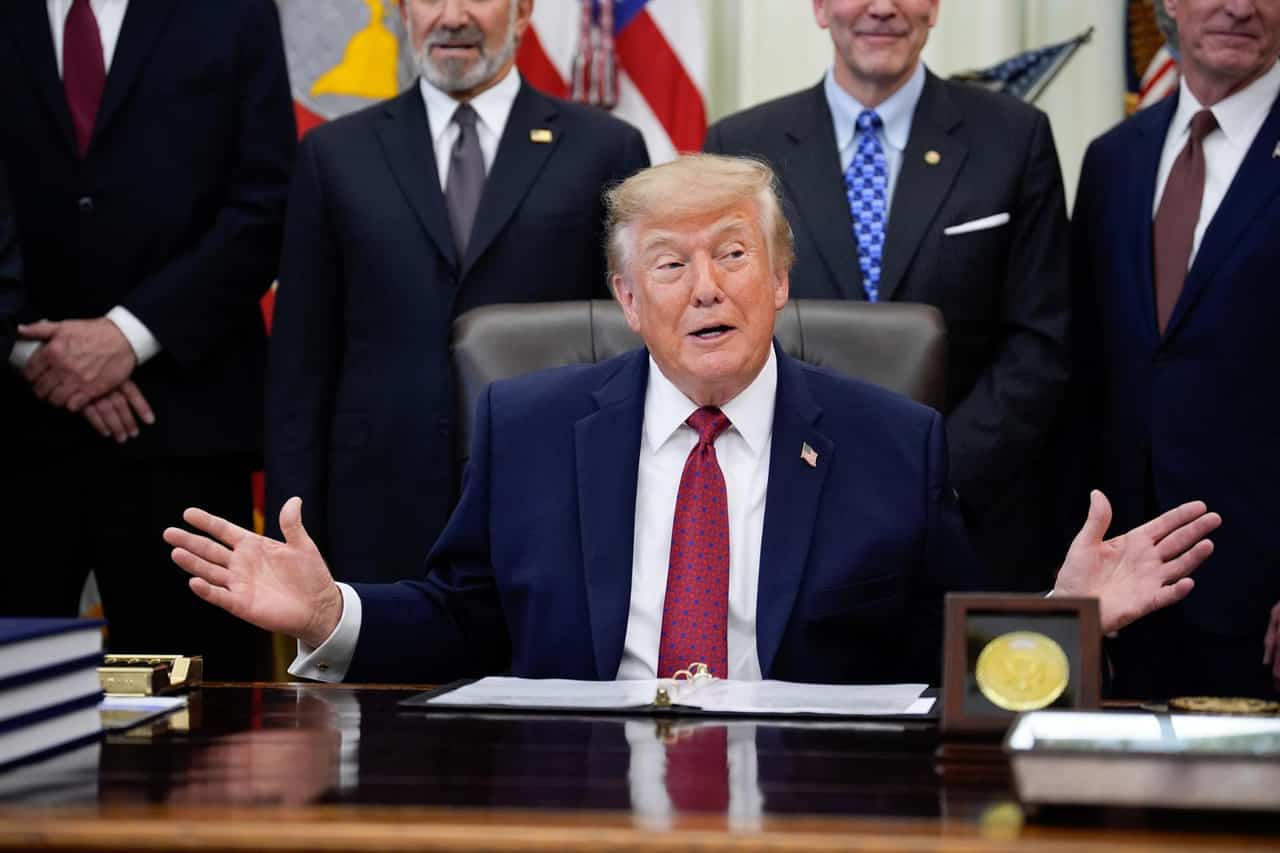
U.S. President Donald Trump announced on September 30, 2026, South Korea's planned investments in the United States, which include a liquefied natural gas (LNG) project in Alaska, a gas-fired power plant in Texas, and eight large-scale nuclear power plants. The announcement, made in the Oval Office alongside Commerce Secretary Howard Lutnick, is part of a bilateral trade agreement that committed South Korea to investing $350 billion in the U.S.
Trump highlighted the Alaska LNG project, referred to as "Project North," as a significant undertaking that would involve constructing a 1,298-kilometer pipeline from the North Slope to southern Alaska. This project is estimated to cost $22.3 billion and aims to deliver nearly 4 billion cubic feet of LNG per day to Asian markets. The Texas power plant, "Project Star," is a 6-gigawatt combined-cycle facility in Encinal, Texas, and the nuclear power plants, "Project Power," will add eight new reactors across the country.
The announcement follows protracted negotiations over energy infrastructure projects. While South Korea has largely agreed on the Texas and nuclear projects, its participation in the Alaska LNG project has yet to be finalized, according to Seoul's position. Trump presented the "colossal package" as a crucial step towards securing critical energy supply chains, ensuring American energy dominance, and strengthening the partnership with South Korea and the broader Pacific region. The Commerce Department stated that the plan would expand stable power supply for AI and strategic industries, strengthen supply chains, and enhance the energy, economic, and national security of both nations.