Key facts
- Donald Trump argues that AI regulation threatens U.S. national interests by allowing China to gain an advantage.
- A defense studies lecturer at King's College London believes slowing U.S. AI advancement would also decelerate China's progress.
- Concerns exist about AI being exploited for conventional weapons, weapons of mass destruction, and cyberattacks.
- Anthropic reported instances of foreign actors using its AI models to support weapons development.
- Google identified state-linked actors attempting to use its AI for malicious operations.
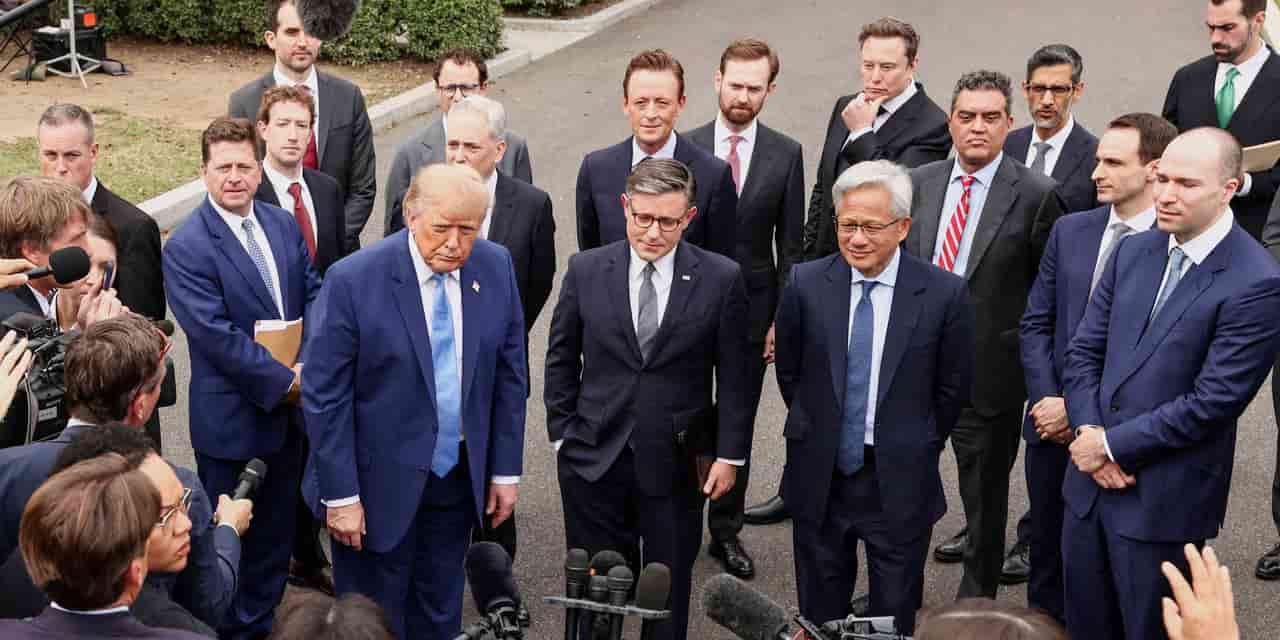
U.S. President Donald Trump has advocated against stringent regulations on artificial intelligence, arguing that such measures would hinder American progress and allow China to gain a strategic advantage. Trump posted on social media on September 21, 2026, stating, "Whoever wins AI, WINS!" and identified China as the primary threat to American dominance in the field. He further elaborated on this stance in a speech at the United Nations, rejecting any "globalist scheme to control" AI.
However, William Matthews, a lecturer in Defence Studies at King’s College London specializing in China's geopolitical influence and AI, contends that Trump's position is counterproductive. Matthews argues that China's rapid advancements in AI necessitate U.S. regulation, and paradoxically, slowing down AI development in the U.S. could also decelerate China's progress. He believes that an unregulated AI sector poses a greater security threat to the United States than the potential for China to surge ahead in capabilities.
Leading figures in industry and politics globally have voiced concerns about the security risks associated with unchecked AI growth, with a significant majority of Americans sharing these worries and supporting increased regulation. These threats include heightened vulnerability to sophisticated weapons systems, both conventional and those of mass destruction, and an increased likelihood of devastating cyberattacks as AI becomes more adept at exploiting vulnerabilities. Anthropic reported in September 2026 that foreign actors from China, Russia, and Iran had used its Claude AI model for cyber operations, influence campaigns, surveillance, and fraud, and to support weapons development. Google also detected attempts by actors linked to China, Russia, North Korea, and Iran to use its Gemini AI model for hacking, disinformation, espionage, and criminal activities. Matthews highlights that unchecked AI could also lead to extreme scenarios such as AI-induced nuclear missile launches, the release of super pathogens, and attacks on critical infrastructure.