Key facts
- Ukraine is increasing its reliance on solar energy to build resilience against Russian attacks on its power grid.
- Government programs offer preferential loans covering up to 80% of solar panel installation costs.
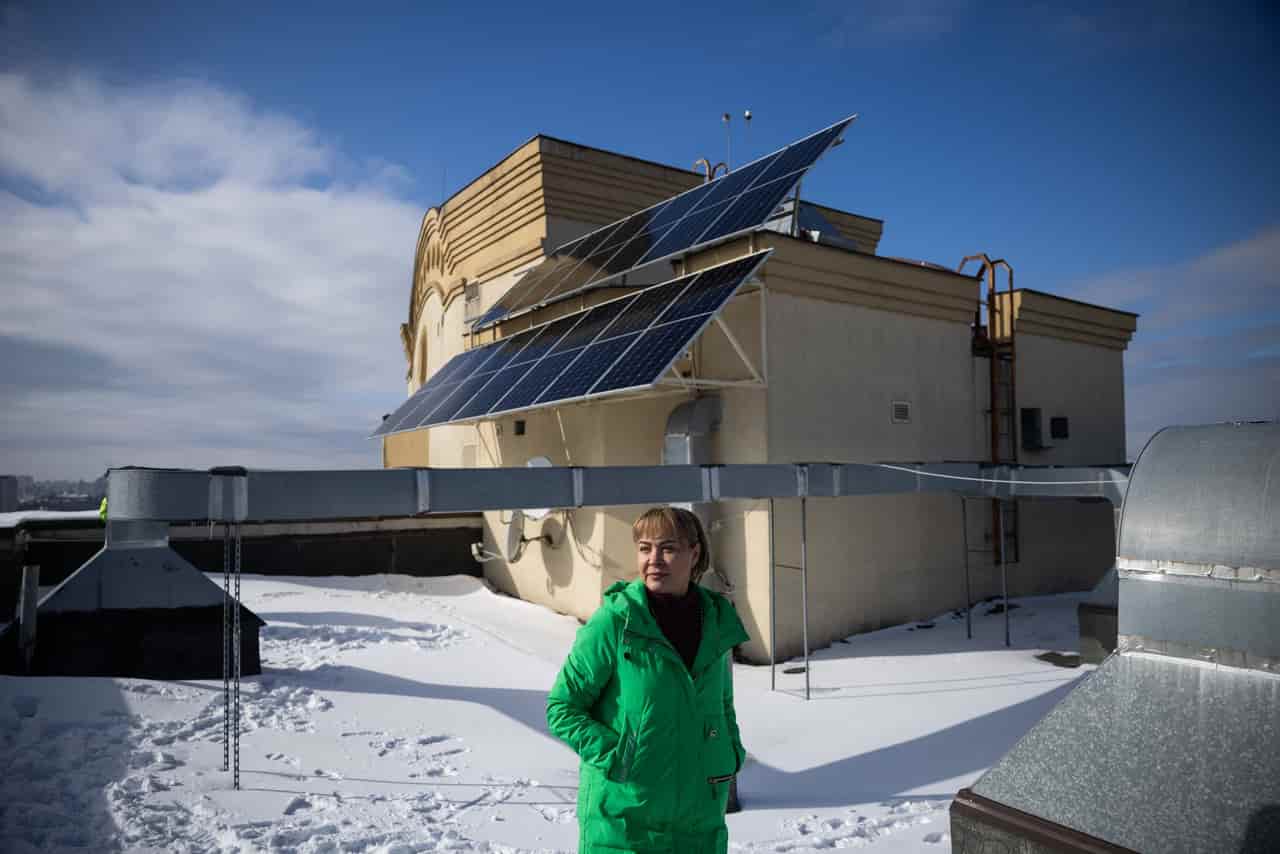
- Yasno has installed 23 megawatts of solar capacity across 117 sites since resuming operations in summer 2024.
- In 2025, Ukraine added 1.5 GW of new solar capacity, nearly doubling the previous year's total.
- Russian attacks have destroyed or occupied about 30% of Ukraine's installed solar capacity and most of its wind farms.
- The country is shifting towards smaller, distributed energy sources that are harder to disable.
Ukraine is increasingly turning to solar energy to bolster its resilience against Russia's persistent attacks on its centralized power infrastructure. The ongoing conflict has led to widespread power outages, particularly during winter months, disrupting businesses and daily life.
Businesses like a door manufacturing facility in Bila Tserkva are opting for solar power to maintain operations independently from the grid. The owner, identified only as Yaroslav, cited cost savings, economic benefits, and ecological advantages as reasons for the switch. Yasno, a subsidiary of DTEK, is facilitating these installations, with government programs like 'Affordable Loans for 5-7-9%' covering a significant portion of the costs.
Before the full-scale invasion, Ukraine's energy mix was dominated by nuclear power, with renewables playing a smaller role. However, the war has destroyed or rendered unusable a substantial amount of installed solar and wind capacity. In response, Ukraine is accelerating its transition to smaller, distributed renewable energy sources that are more difficult for Russia to target effectively.
In 2025, Ukraine saw a significant increase in new solar capacity installations, with projections for 2026 to match that pace. This shift is seen as crucial for weathering future winters and integrating with the European Union's energy market. Even residential buildings are adopting solar solutions to ensure basic services like heating and elevators remain operational during blackouts.