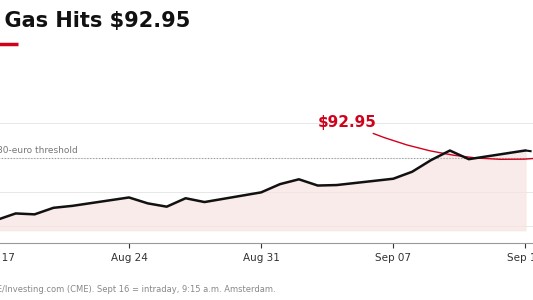
TTF Gas Hits $92.95 as Middle East Tensions Weigh on Energy Markets
IN SHORT
Europe's benchmark natural gas prices held above 80 euros per megawatt-hour early Wednesday, nearing 2022 highs. Low storage levels and Middle East conflict concerns are fueling worries about winter supplies. Spot LNG prices in Northeast Asia have jumped to $28.40 per MMBtu.
Key Numbers
$92.95TTF gas price per MWh
80.545 eurosTTF gas price per MWh
80 eurosTTF gas price threshold
6%Monday's gas price surge
$28.40Spot LNG price per MMBtu in Northeast Asia
$2.70Increase in Northeast Asia spot LNG price from last week
Who's Involved
Warren Patterson
ING commodities strategist who noted Middle East escalation impacts LNG flows
Ewa Manthey
ING commodities strategist who noted Middle East escalation impacts LNG flows
↳ Why This Matters
Rising natural gas prices in Europe, driven by geopolitical tensions and low storage levels, increase the risk of higher energy costs for consumers and businesses heading into the winter heating season, potentially impacting inflation and economic growth.