Key facts
- Lake Koroneia in northern Greece has shrunk to less than a tenth of its original size.
- The lake's surface area has reduced to 2.7 square kilometers from 34.4 square kilometers in 2016.
- Annual rainfall in the lake's catchment has averaged about 400 millimeters over the last five years.
- Average local temperatures have climbed, increasing evaporation by 100 to 150 millimeters a year.
- Farmers have been using pumps to draw water from the lake for irrigation.
- Greece's Environment Ministry has increased monitoring to reduce irrigation.
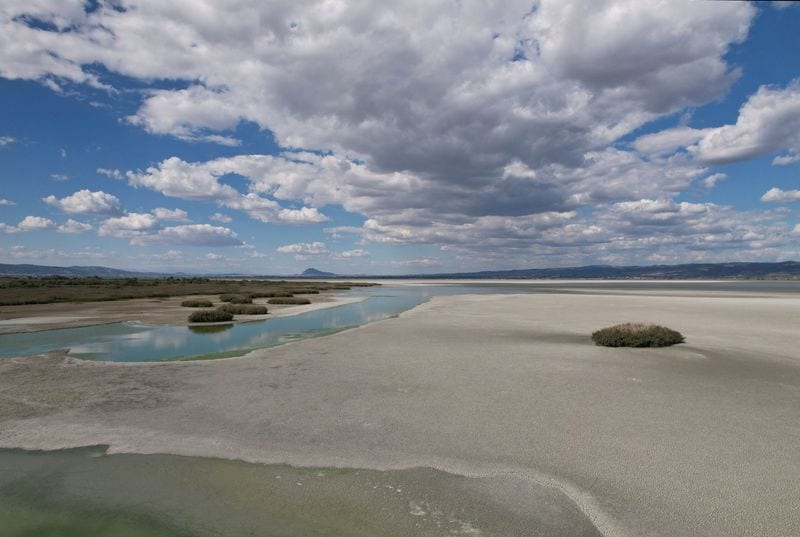
Lake Koroneia in northern Greece, once a protected wetland and a haven for migratory birds, has shrunk to less than a tenth of its original size due to a combination of climate change impacts and human activity. Data from the National Observatory of Athens indicates the lake's surface area has reduced to 2.7 square kilometers from 34.4 square kilometers in 2016.
Scientists attribute the decline to a decade of low rainfall and above-average heat. Dimitris Papadimos, head of water resources management and climate change at the National Wetland Center, noted that annual rainfall in the lake's catchment has averaged about 400 millimeters over the last five years, a decrease of approximately 150 millimeters compared to previous decades. Simultaneously, rising local temperatures have increased annual evaporation by 100 to 150 millimeters.
The problem is exacerbated by human factors, with farmers increasingly relying on the lake to irrigate their crops and cattle due to the reduced rainfall. A Reuters reporter observed a farmer using a large pump to draw water from the remaining lake.
Authorities have implemented measures to address the situation, including increased monitoring to curb irrigation, following a 2013 European Union court ruling that found Greece had failed to adequately protect Koroneia Lake from over-irrigation, illegal drilling, and pollution. Petros Varelidis, secretary general for water resources at the Greek Environment Ministry, confirmed these enhanced monitoring efforts.