Key facts
- Ukraine's small dairy farms are disappearing due to high costs, low prices, EU regulations, and the war.
- Milk production costs for small farms can be as high as Hr 13 ($0.29) per liter, while factories may pay as little as Hr 9.
- EU animal health and welfare standards require upfront investment for many Ukrainian farmers.
- Imported cheese is becoming as affordable as or cheaper than Ukrainian dairy products in supermarkets.
- Larger farms with 1,000 cows or more are increasing in number and are seen as more sustainable by some due to efficiency.
- Environmental groups warn that larger farms can pressure land and risk pollution, while small farms can support biodiversity.
Ukraine's small dairy farms are facing an existential crisis, with many disappearing due to a combination of the ongoing war, rising costs, declining milk prices, and the increasing burden of EU regulations. The number of official farms in the country has fallen by a third over the past five years, with smaller operations being the hardest hit.
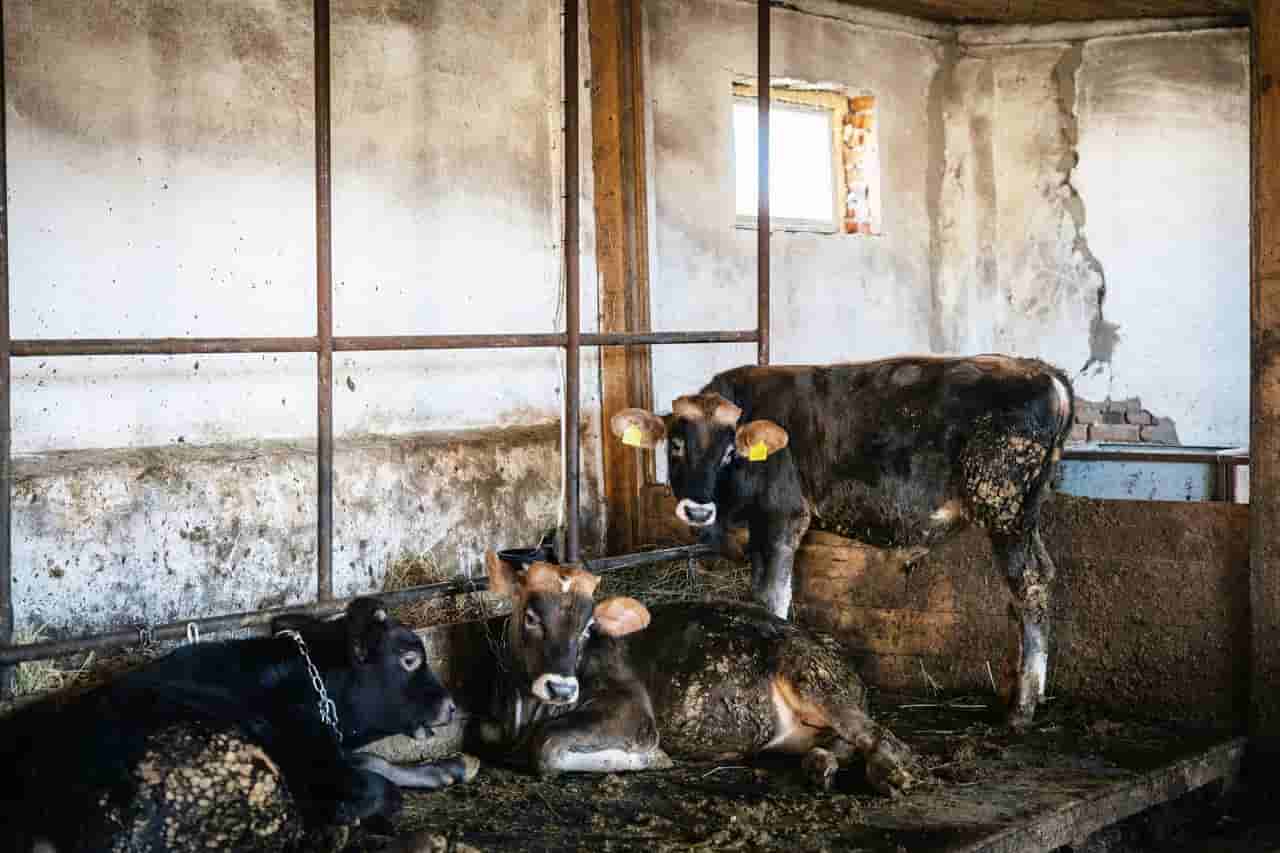
Marinka Hritsik, a farmer near Chernihiv, has seen her village's herd shrink dramatically. "There were eighteen (household-owned) cows in our village in 2022, but now there are seven," she said. "By winter, there probably won’t be any left." This reflects a national trend where household farms, typically with fewer than five cows, have seen their numbers decline by two-thirds in a decade.
In contrast, larger farms with herds of 1,000 cows or more are increasing. Forecasts for 2026 indicate that these larger enterprises will dominate milk production for the first time, producing more than household farms. The U.N.-led Food Security and Livelihoods Cluster has warned of an impending "rural crisis" for these smaller farms, citing prolonged conflict, rising fodder costs, declining profitability, and disrupted market systems.
Hanna Lavreniuk, director general of Ukraine’s Association of Milk Producers (AMP), described the situation for smaller farms as "quite dire," warning that even mid-sized farms are at risk and "it will be the last season" for some.
The war has exacerbated existing challenges. Workers have joined the fight, land has been occupied or destroyed, and livestock have been killed or attacked. Farmers themselves are among the millions displaced. Winter presents additional hardship, with increased reliance on expensive feed as grass growth ceases and milk production naturally decreases.
Globally, milk prices have slumped after overproduction in 2025. Fertilizer and fuel prices have also risen, partly due to geopolitical events. EU regulations, particularly new animal health and welfare standards, add to costs and complexity, requiring investments in infrastructure that many small farmers cannot afford, especially with a national bank interest rate of 16%.
Farmers struggle to sell their milk at a price that covers their costs. Hritsik estimates her production cost at around Hr 13 ($0.29) per liter, while factories may offer as little as Hr 9, forcing some to operate at a loss or seek alternative markets. The influx of affordable imported cheese into Ukraine further pressures domestic producers, as consumer spending shifts away from local dairy.
While some view the consolidation of land by larger farms as a path to greater sustainability and profitability, citing efficiencies and resilience to price fluctuations, environmental groups like Ecoaction express concerns. They highlight the potential for larger farms to exert significant pressure on land, increase pollution risks from manure management, and reduce biodiversity. In contrast, they advocate for smaller livestock models that can support grassland management and carbon capture.