Key facts
- Toyota plans to deploy 400,000 humanoid robots at production sites worldwide.
- The robots are being developed in-house and will be trained using Toyota's own AI model.
- Toyota's Chief Scientist Gill Pratt stated that the robots are 'useful now'.
- Toyota will test Walden Robotics' humanoid platform in real manufacturing environments throughout 2026.
- Walden Robotics' platform uses standardized joint modules and a simplified programming interface.
- The initial deployment will focus on parts retrieval and quality inspection tasks.
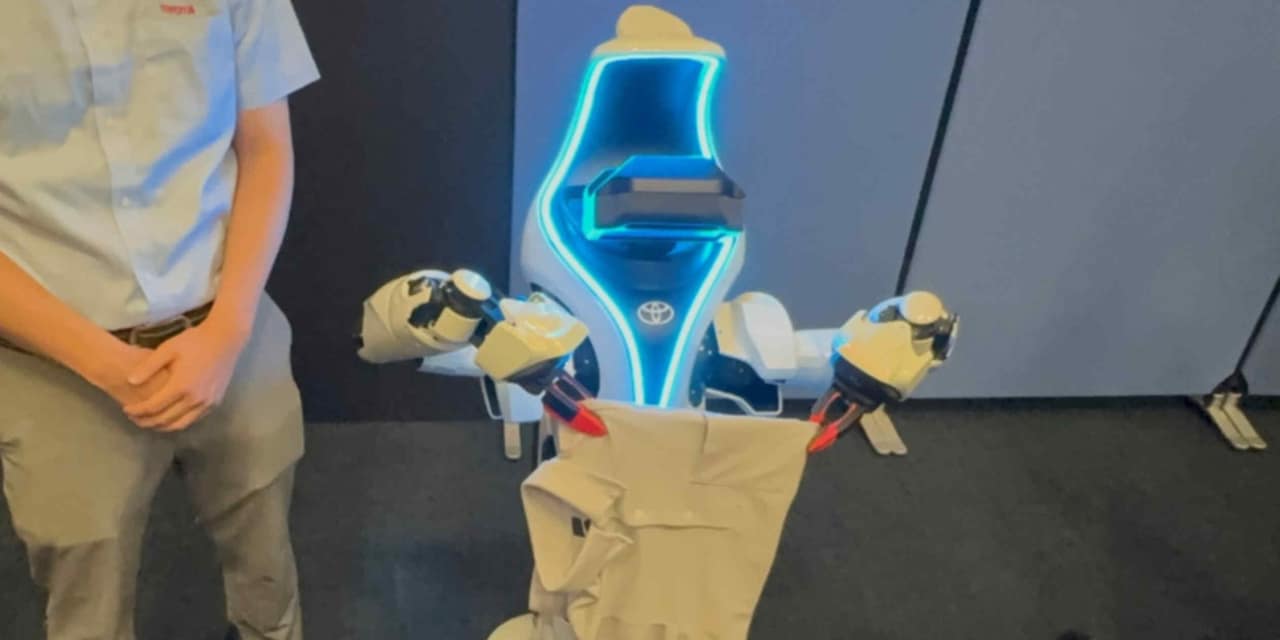
Toyota Motor group plans to deploy 400,000 in-house-developed humanoid robots at production sites worldwide as part of an initiative to create factories where people and robots work side by side. The automaker is leveraging advances in artificial intelligence to train these robots for various tasks, aiming to address rising labor costs and worker shortages.
Toyota's Chief Scientist Gill Pratt stated that the robots are 'useful now' and that the company sees 'little sparks of hope that this is actually going to be feasible.' The company has trained its research humanoids on 500 tasks using its own AI model, with engineers believing the robots can perform more by synthesizing lessons learned.
Toyota announced in May 2026 a partnership with five Toyota Group companies to accelerate AI adoption, including a global AI accelerator program and a Toyota Software Academy to train employees. This move places Toyota in a race with other automakers like Tesla, Mercedes-Benz, and BMW, as well as Chinese players, who are also pursuing humanoid robot development.
In a separate development, Toyota will test Walden Robotics' modular humanoid system in real manufacturing environments throughout 2026. Walden Robotics, founded in 2024 by former Boston Dynamics engineers Sarah Chen and Marcus Wolff, focuses on industrial use cases. Toyota confirmed it will deploy Walden's platform across select North American manufacturing facilities starting in the third quarter of 2026, focusing initially on parts retrieval and quality inspection tasks in its Georgetown, Kentucky plant. Walden's platform is designed with standardized joint modules and a simplified programming interface for factory floor technicians.