Key facts
- Panasonic Energy aims for ¥800 billion ($5.5 billion) in sales from data center energy storage systems by fiscal year 2029.
- The company holds an 80% market share for distributed power supply systems for data centers.
- AI servers require significantly more electricity and have more rapid power fluctuations than traditional servers.
- Panasonic Energy's systems include backup functions for blackouts and peak shaving for demand surges.
- The global server market for AI applications is predicted to grow from $52 billion in 2023 to $224 billion in 2028.
Panasonic Energy, primarily known for its electric vehicle batteries, is increasingly focusing on the booming AI data center market, aiming to achieve ¥800 billion ($5.5 billion) in sales from its energy storage systems by fiscal year 2029. The surge in high-performance AI servers, which consume vast amounts of electricity and experience rapid power fluctuations, has created a critical need for stable and reliable power supplies in data centers.
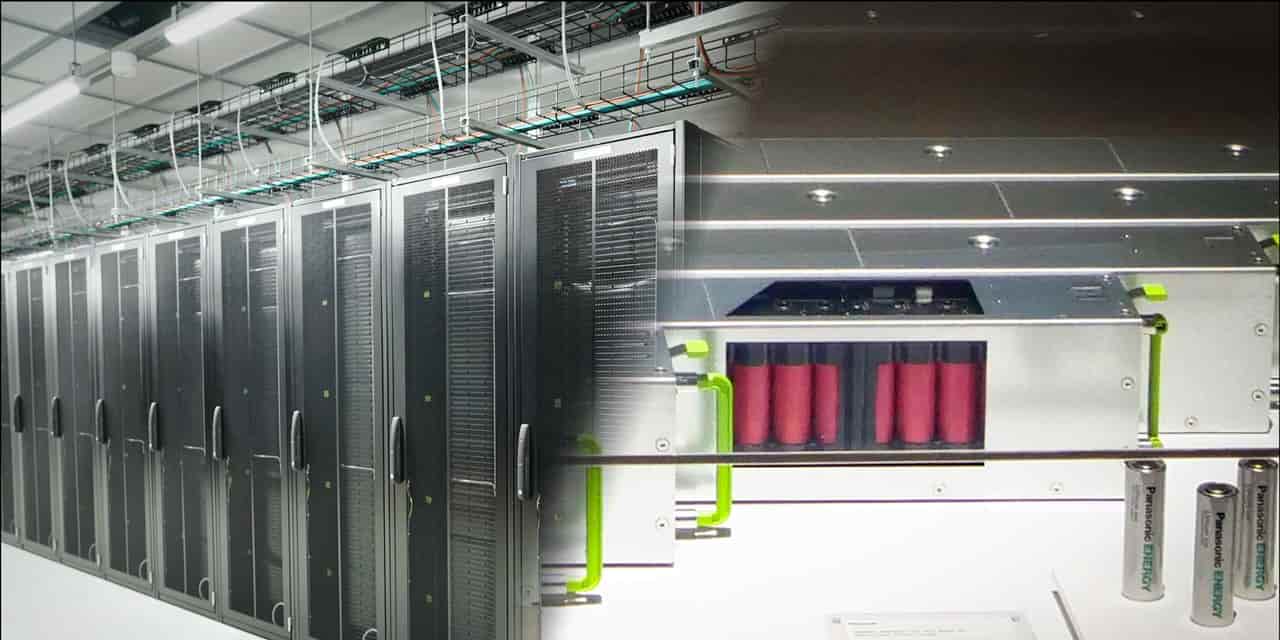
These AI data centers require power densities significantly higher than traditional facilities, with AI server racks demanding 30-100 kW or more, compared to 5-8 kW for conventional racks. The immense energy consumption and instantaneous demand spikes pose challenges for existing power grids and backup systems. Panasonic Energy's rack-mounted energy storage systems offer a solution by incorporating lithium-ion battery cells to provide backup power during outages and a peak shaving function to manage demand surges, thereby ensuring stable and energy-efficient operations.
The company currently holds an 80% market share in distributed power supply systems for data centers and has already secured agreements for over 80% of its planned FY2029 sales. This strong market position and customer commitment are driving Panasonic Energy to strengthen its production and supply frameworks both domestically and internationally to meet the growing global demand for AI infrastructure.