Key facts
- NASA approved the PRIMA mission, a new class of space observatory.
- PRIMA will be the first of NASA's Probe Explorers, aiming for more science at a lower cost.
- The mission has a cost cap of $1.2 billion, excluding launch costs.
- PRIMA is targeted for launch in 2033.
- The telescope will observe in far-infrared light, requiring optics cooled to 4.5 Kelvin.
- PRIMA will use a modified spare cryocooler from the James Webb Space Telescope.
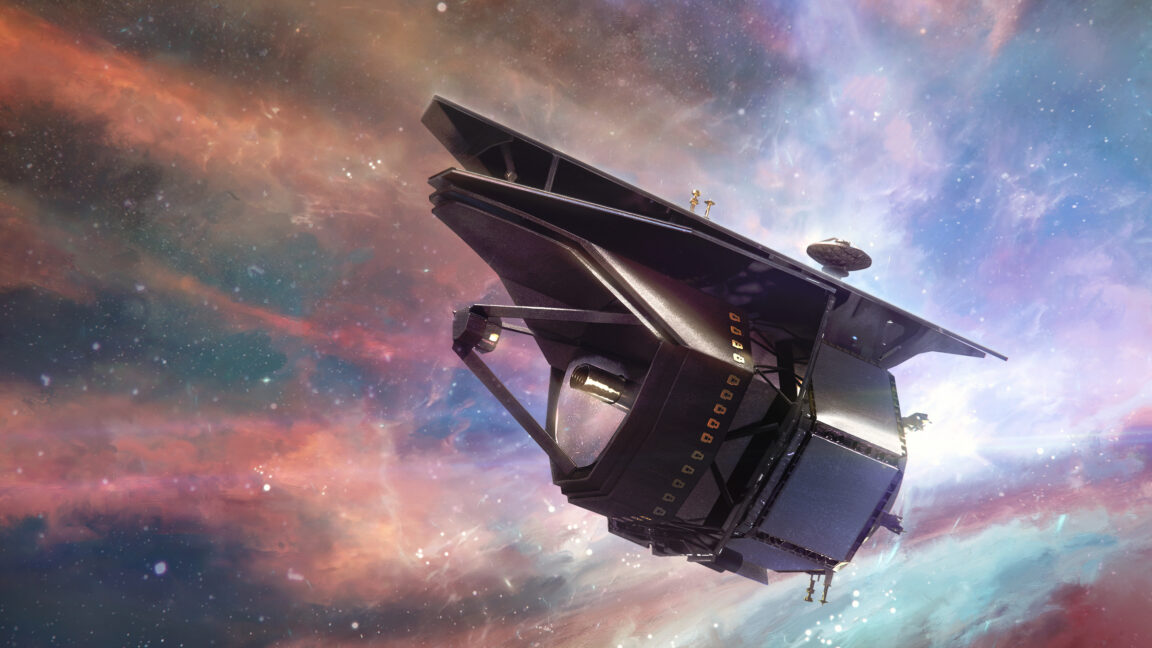
NASA announced this week that it has approved the PRIMA mission, the first in a new class of observatories called Probe Explorers, which are designed to conduct significant scientific research at a lower cost. The Probe far-Infrared Mission for Astrophysics (PRIMA) is on track for a launch in the early 2030s, with a target of 2033.
PRIMA aims to strike a balance between smaller, less expensive Explorer-class missions and multibillion-dollar flagship observatories. The mission has a cost cap of $1.2 billion, excluding launch expenses. To achieve this, PRIMA will utilize spare parts from the James Webb Space Telescope, including a modified cryocooler. The telescope will observe the universe in faint, far-infrared light, requiring its optics to be cooled to 4.5 Kelvin (minus 451 degrees Fahrenheit). Its focal planes will be chilled even lower to 100 milliKelvin.
According to NASA, PRIMA's far-infrared sensitivity will provide insights into the origins of planets and their atmospheres, the coevolution of galaxies and black holes, and changes in dust and metals over cosmic time. The observatory will have a 5.9-foot-diameter (1.8-meter) primary mirror and will be positioned at the Sun-Earth L2 Lagrange point, a million miles from Earth. This mission builds upon discoveries made by previous infrared observatories like Spitzer, Webb, and Europe's Herschel space telescope.
NASA's Science Mission Directorate associate administrator Nicky Fox stated that PRIMA will "unveil the obscure across cosmic time to better understand the formation of planets, stars, black holes, and even how water on Earth came to be." The approval moves PRIMA into Phase B of development, which includes a preliminary design review. The complete observatory is expected to weigh less than 3.4 metric tons (7,500 pounds) at launch.
Shawn Domagal-Goldman, director of NASA’s Astrophysics Division, highlighted that PRIMA, alongside the Webb and Roman space telescopes, will maintain a cadence of launching premiere-class missions. NASA is also continuing preliminary studies for its next major flagship, the Habitable Worlds Observatory, planned for the 2040s with an estimated cost of $11 billion.