Key facts
- The number of active satellites in orbit has reached approximately 17,000.
- SpaceX's Starlink constellation comprises around 11,000 satellites.
The number of satellites in Earth's orbit has surpassed 17,000, a significant increase driven by large constellations like SpaceX's Starlink. Experts express concern that this rapid growth could lead to a cluttered orbital environment and an increased risk of collisions, potentially rendering certain orbits unusable.
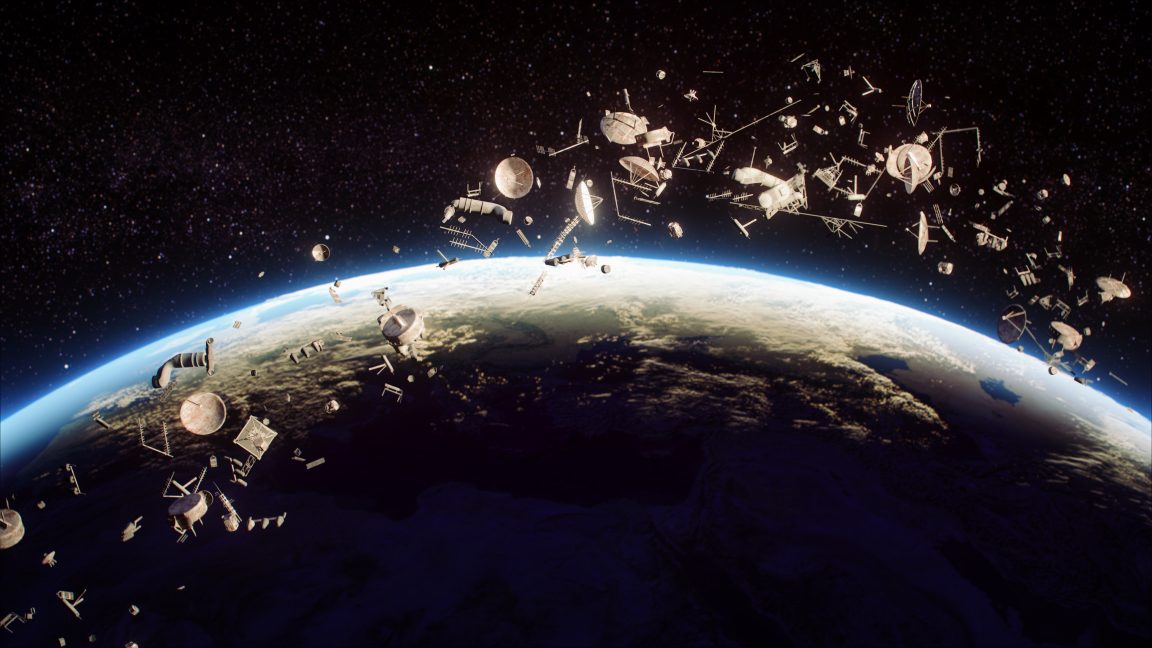
The increasing density of satellites and debris in Earth's orbit raises concerns about the long-term sustainability of space activities, potentially impacting future satellite launches, space-based services, and even human spaceflight.
The number of satellites orbiting Earth has surged to approximately 17,000, a dramatic increase from around 1,000 active satellites in 2013. This growth is largely attributed to the expansion of large satellite constellations, most notably SpaceX's Starlink, which now accounts for about 11,000 of the orbiting objects. Amazon and several Chinese companies are also developing similar constellations, with projections suggesting hundreds of thousands of satellites could eventually be deployed, including for orbital data centers.
Experts hold differing views on the sustainability of this rapid expansion. Moriba Jah, a professor at the University of Texas at Austin specializing in orbital debris, expressed significant concern, predicting that certain orbits may become unusable due to saturation with objects and junk. He also forecast a loss of human life within the next decade, either from large debris re-entering the atmosphere or from spacecraft being struck by unpredicted junk.
Conversely, SpaceX founder Elon Musk has suggested that space is vast and unlikely to become crowded, stating that satellites are too small to be noticeable relative to Earth's size. However, the European Space Agency's (ESA) latest Space Environment Report highlights growing concerns. The agency has significantly revised its projections for future satellite populations upward, noting that traditional mitigation approaches may be insufficient for the unprecedented scale of future traffic. The ESA's modeling indicates that even with adherence to best practices for satellite disposal and collision avoidance, collision rates could increase exponentially, leading to a potentially unstable orbital environment by mid-century.
Pick the topics you care about. Get only what matters, on your cadence.