Key facts
- The Canadarm2 robotic arm on the International Space Station has stopped working.
- The mobile transporter that guides the arm along the station's main truss is also immobile.
- The issue occurred after a routine "walk-off" maneuver.
- NASA is investigating the cause, which could be hardware, data, or software related.
- The Canadarm2 was supplied by the Canadian Space Agency and launched in April 2001.
- Its nominal design lifetime was 15 years, meaning it has operated for over a decade beyond that.
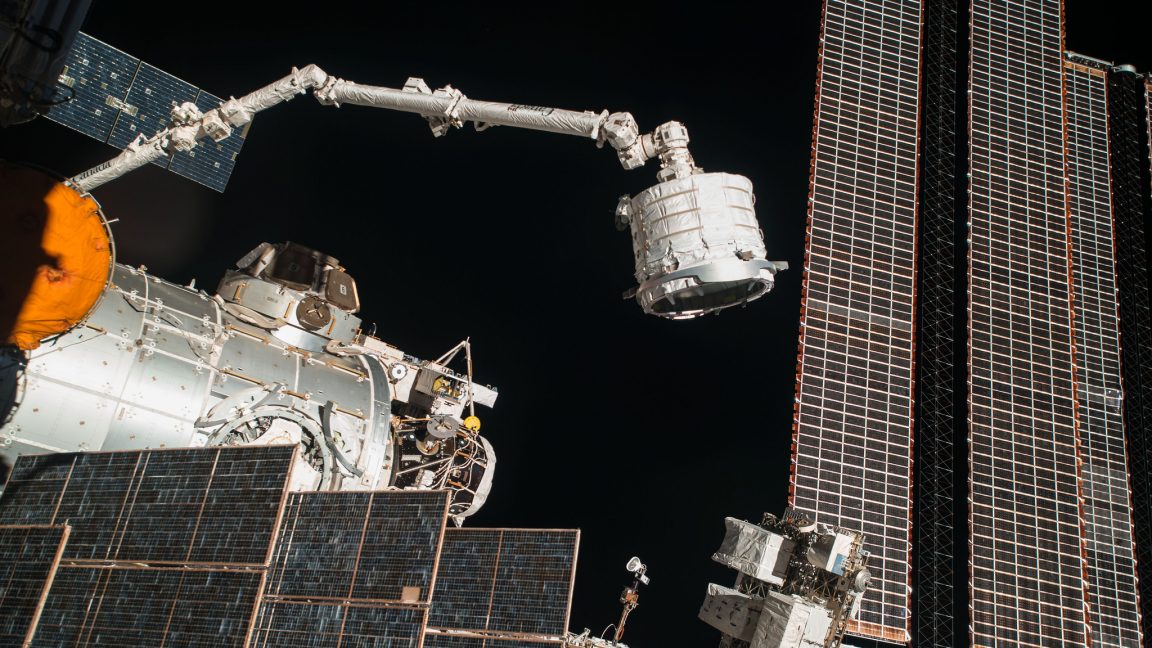
The Canadarm2, a critical robotic arm on the International Space Station (ISS), has ceased functioning, along with its mobile transporter. The issue arose following a routine maneuver, prompting an investigation by NASA to determine if the problem stems from hardware, data, or software. Supplied by the Canadian Space Agency and designed by MDA, the 58-foot-long arm has been a vital component of the orbiting laboratory since its launch in April 2001. It has operated for over a decade beyond its 15-year design life, capable of handling payloads up to 116 tons and assisting with cargo vehicle berthing and external hardware movement for spacewalks.
While NASA has not provided extensive details, the potential loss of functionality, even if temporary, could complicate operations, particularly for cargo missions. SpaceX's Dragon vehicle, which relies on the arm for berthing, is slated for retirement within four years, and other primary cargo vehicles like Cygnus and HTV-X cannot dock autonomously. The incident also serves as a reminder of the ISS's aging infrastructure, much of which is operating beyond its planned lifespan.