Key facts
- Tesla workers have expressed concerns about being replaced by Optimus robots they are training.
- Optimus robots require programming for specific tasks in controlled environments due to insufficient AI capabilities.
- Tesla uses special suits to record factory workers' movements for robot training data.
- Tesla relies on Chinese suppliers for various robot components.
- The FCC has banned new foreign-made robots, including humanoid models.
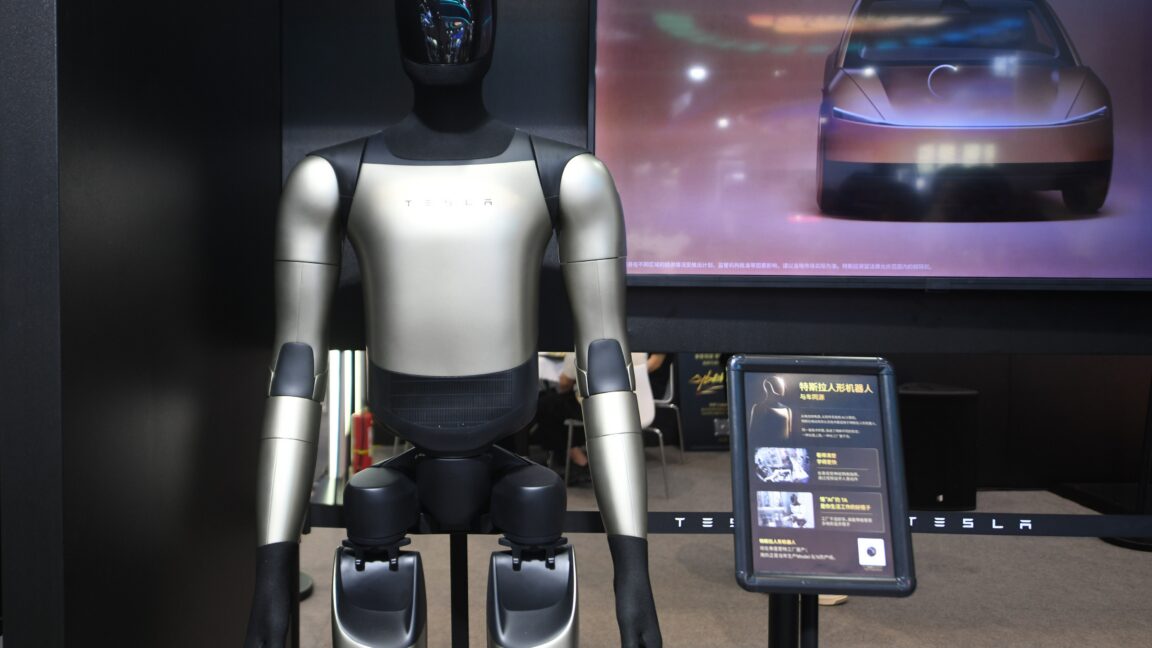
Tesla workers have voiced apprehension about training the company's Optimus humanoid robots, fearing that the machines are being developed to eventually replace them. This concern arises as Tesla grapples with the imperfect manufacturing process of the robots, which often require immediate fixes. Touch sensors for the robots' hands have been unreliable, leading Tesla to develop a replaceable glove-like sensor layer.
The artificial intelligence capabilities of Optimus are reportedly still insufficient for general-purpose operations, necessitating programming for specific tasks within carefully controlled environments. A significant hurdle for all robotics companies, including Tesla, is acquiring sufficient training data for robots to learn a wide array of manual tasks. Tesla has been using factory workers in Texas and California, clad in special suits, to record their physical movements for imitation learning. However, reports indicate some workers expressed discomfort with this process, knowing the robots could eventually supplant them.
In response to these concerns, Tesla has reportedly shifted the data collection responsibility to dedicated teams and established "training hubs." The company also continues to rely on Chinese suppliers for various robot components, a practice that persists despite US government efforts to bolster domestic supply chains. The Federal Communications Commission has taken action by banning new foreign-made robots, including humanoid models.
Tesla's challenges are not unique in the rapidly evolving robotics sector. Automakers in China, Japan, and South Korea, as well as dedicated robotics firms, are also developing humanoid robots. Toyota plans substantial investment in robotic factory upgrades, while Hyundai intends to deploy thousands of Boston Dynamics' Atlas robots. Agility Robotics, a US-based company, has already deployed humanoid robots in a warehouse setting, but the broader business case for these machines hinges on sustained, cost-effective deployments and demonstrated safety around humans.