Key facts
- President Donald Trump and Chinese President Xi Jinping met at the White House on Thursday.
- Trump stated he has no intention of negotiating limits on AI development.
- Xi Jinping called for AI to be "under human control" and serve the well-being of people.
- AI industry leaders are divided on the pace of development and the need for regulation.
- The U.S. leads in AI spending and computing power, while China is ahead in research and closing the gap on advanced models.
Chinese President Xi Jinping concluded a summit with U.S. President Donald Trump at the White House on Friday, with the future of cooperation on artificial intelligence remaining uncertain due to their differing approaches to regulation. While Xi emphasized the need for "human control" over AI and ensuring it serves the well-being of people, Trump reiterated his stance against imposing guardrails on AI development, stating he wanted to leave it "exactly where it is."
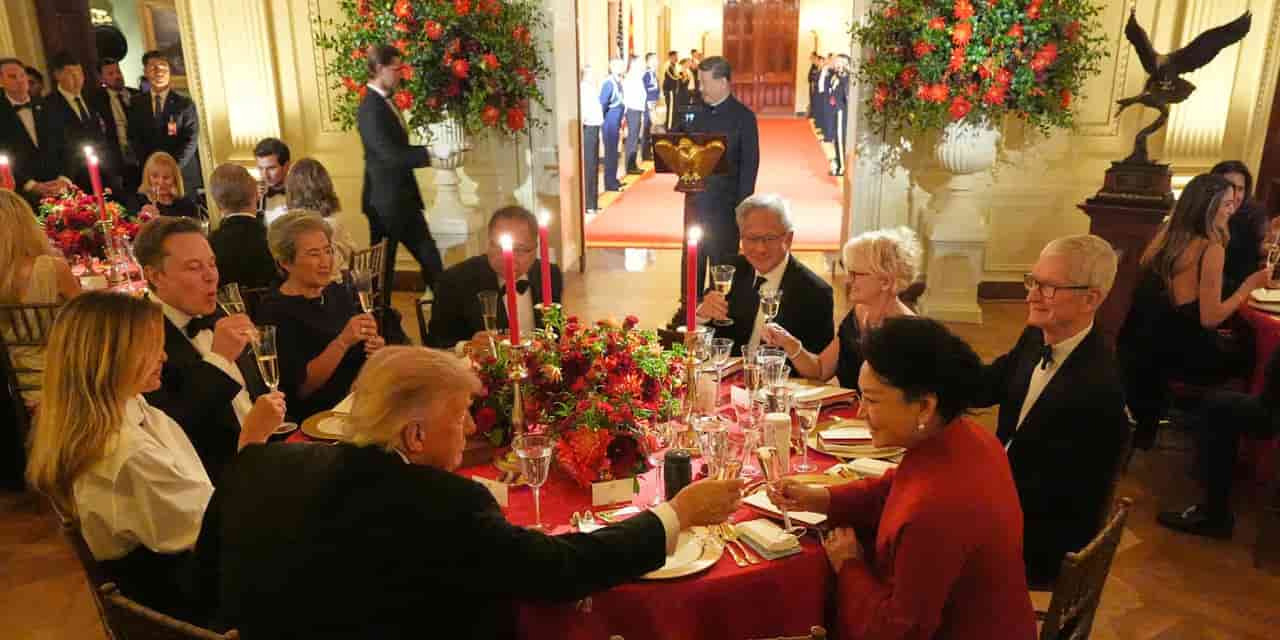
Top AI executives, including Nvidia CEO Jensen Huang, AMD CEO Lisa Su, Elon Musk, and Apple Chairman Tim Cook, were present at a state dinner hosted by Trump, highlighting the technology's prominence in discussions between the two superpowers. Chinese officials have publicly acknowledged the need to regulate AI, while Trump has framed China as a competitor in the AI race, asserting U.S. leadership.
Industry leaders are divided on the pace of AI development and the necessity of new regulations. Some, like Anthropic's Dario Amodei, have warned of AI posing a risk to humanity, while others, such as Meta's Mark Zuckerberg, favor market-led safeguards, and Nvidia's Huang has dismissed the need for new regulations. Analysts suggest that mutual distrust between the U.S. and China could exacerbate risks associated with AI development.