Key facts
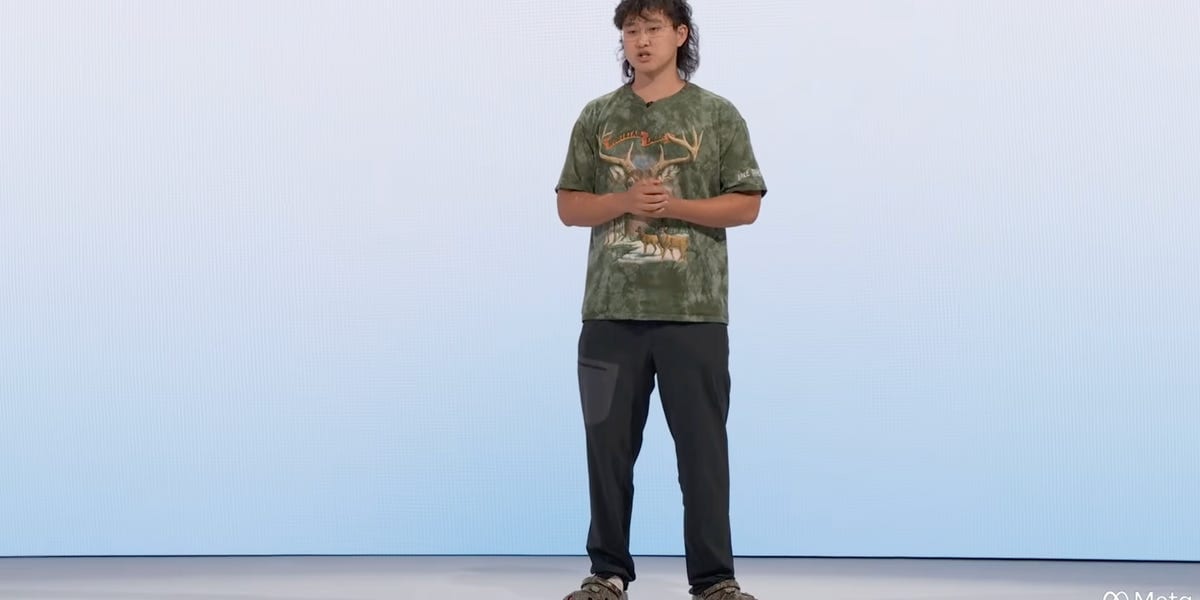
- Meta AI chief Alexandr Wang clarified the cost of his camouflage t-shirt worn at Meta Connect 2026.
- Wang stated the t-shirt cost no more than $30 and was purchased from a Santa Cruz shop.
- The outfit, including matching Crocs, is described as a reflection of current Gen Z fashion trends.
- Fashion historians and marketers noted the outfit's emphasis on age and its alignment with downtown or artistic crowds.
- The style is characterized as a mismatch of eras and aesthetics, typical of Gen Z's embrace of ironic fashion.
Meta's chief AI officer, Alexandr Wang, addressed online speculation surrounding his outfit at the Meta Connect 2026 conference, particularly the cost of his camouflage deer t-shirt. Wang clarified that the shirt, paired with matching Crocs, cost no more than $30 and was purchased from a shop in Santa Cruz, California. He refuted claims that the outfit was an expensive designer piece, instead characterizing it as a reflection of current Gen Z fashion trends.
Fashion historians and marketers have described Wang's attire as emblematic of a younger generation's style, which often incorporates thrifted items and a blend of disparate aesthetics. Daniel James Cole, a fashion historian at New York University, noted that such outfits can emphasize the wearer's age and are common among artistic crowds in areas like Brooklyn or the Lower East Side. Sofia Jiang, a marketing professional, echoed this sentiment, suggesting the look is typical of a "14-year-old boy from LA" picking items from a thrift store.
The article suggests that Wang's choice of dress, including the graphic tee, fleece joggers, Crocs, and rimless glasses, represents a deliberate mismatch of eras and aesthetics, a hallmark of Gen Z's embrace of ironic fashion. This approach is compared to Mark Zuckerberg's past adoption of the white t-shirt as a uniform, signaling a shift away from traditional business attire. Amina Salahou, founder of Les Adore, believes Wang's outfit communicates solidarity with the developer community and startup founders, portraying him as part of their culture rather than a figure within a bureaucratic system.