All NewsEducationTVBrokers
Equities & FundsCrypto & Digital AssetsAI & TechnologyBusiness & CorporateUS Politics & PolicyGeopolitics & Global RiskMacro, Rates & FXCommodities & EnergyEuropean Politics & MarketsAsia-PacificReal Estate & Property
All NewsHome
← Back to AI & Technology

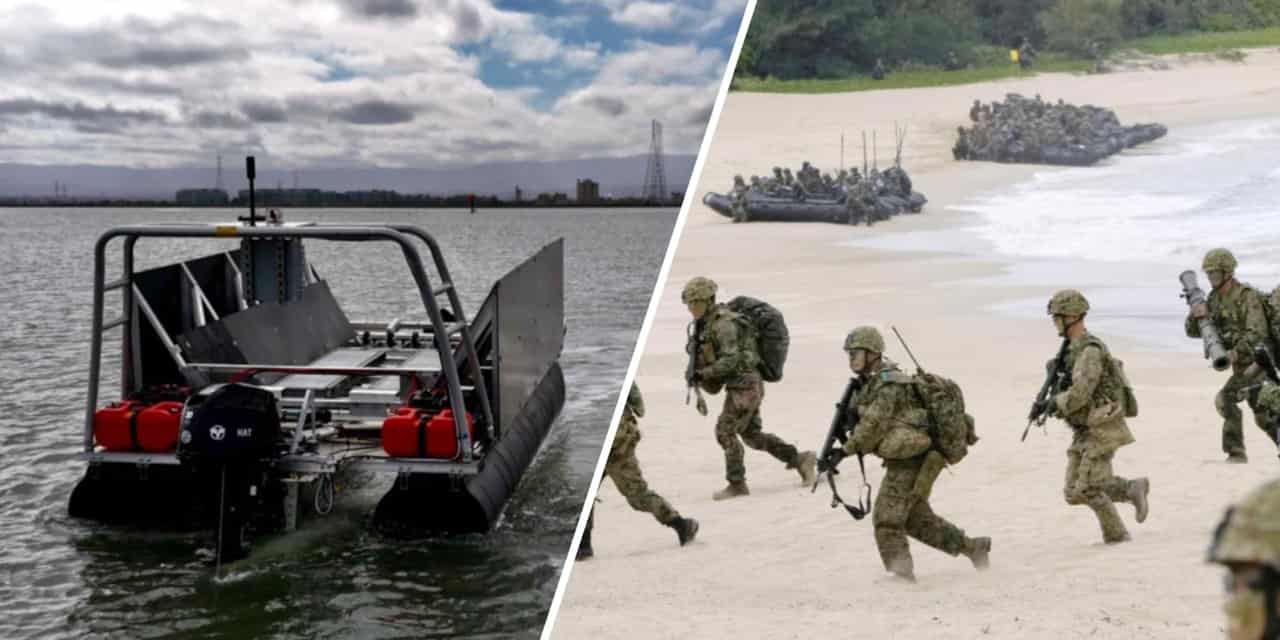
Japanese shipbuilder to produce drone boats for Japan, US military

Created at 7 Sep · 3:36 PM1 source↑ Market-relevant
IN SHORT

Japan's Onomichi Dockyard will begin constructing uncrewed surface vessels, aiming to supply them to the Self-Defense Forces and the U.S. military. This move aligns with a broader industry trend toward dual-use technologies with both civilian and military applications.

Key Numbers

20unmanned surface vehicles purchased by Japan from Liquid Robotics
$25 millioncontract value for Liquid Robotics' vehicles
12 monthsautonomous operating capability of Wave Gliders
2 knotsmaximum speed of Wave Gliders
9,300+ nautical milesdistance traveled by one Wave Glider on a single trip
$830,000+implied per-unit cost of Wave Gliders
$1.75 billionSeries D funding round for Saronic
$9.25 billionvaluation for Saronic Technologies
180-footlength of Saronic's autonomous vessel Marauder
20 vesselsannual production capacity at Saronic's expanded Franklin shipyard
$300 millionSaronic's Phase 1 investment into its Franklin shipyard

Who's Involved

Onomichi Dockyard
Japanese shipbuilder to produce drone boats
Bulwark Dynamics
American startup that developed drone boat technology
Liquid Robotics
Boeing subsidiary and developer of Wave Glider USVs
Boeing
Parent company of Liquid Robotics, defense contractor
U.S. Air Force
Purchased unmanned surface vehicles for delivery to Japan
Saronic Technologies
AI boat maker that raised significant funding
Dino Mavrookas
CEO of Saronic Technologies
Kleiner Perkins
Led Saronic's Series D funding round
Advent International
New investor in Saronic Technologies
Bessemer Venture Partners
Existing investor in Saronic Technologies
U.S. Navy
Seeking medium unmanned surface vessels and integrating autonomous systems
Bryan Clark
Leads Hudson Institute's Center for Defense Concepts and Technology
Japanese shipbuilder to produce drone boats for Japan, US military

↳ Why This Matters

The expansion of drone boat production by Japanese and American companies highlights a significant shift in defense technology, driven by the proven effectiveness of autonomous systems in modern conflicts and increasing military demand for advanced surveillance and operational capabilities.

Key facts

  • Onomichi Dockyard will mass-produce uncrewed surface vessels.
  • The company intends to supply these drone boats to the Japanese Self-Defense Forces and the U.S. military.
  • Liquid Robotics, a Boeing subsidiary, previously sold 20 unmanned surface vehicles to Japan for $25 million.
  • Saronic Technologies, a defense tech startup, raised $1.75 billion, valuing the company at $9.25 billion.
  • Saronic is expanding its shipyard capacity and building a new facility called Port Alpha.

Japan's Onomichi Dockyard is set to begin the mass production of uncrewed surface vessels (USVs), with the goal of supplying these drone boats to both the Japanese Self-Defense Forces and the U.S. military. This initiative signifies a strategic move by commercial shipbuilders into dual-use technologies that serve both civilian and military purposes.

This development aligns with a growing global demand for autonomous maritime systems. Liquid Robotics, a subsidiary of Boeing, previously secured a $25 million contract with the U.S. Air Force to supply 20 of its Wave Glider USVs to Japan. These solar and wave-powered vessels are designed for long-endurance surveillance, capable of operating autonomously for up to 12 months and covering vast distances.

Meanwhile, the autonomous surface vessel market is experiencing significant growth, evidenced by Saronic Technologies' recent $1.75 billion Series D funding round, which valued the company at $9.25 billion. Saronic plans to use this investment to expand its shipyard in Franklin, Louisiana, and construct a new, larger facility named Port Alpha. The company is increasing its production capacity to meet demand from various customers, including the U.S. Navy, which is actively integrating autonomous surface vessels into its fleet.

The utility of drone boats has been demonstrated in recent global conflicts, such as the Russia-Ukraine war and the conflict involving Iran. The U.S. Navy is shifting its strategy for acquiring medium unmanned surface vessels to a marketplace model that emphasizes existing, mature technologies, encouraging companies to deliver solutions rapidly.

Frequently asked questions

Onomichi Dockyard aims to mass-produce uncrewed surface vessels and supply them to the Japanese Self-Defense Forces and the U.S. military.

Wave Gliders are low-observable, mobile platforms powered by solar and wave energy, capable of operating autonomously for up to 12 months and covering over 9,300 nautical miles.

Saronic Technologies raised $1.75 billion in Series D funding, achieving a valuation of $9.25 billion, to expand its production capabilities.

The U.S. Navy is integrating autonomous surface vessels into its fleet due to their proven usefulness in global conflicts and the need for advanced, rapidly deployable robotic and autonomous technologies.

What Happens Next

01Onomichi Dockyard to begin construction of uncrewed surface vessels.
02Saronic Technologies to expand its Franklin shipyard and build Port Alpha.
03U.S. Navy to continue integrating autonomous surface vessels into its fleet through a marketplace model.
CME Headlines
  • Risk Management and Monitoring Notice: Multi-Factor Authentication Updates - September 12
    3 Sep · 5:00 AM

How It Developed

Onomichi Dockyard will begin constructing uncrewed surface vessels.
The Japanese shipbuilder aims to supply these vessels to the Self-Defense Forces and the U.S. military.
Liquid Robotics, a subsidiary of Boeing, sold 20 commercial unmanned surface vehicles to Japan for $25 million.
These vehicles, known as Wave Gliders, can operate autonomously for up to 12 months.
Saronic Technologies, an AI boat maker, raised $1.75 billion at a $9.25 billion valuation to expand production.
Saronic plans to build a new manufacturing facility, Port Alpha, with 10 times the capacity of its current shipyard.
Drone boats have proven their usefulness in global conflicts, including the Russia-Ukraine war and the U.S.-Israel conflict with Iran.

Sources

T1
Japanese shipbuilder to produce drone boats, eyes Japan, US ordersNikkei Asia
T2
AI boat maker Saronic smashes $9 billion valuationdefenseone.com
T2
Boeing Sends Liquid Robots to Defend Japan | The Motley Foolfool.com

Related Stories

China readies humanoid robots for combat, military documents reveal
7 Sep · 6:07 AM
Didi to seek Hong Kong permits for driverless vehicle tests
7 Sep · 4:30 AM
China's 'Tesla imitators' pivot to affordable humanoid robots for consumers
7 Sep · 4:27 AM
China's Z.ai and Moonshot Launch AI Model Subscriptions on Tmall
7 Sep · 8:06 AM
Cathay Pacific, Google Partner on AI to Reduce Aviation's Climate Impact
7 Sep · 10:51 AM