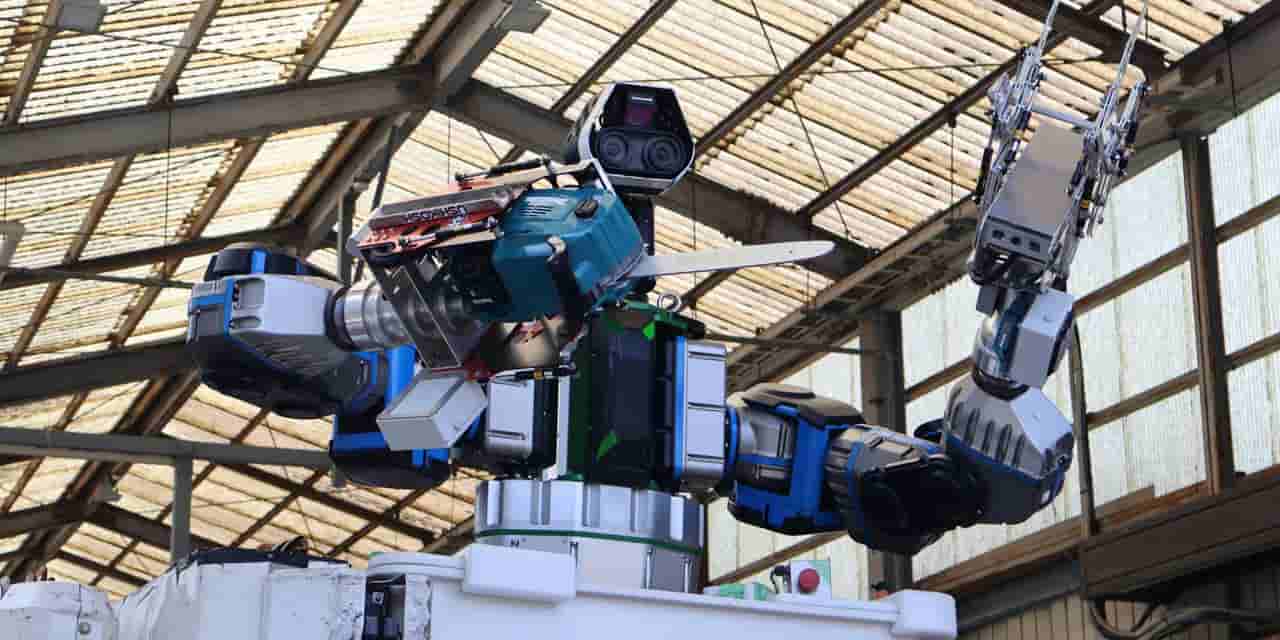
Japan is deploying advanced humanoid robots in sectors like agriculture, forestry, and healthcare to address severe labor shortages caused by an aging population and low birth rates. These versatile machines leverage precision, durability, and AI for tasks previously thought impossible for automation.

Japan's innovative use of robotics to combat demographic challenges offers a potential model for other aging societies worldwide facing similar labor shortages. The advancements in versatile, AI-driven robots could reshape industries and redefine human-robot collaboration.
Japan is increasingly deploying its advanced humanoid robots in sectors outside of traditional manufacturing, aiming to address critical labor shortages exacerbated by an aging population and low birth rates. Developers are leveraging the precision and durability honed in factory settings to create machines capable of complex tasks in environments like forests, greenhouses, and hospitals.
The demographic imperative in Japan is stark: nearly 30% of the population is over 65, and the working-age population is expected to decline by almost 20% by 2040. This shortfall impacts key industries such as agriculture, forestry, construction, and healthcare, leading to empty fields, unmanaged forests, stalled construction, and strained hospitals.
This new generation of robots is characterized by significant advancements in sensory sophistication, including LiDAR, advanced computer vision, and tactile sensors. Onboard AI and machine learning enable rapid decision-making and adaptation to unstructured environments. Enhanced dexterity in multi-jointed arms and robust mobility platforms allow robots to perform intricate tasks and navigate challenging terrains. A key focus is human-robot collaboration (HRC), where robots, or cobots, work safely alongside humans to handle repetitive or dangerous tasks, allowing human workers to focus on higher-level responsibilities.
These versatile machines are already transforming industries. In agriculture, autonomous tractors are being used to till and plant fields, helping to mitigate the severe shortage of farmworkers, whose average age exceeds 65. The technology is also being applied to tasks like precision branch cutting in forestry and delicate fruit picking in greenhouses.