All NewsEducationTVBrokers
Equities & FundsCrypto & Digital AssetsAI & TechnologyBusiness & CorporateUS Politics & PolicyGeopolitics & Global RiskMacro, Rates & FXCommodities & EnergyEuropean Politics & MarketsAsia-PacificReal Estate & Property
All NewsHome
← Back to AI & Technology

SoftBank tests stratospheric aerial base station in Japan

Created at 2 Sep · 8:16 PM1 source↑ Market-relevant
IN SHORT

SoftBank Corp. has successfully conducted Japan's first trial of a stratospheric communications base station, utilizing a High-Altitude Platform Station (HAPS) from U.S. startup Sceye. The company aims for commercialization by 2027, targeting disaster response and enhanced connectivity.

Key Numbers

15,000 kmdistance flown by HAPS from U.S. to Japan
2027target year for commercialization
13 daysduration of HAPS flight across Pacific

Who's Involved

SoftBank Corp.
Japanese telecommunications company conducting HAPS trials
Sceye, Inc.
U.S. aerospace startup providing HAPS technology
Junichi Miyakawa
President & CEO of SoftBank Corp.
Mikkel Vestergaard Frandsen
Founder and CEO of Sceye, Inc.
Masayuki Kamimura
Senior Director at SoftBank’s Ubiquitous Network Planning Division
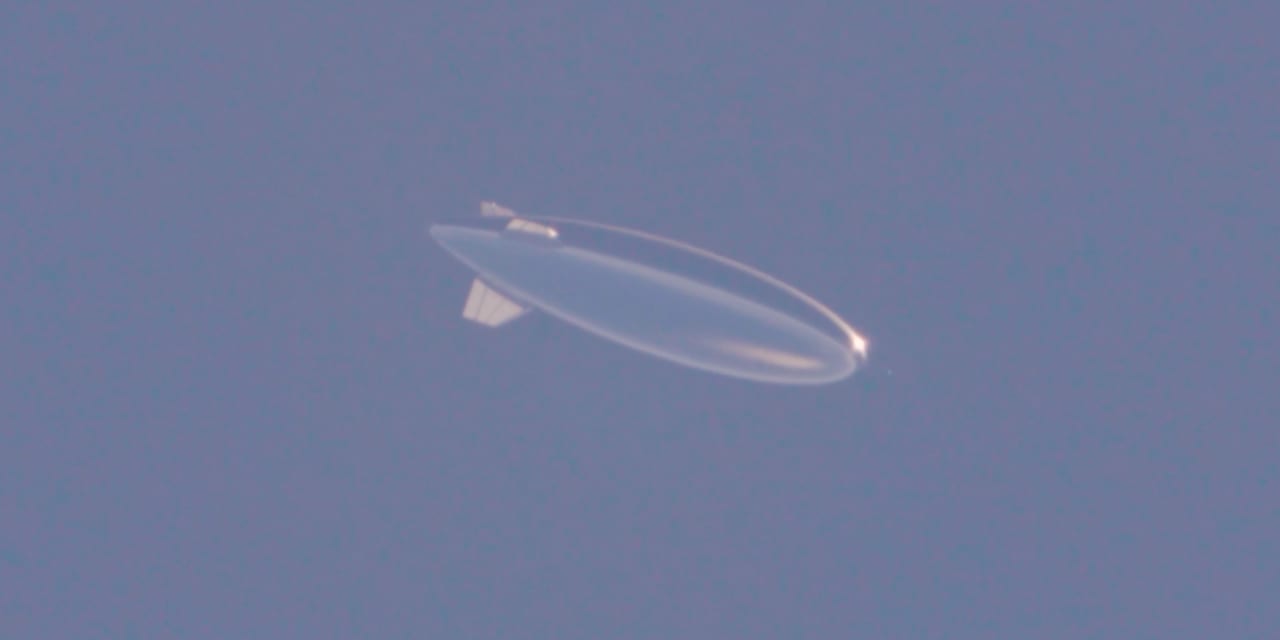
SoftBank tests stratospheric aerial base station in Japan

↳ Why This Matters

This development signifies a step towards advanced aerial communication networks, potentially enhancing disaster response capabilities and expanding connectivity in remote areas, aligning with SoftBank's vision for ubiquitous connectivity.

Key facts

  • SoftBank Corp. conducted Japan's first trial of a stratospheric communications base station.
  • The trial used Sceye's High-Altitude Platform Station (HAPS), which flew from the U.S. to Japan.
  • Services tested included voice calls, data communications, and an emergency alert system.
  • HAPS-to-drone communications and HAPS-based edge computing were also verified.
  • Commercialization of HAPS services in Japan is targeted for 2027.

SoftBank Corp. has successfully completed Japan's first trial of a stratospheric communications base station, a High-Altitude Platform Station (HAPS), with plans to commercialize the service by 2027. The trials, conducted in collaboration with U.S. aerospace startup Sceye, Inc., utilized Sceye's Lighter Than Air (LTA)-type HAPS.

The Sceye HAPS departed from Roswell, New Mexico, and flew over 15,000 km across the Pacific Ocean to reach Japanese airspace, remaining operational for an extended period off Cape Muroto in Kochi Prefecture. During the trials, stable voice calls, including emergency calls, and high-capacity data communications like video streaming were confirmed using smartphones.

An emergency alert messaging system designed for large-scale disasters was also successfully verified. Furthermore, the companies validated HAPS-to-drone communications, aiming to establish a three-dimensional communications network, and conducted the world's first technical verification of HAPS-enabled edge computing. This involved processing smartphone communications entirely within the HAPS without routing through a terrestrial network.

SoftBank aims to integrate HAPS with terrestrial networks to provide ubiquitous connectivity, supporting use cases such as disaster communication, bridging the digital divide, and enabling aerial mobility services. This initiative is part of SoftBank's broader vision for Ubiquitous Transformation (UTX).

Frequently asked questions

A HAPS is a communications base station that operates from the stratosphere, often described as a 'flying base station,' designed to provide mobile connectivity.

The primary goal is to provide high-quality, high-capacity communications comparable to terrestrial mobile networks, enable rapid restoration of communications after disasters, and integrate non-terrestrial networks with terrestrial mobile networks for ubiquitous connectivity.

HAPS provides direct-to-device mobile communications from the stratosphere, offering high-capacity services similar to terrestrial networks, whereas satellite internet typically provides low- to medium-capacity communications from space to areas with limited coverage.

It refers to processing data and running applications on the HAPS itself, without needing to route communications through a terrestrial network, enabling faster response times and potentially new services.

What Happens Next

01SoftBank and Sceye will use trial data to prepare for HAPS commercialization.
02Operational frameworks and communication quality improvements will be developed.
03Commercialization of HAPS services in Japan is targeted for 2027.

How It Developed

SoftBank Corp. announced successful trials of a stratospheric communications base station in Japan.
The trials utilized Sceye's Lighter Than Air (LTA)-type High Altitude Platform Station (HAPS).
Sceye's HAPS flew over 15,000 km from New Mexico, U.S., to Japan's airspace.
The HAPS remained operational over a target area off Cape Muroto for an extended period.
Tests confirmed stable voice calls, emergency calls, text messaging, and high-capacity data communications.
An emergency alert messaging system for large-scale disasters was verified.
HAPS-to-drone communications were validated, aiming for a three-dimensional network.
The world's first technical verification of HAPS-enabled edge computing was conducted.

Sources

T1
SoftBank tests stratospheric aerial base station in Japan 1stNikkei Asia
T2
SoftBank succeeds in Japan's first communication test of "flying base ...finance.biggo.com
T2
SoftBank Corp. Achieves Japan's First HAPS Trial Servicesoftbank.jp
T2
Stratospheric Ambition: SoftBank Corp. Prepares for its First HAPS ...softbank.jp

Related Stories

Samsung ramps up in-person foldable phone demos in Japan amid fierce competition
1 Sep · 9:27 PM
Mitsubishi Heavy, NEC to Develop Defense Drones, AI Systems
2 Sep · 3:11 PM
Russia's Starlink rival Rassvet faces launch setbacks
2 Sep · 11:26 AM
Reliance Jio launches cloud PC service to enable AI capabilities on older computers
2 Sep · 4:11 PM
China's 2026 moon laser communication speed slower than NASA's 2013
2 Sep · 4:05 AM