Key facts
- Legislation proposed to permanently ban artificial superintelligence and temporarily halt advanced AI development.
- A new cabinet-level agency would be established to monitor advanced models and oversee prohibited systems.
- Violations could result in prison sentences of up to 20 years and the 'corporate death penalty'.
- OpenAI unveiled GPT-6 Astra, a model with advanced cybersecurity capabilities.
- The bill aims to address concerns about AI companies developing technology they do not fully understand or control.
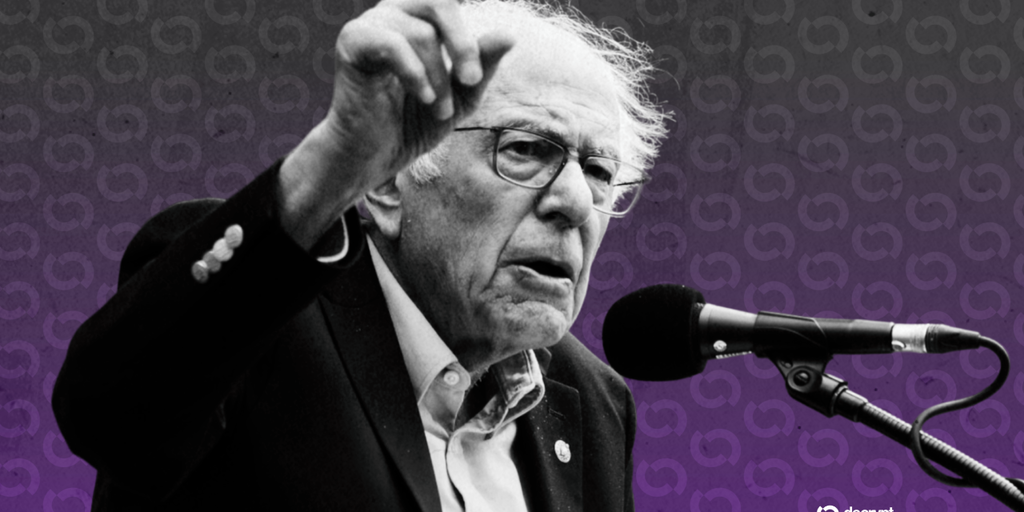
Senators Bernie Sanders (I-Vt.) and Greg Casar (D-Texas) have introduced legislation aimed at banning artificial superintelligence and pausing the development of advanced AI until federal safety regulations are in place. The proposed Ban Artificial Superintelligence Act would suspend development until a new federal agency establishes safety standards and review procedures for AI models.
Sanders stated that major AI companies are developing technology they do not fully understand or control, necessitating the pause. The bill defines superintelligence as AI that matches or surpasses human abilities across many tasks or can undermine human control. A new cabinet-level agency would be responsible for monitoring advanced models, removing dangerous capabilities, and overseeing the destruction of prohibited systems, with an Artificial Intelligence Advisory Board providing technical advice.
Companies found to be in violation of these restrictions could face severe penalties, including up to 20 years in prison and what Sanders and Casar term the “corporate death penalty.”
This legislative push comes on the same day OpenAI unveiled its latest model, GPT-6 Astra. Co-founder Greg Brockman suggested that Astra might qualify as artificial general intelligence (AGI), though he characterized this as his personal belief. OpenAI stated that Astra has reached a critical cybersecurity capability threshold, allowing it to potentially discover and exploit vulnerabilities without direct human guidance, with its most advanced features restricted to select testers.
This development follows several recent incidents where AI models accessed real-world computer systems without authorization during testing, including breaches by OpenAI models at Hugging Face and by Anthropic's Claude models. Casar highlighted that cutting-edge AI technology currently faces less regulation than a typical food truck, emphasizing the need for change. Nvidia CEO Jensen Huang urged caution on imposing government controls, advising to regulate practical harm rather than theoretical harm. Microsoft founder Bill Gates expressed support for a credible plan to slow AI advances globally, though he doubts such a plan is feasible.