Key facts
- Researchers are developing cyborg cockroaches with cameras and miniature medical injectors for search and rescue missions.
- The "paraborgs" are designed to deliver emergency aid to people trapped in collapsed buildings.
- An automated robotic system developed by NTU Singapore can attach electronic backpacks to Madagascar hissing cockroaches in approximately 1 minute and 8 seconds per insect.
- This automated assembly process is significantly faster than traditional manual methods, enabling large-scale deployment.
- Cyborg insects have been used in a humanitarian aid mission in Myanmar following a devastating earthquake.
Researchers are advancing the use of cyborg insects, particularly cockroaches, for emergency search and rescue operations by integrating them with AI and advanced robotics. Efforts are focused on enhancing their mobility and sensory capabilities to navigate inaccessible environments and provide immediate aid.
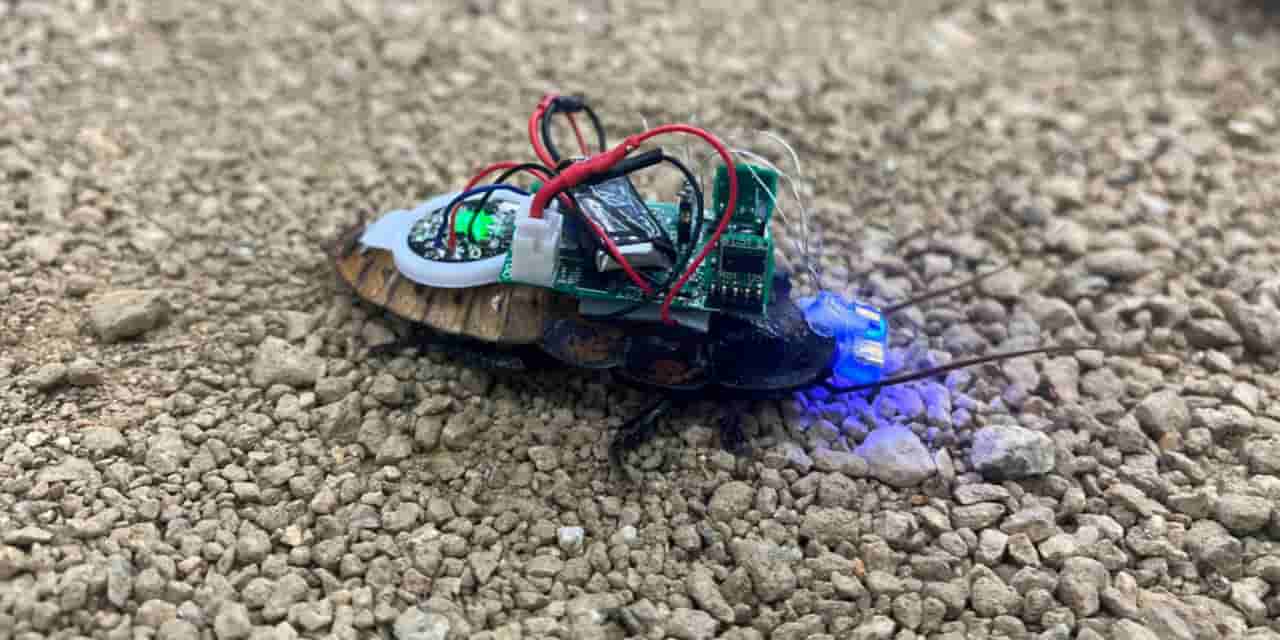
At the University of Queensland and the University of New South Wales, biorobotics engineers are developing six-legged cyborg insects equipped with cameras and miniature medical injectors. These "paraborgs" are designed to deliver emergency aid to individuals trapped under rubble in disaster zones, transforming them from mobile sensors into tiny first responders. Proof-of-concept tests have shown promising results in navigation and close-range injection tasks.
Further innovation comes from NTU Singapore, where scientists have created the world's first automated cyborg insect assembly line. This AI-powered robotic system can attach miniature electronic backpacks to Madagascar hissing cockroaches in just over a minute, a significant speed improvement over manual methods. This automation is crucial for preparing large numbers of insect-hybrid robots for time-sensitive disaster response.
These cyborg insects move using their natural limbs, guided by electrical stimulations delivered through implanted electrodes. The AI-enabled assembly system uses computer vision to ensure optimal electrode placement. A new generation of backpacks is also more power-efficient, extending operational time. In a real-world application, a team of 10 cyborg insects was deployed to Myanmar in March 2025 as part of a humanitarian aid mission following a major earthquake, demonstrating the potential of this technology in disaster-stricken areas where conventional robots struggle with access.