Key facts
- A new algorithm named Spi-Fly, inspired by fruit fly olfactory systems, has been developed.
- Spi-Fly utilizes sparse coding and a simple learning rule, bypassing complex backpropagation.
- The algorithm excels at learning new scents rapidly and retaining previously learned odors.
- In tests, Spi-Fly learned odors with significantly fewer exposures compared to backpropagation.
- The system shows resilience to 'catastrophic forgetting' when presented with new information.
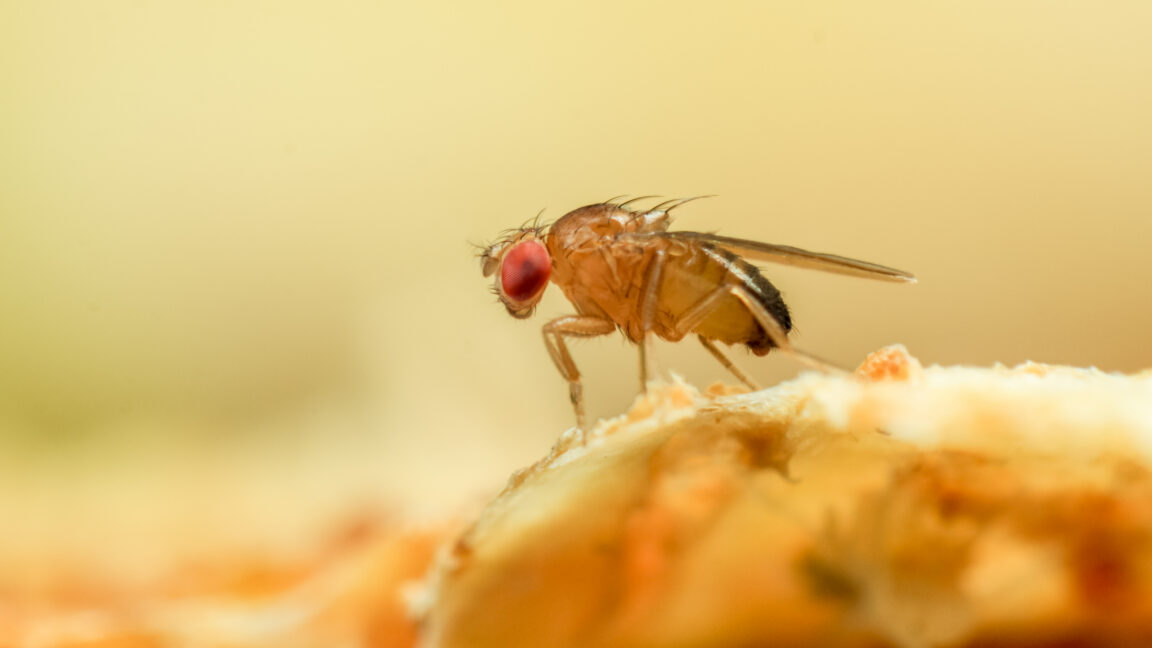
Researchers have developed a novel algorithm, dubbed Spi-Fly, inspired by the olfactory capabilities of fruit flies. Published in Neuromorphic Computing and Engineering, the algorithm aims to overcome limitations in current electronic noses, particularly their tendency to forget previously learned scents when encountering new ones—a phenomenon known as 'catastrophic forgetting.'
Unlike current electronic noses, which are often expensive, limited in detection range, and prone to forgetting, Spi-Fly mimics the fruit fly's ability to process a wide array of smells quickly and retain memories long-term. This is achieved through a process called sparse coding, where the fly's brain assigns a unique 'barcode' to each smell. The Spi-Fly algorithm simulates this by projecting sensor data onto a hidden layer, where neurons inhibit each other to identify active patterns that represent a specific odor.
The learning process for Spi-Fly is significantly simpler than conventional methods like backpropagation. It relies on a basic neural network rule: strengthening connections when a neuron fires alongside the correct answer. In tests using gas sensor data, Spi-Fly achieved peak performance with only three exposures per odor, compared to approximately 70 exposures needed by backpropagation. Furthermore, when subjected to new odors, Spi-Fly demonstrated minimal loss of accuracy for previously learned scents, while backpropagation performance degraded significantly.
The algorithm is designed with neuromorphic chips in mind, which process information using spikes and have limited memory. Spi-Fly shows less degradation under these constraints compared to backpropagation. However, the researchers acknowledge limitations, including a theoretical capacity for a few hundred odors and the fact that tests were conducted in simulation using isolated odors, not complex real-world scent mixtures. A competitor's algorithm, EPL net, is also discussed, with Spi-Fly's advantage attributed to its continuous stream processing versus EPL net's discrete sampling.