Key facts
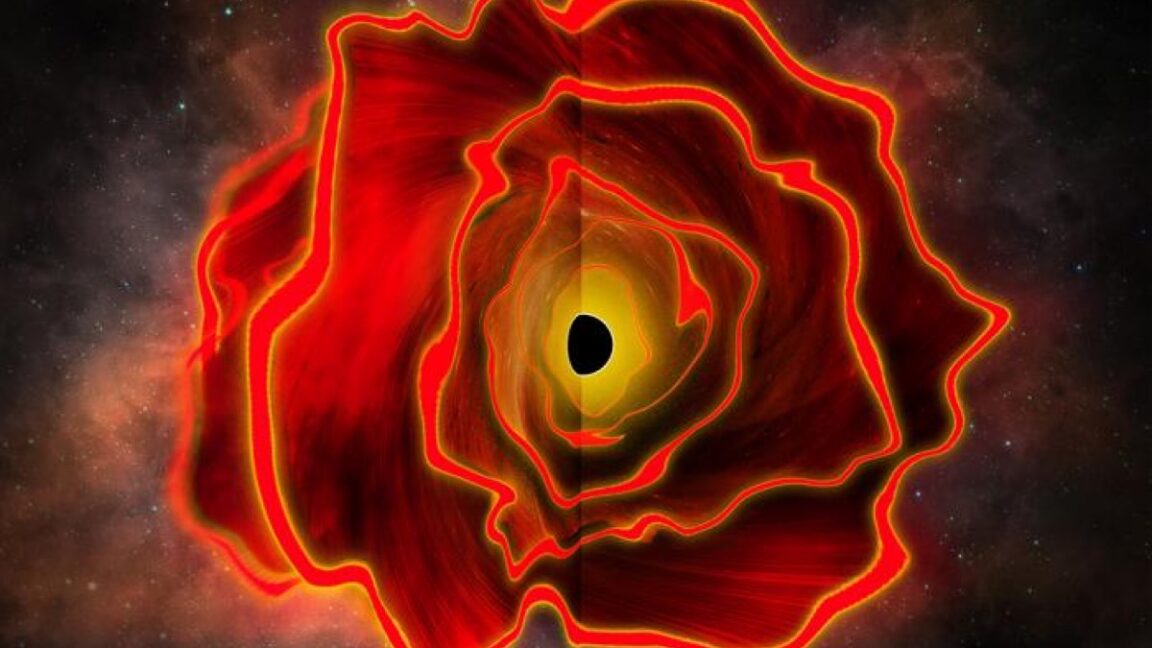
- Astronomers discovered a "black hole star," an extremely bright red object in the early universe.
- Scientists have engineered microbes to break down PET plastic into an edible substance.
- Oceanographer John Spiesberger identified a link between whale calls and Einstein's special theory of relativity.
- Avocado tree flowers exhibit a sex-switching behavior during the day.
- Research is underway on developing sound-powered drones.
- Studies are examining the diversity and characteristics of mosquito species.
August's scientific discoveries include the identification of a "black hole star," a celestial object emitting energy comparable to an active black hole, found in the early universe. Astronomers believe this object, named MoM-BH*-1, consists of a massive black hole surrounded by a dense hydrogen cocoon.
In a novel approach to environmental solutions, scientists at Southern Illinois University have engineered microbes capable of breaking down PET plastic into an edible substance, which they have formed into "µBites" cookies. This innovation is being explored for potential use in space missions or isolated environments.
Separately, oceanographer John Spiesberger has uncovered an unexpected link between whale vocalizations and Albert Einstein's theory of special relativity. By analyzing the travel time of whale calls underwater, he observed temporal interference effects that, while appearing to exceed the speed of light, ultimately adhere to the principles of relativity.
Other research highlights from August include studies on the sex-switching behavior of avocado tree flowers, the development of sound-powered drones, and investigations into the specific characteristics of various mosquito species.