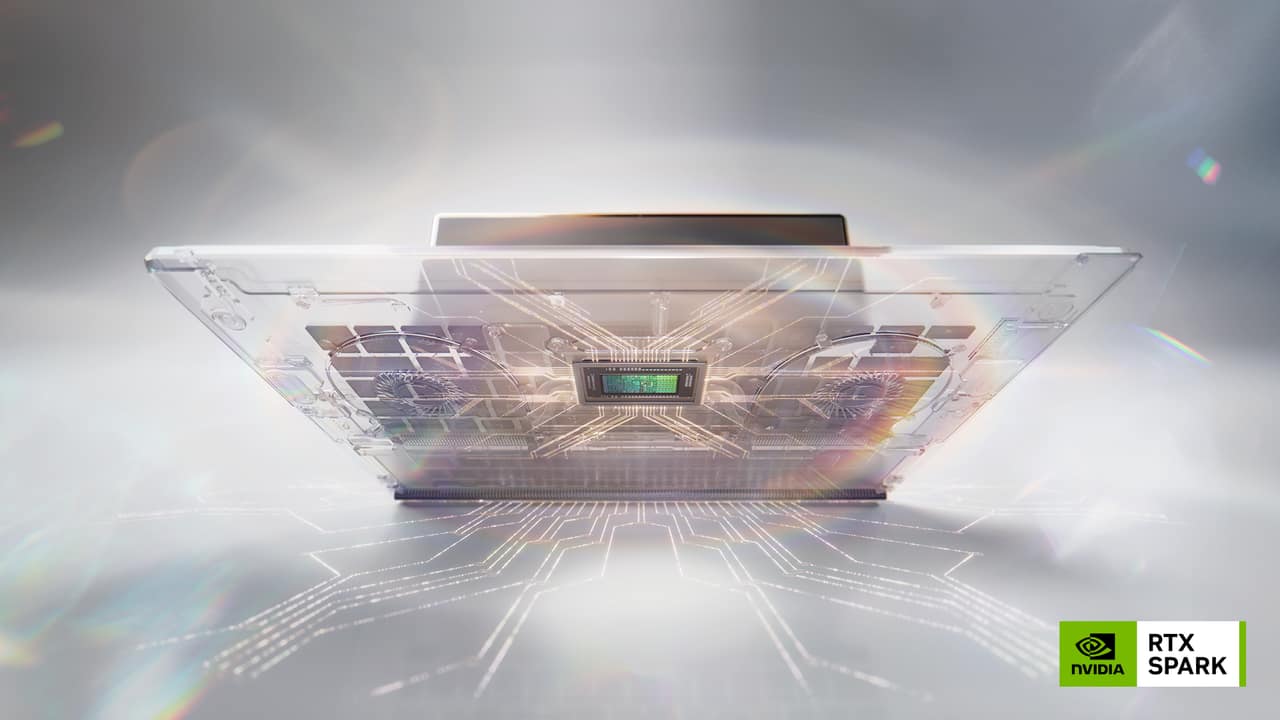
Key facts
- Nvidia's RTX Spark chip will power new Windows PCs from Lenovo and Acer launching in October.
- The RTX Spark chip combines a Blackwell GPU and a Grace CPU for on-device AI processing.
- The chip is designed for local AI processing, creative workloads, and gaming.
- Nvidia collaborated with Microsoft and MediaTek on the development of RTX Spark.
- The RTX Spark platform offers up to 1 petaflop of AI performance and supports 128GB of unified memory.
Nvidia announced that Lenovo and Acer will launch the first Windows PCs powered by its RTX Spark chip in October, aiming to bring artificial intelligence capabilities directly to laptops and desktop computers. This move is part of a broader industry trend towards on-device AI, which reduces the cost of cloud-based services and enhances user privacy and responsiveness by processing tasks locally.
The RTX Spark chip, developed in collaboration with Microsoft and MediaTek, combines a Blackwell graphics processor with a Grace central processor. Nvidia unveiled the chip in June as part of a partnership with Microsoft to "reinvent the PC" for the AI era. The chip is designed for local AI processing, creative workloads, and gaming, offering up to 1 petaflop of AI performance and supporting up to 128 GB of unified memory.
These new RTX Spark-powered PCs will join the Copilot+ PC category, featuring local AI processing through NPUs and GPU acceleration. Nvidia CEO Jensen Huang stated that the RTX Spark represents a new beginning for personal computers, transforming them from tools into "teammates" that can perform tasks upon request.
Other tech companies are also advancing on-device AI. Apple recently refreshed its Mac mini and Mac Studio desktops with M-series chips capable of running larger AI models locally. Nvidia has a history of supplying Arm-based chips for Microsoft devices, and has been developing Windows on Arm chips in collaboration with MediaTek.