All NewsEducationTVBrokers
Equities & FundsCrypto & Digital AssetsAI & TechnologyBusiness & CorporateUS Politics & PolicyGeopolitics & Global RiskMacro, Rates & FXCommodities & EnergyEuropean Politics & MarketsAsia-PacificReal Estate & Property
All NewsHome
← Back to AI & Technology

Eggshell-inspired aluminum arrays show promise for spacecraft debris protection

Created at 8 Sep · 4:26 PM1 source↑ Market-relevant
IN SHORT

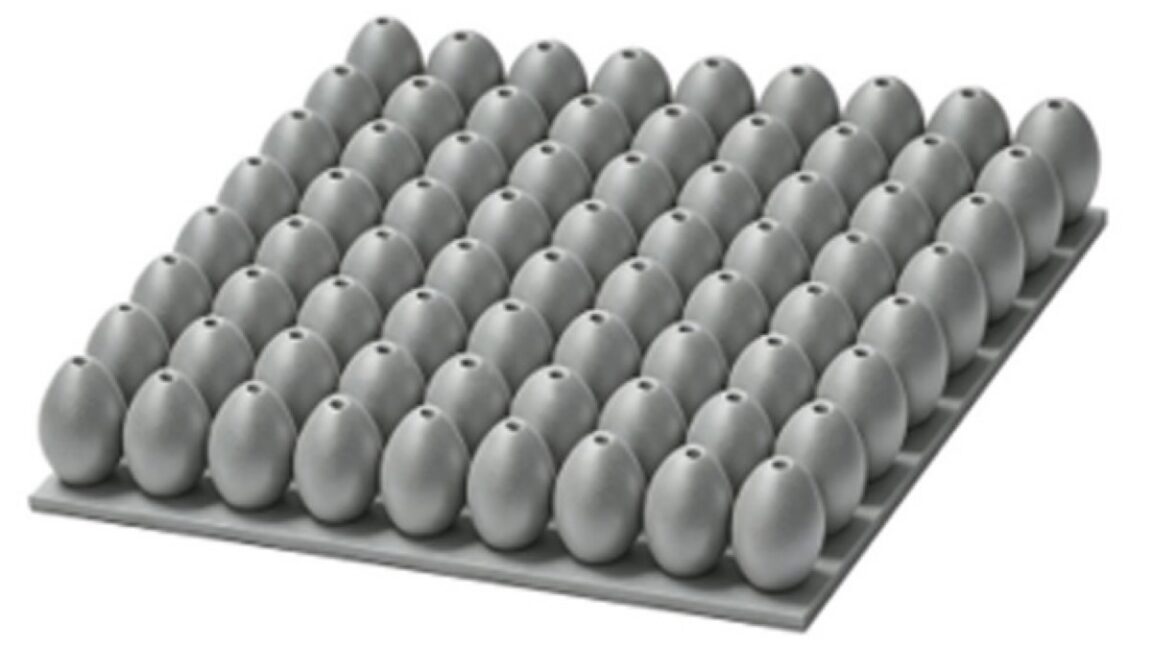
Chinese scientists have developed a new 3D-printed aluminum material inspired by eggshells that demonstrates enhanced protection against hypervelocity impacts. Water-filled eggshell-shaped arrays proved most effective in simulations and experiments, reducing projectile velocity by nearly 65%.

Key Numbers

65%projectile velocity reduction by eggshell arrays
51%projectile velocity reduction by aluminum plates
34,000pieces of space debris larger than 10 cm
900,000pieces of space debris between 1 cm and 10 cm
128 millionpieces of space debris smaller than 1 cm

Who's Involved

Wang
Co-author of the study from Dalian University of Technology
Tal Cohen
MIT colleague who tested egg orientation assumptions
Pedro Reis
MIT mechanical engineer who studied eggshell geometry
Journal of Applied Physics
Publication for the new research paper
Eggshell-inspired aluminum arrays show promise for spacecraft debris protection

↳ Why This Matters

The development of more effective spacecraft shielding is critical as the amount of space debris continues to grow, posing a significant threat to operational satellites and crewed missions.

Key facts

  • Chinese scientists have created a new aluminum material inspired by eggshells to protect spacecraft from debris.
  • The material consists of 3D-printed aluminum eggshell structures filled with water.
  • Experiments demonstrated that these water-filled eggshell arrays reduced projectile velocity by nearly 65%.
  • This design is more effective than plain aluminum plates, which reduced velocity by 51%.
  • The cooperative deformation of the eggshell units distributes impact energy across the structure.

Chinese scientists have developed a novel aluminum material inspired by the structure of eggshells, aiming to enhance spacecraft protection against space debris. The research, published in the Journal of Applied Physics, details how 3D-printed aluminum eggshell arrays filled with water proved significantly more effective at resisting hypervelocity impacts than traditional aluminum plates.

Eggshells have long been studied for their unique mechanical properties, including their rigidity and resistance to shattering. Previous research by MIT mechanical engineer Pedro Reis highlighted the link between an egg's ovoid geometry and its ability to withstand force. This new study draws on these principles, conceptualizing a protective structure that mimics the cooperative deformation of multiple eggshells.

In simulations and experiments using a light-gas gun, the water-filled eggshell-shaped arrays demonstrated a nearly 65% reduction in projectile velocity. In contrast, plain aluminum plates achieved only a 51% reduction. The water inside the eggshell structures plays a crucial role in dissipating impact energy by sloshing and preventing wave propagation. The most effective configuration involved upright eggshells with their narrow tips in contact with the top plate.

Co-author Yuxin Wang explained that the protection mechanism differs from a single eggshell's fragility. The array's cooperative deformation transforms local impact loads into distributed energy dissipation across the entire metastructure, thereby enhancing the anti-impact performance of target plates. The researchers hope this bio-inspired approach will encourage further development of protective structures.

Frequently asked questions

The material was inspired by the mechanical properties and structure of eggshells, which are known for their rigidity and resistance to shattering.

3D-printed aluminum eggshell structures filled with water are used. When impacted, the cooperative deformation of these units distributes the impact energy, dissipating it effectively.

Experiments showed the eggshell arrays reduced projectile velocity by nearly 65%, significantly more than plain aluminum plates which reduced velocity by 51%.

The research addresses the growing problem of space debris, which can cause significant damage to spacecraft due to high impact velocities.

What Happens Next

01Further experiments are needed to refine the design and improve the material's energy absorption.
02Researchers hope the study will attract more attention to bio-inspired protective structures.
CME Headlines
  • Risk Management and Monitoring Notice: Multi-Factor Authentication Updates - September 12
    3 Sep · 5:00 AM

How It Developed

Scientists developed a new aluminum material inspired by eggshells for spacecraft protection.
The material uses 3D-printed aluminum eggshell structures filled with water.
Experiments showed the eggshell arrays reduced projectile velocity by nearly 65%, outperforming plain aluminum plates.
The cooperative deformation of eggshell units transforms local impact load into distributed energy dissipation.

Sources

T1
How eggshells can protect spacecraft from space debrisvar abtest_2170619 = new ABTest(2170619, 'impression');Ars Technica

Related Stories

Japan consortium develops perovskite solar cells with 50% longer lifespan
8 Sep · 9:26 AM
Chinese scientists propose turning abandoned coal mines into underground farms
8 Sep · 6:15 AM
Free Stars: Children of Infinity demo released
8 Sep · 4:11 PM
EV batteries retain 90% capacity after 150,000 km, study finds
8 Sep · 2:06 PM
Stoke Space raises $1 billion to rival SpaceX with reusable rockets
8 Sep · 11:21 AM