Key facts
- A fire at the Lake Mariner data center revealed accountability challenges due to multiple involved companies.
- Firefighters faced issues with safety systems and access to crucial information during the blaze.
- The $3.2 billion AI data center project has numerous stakeholders, including TeraWulf, Fluidstack, Google, and Anthropic.
- Concerns exist regarding the gap between promised jobs and actual employment at the facility.
- Anthropic has pledged to cover electricity price increases and infrastructure costs related to its data center energy use.
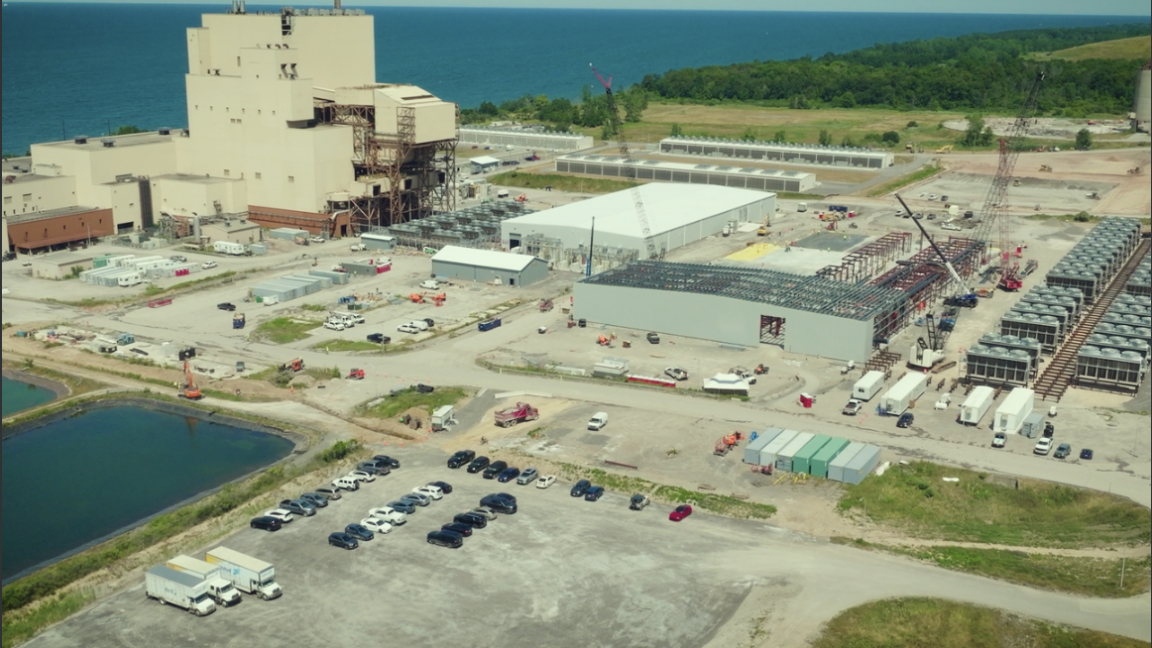
A fire at the Lake Mariner data center in Somerset, New York, has highlighted significant accountability challenges stemming from the complex web of companies involved in the $3.2 billion AI infrastructure project. Firefighters responding to the early June blaze reported entering the unfinished building "kind of blind," encountering no working alarm, no suppression system, and three dead hydrants. Crucial safety documents, which firefighters are legally entitled to access, were reportedly destroyed in the fire.
Chief Steve Matisz of the Barker Fire Department described the situation as difficult, expressing uncertainty about the claim that safety sheets burned in the fire. The Lake Mariner campus is situated on land leased by TeraWulf, the operator, from a company owned by its CEO, Paul Prager. Fluidstack, a UK-based AI company, is slated to manage the center, while Google holds warrants for a future 14 percent equity stake and guarantees Fluidstack's lease payments. Anthropic is among the AI companies the facility is designed to serve.
TeraWulf has stated it is responsible for operational safety and emergency preparedness at the campus. Following an after-action review, the company implemented Knox boxes, additional hydrants, and safety data sheet "go-bags." However, as of mid-August, the fire chief indicated that work on the hydrants had not yet been observed, though a Knox box representative had visited the site.
The fire did not significantly impede construction, and no injuries were reported. Nevertheless, the incident underscores a growing trend in the AI buildout boom where responsibility is diffused across numerous stakeholders. This diffusion complicates assigning accountability for potential future safety failures, operational issues, financial stability, and the environmental strain on the grid and water supply.
Residents and town officials have expressed frustration with the lack of responsiveness from TeraWulf regarding community requests for meetings and answers about the project's benefits. A planning board presentation indicated that the full buildout would create between 35 and 40 jobs, a stark contrast to the 165 permanent jobs and $85 million in capital investment initially promised in 2019. New York Governor Kathy Hochul has acknowledged this gap, noting that data centers do not deliver significant, long-term jobs and challenging the industry to operate more intelligently.
Experts like Pilar Thomas, who teaches Tribal energy law, point out that while construction may employ hundreds for a limited time, operational roles are minimal unless there's a commitment to local training, which is rarely seen. The substantial, constant energy demand of such facilities also has broader economic implications. Leah Stokes, a political scientist, explained that the increased costs associated with managing grid constraints and running backup power plants during peak demand are socialized across all consumers' electricity bills.
Anthropic has committed to covering electricity price increases and 100 percent of grid infrastructure costs for its data centers, including Lake Mariner, and to procuring new power generation to match its energy needs. However, this pledge specifically addresses electricity pricing and does not detail mechanisms for verifying claims about clean energy or noise levels at leased sites. Anthropic's contracting behavior, such as a direct 20-year, $19 billion lease with TeraWulf for a Kentucky facility, highlights a difference in approach between wholly owned sites and leased arrangements like Lake Mariner, where confirming environmental and safety claims may be more challenging.