Key facts
- Kioxia is developing new high-speed NAND flash memory to meet AI demand.
- The company aims to increase its datacenter and enterprise market sales ratio to over 60%.
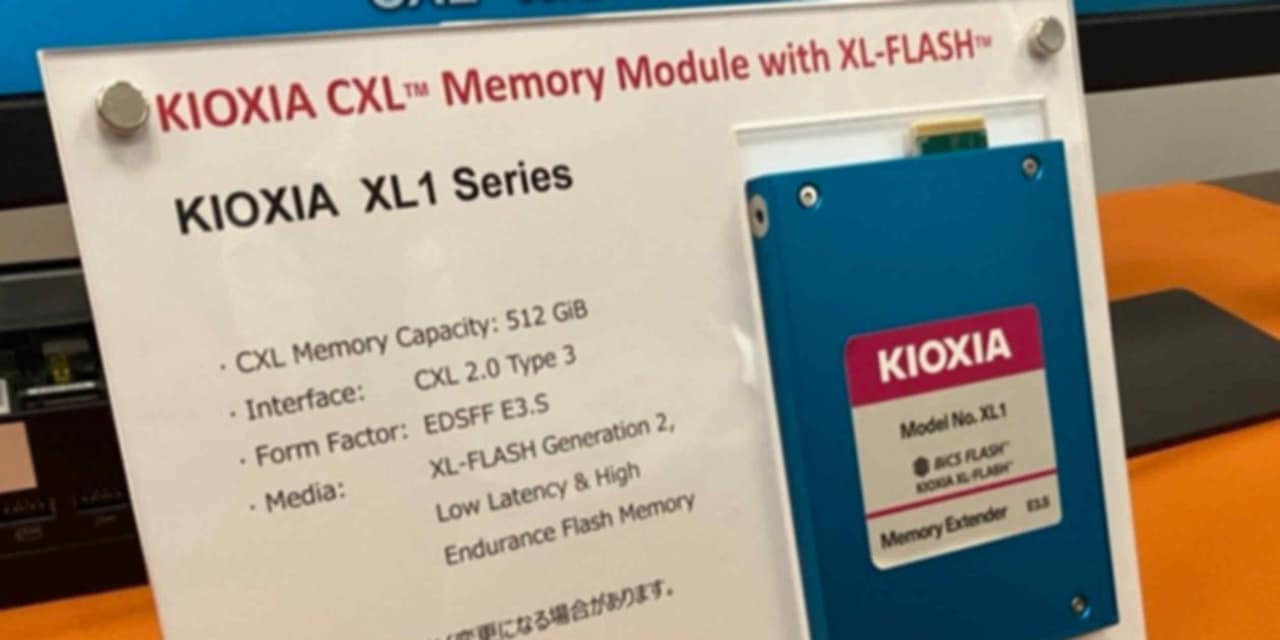
Japanese semiconductor maker Kioxia is shifting its strategy to focus on the AI inference market, planning to increase sales from data center and enterprise sectors to over 60%. The company is investing heavily in advanced NAND flash and SSDs to meet the growing demand for storage as extended memory for GPUs in AI systems.
Kioxia's strategic pivot towards AI infrastructure highlights the growing importance of advanced storage solutions in the rapidly expanding AI market, potentially reshaping the competitive landscape for memory chip manufacturers and impacting the supply chain for data centers and telecom infrastructure.
Japanese semiconductor maker Kioxia Holdings is strategically positioning itself to capitalize on the burgeoning demand for high-performance NAND flash memory driven by artificial intelligence workloads. The company outlined plans to leverage its enhanced NAND flash technology as an alternative to DRAM, aiming to strengthen relationships with major U.S. tech firms and counter competition from Chinese rivals.
At its Investor Day, Kioxia unveiled a growth strategy centered on the "AI Inference Era," emphasizing the critical role of flash memory and SSDs as extended memory for GPUs in next-generation AI systems. The company projects that AI inference processing will increase exponentially as applications become more complex, necessitating efficient storage solutions.
Kioxia intends to shift its strategic focus toward the AI infrastructure market, targeting an increase in its datacenter and enterprise market sales ratio to over 60% in the medium to long term. To support this transition, the company plans to invest approximately 470 billion yen annually in capital expenditures and 230 billion yen in research and development over the next three years. These investments will concentrate on high-growth, high-profit sectors, including ramping up production of its BiCS FLASH technology with over 200 layers and developing enterprise-grade SSDs with enhanced quality of service.
The company is also developing solutions for computational storage and smartNIC architectures to reduce the load on central CPUs and GPUs, which is particularly relevant for telecom operators managing real-time AI inference. Kioxia aims to improve revenue visibility and achieve stable, highly profitable growth through disciplined investment and multi-year Long-Term Agreements (LTAs). The company expects to achieve a net cash position in the first quarter of fiscal year 2026 and will consider shareholder returns after strengthening financial soundness and ensuring liquidity for growth investments.
Pick the topics you care about. Get only what matters, on your cadence.