Key facts
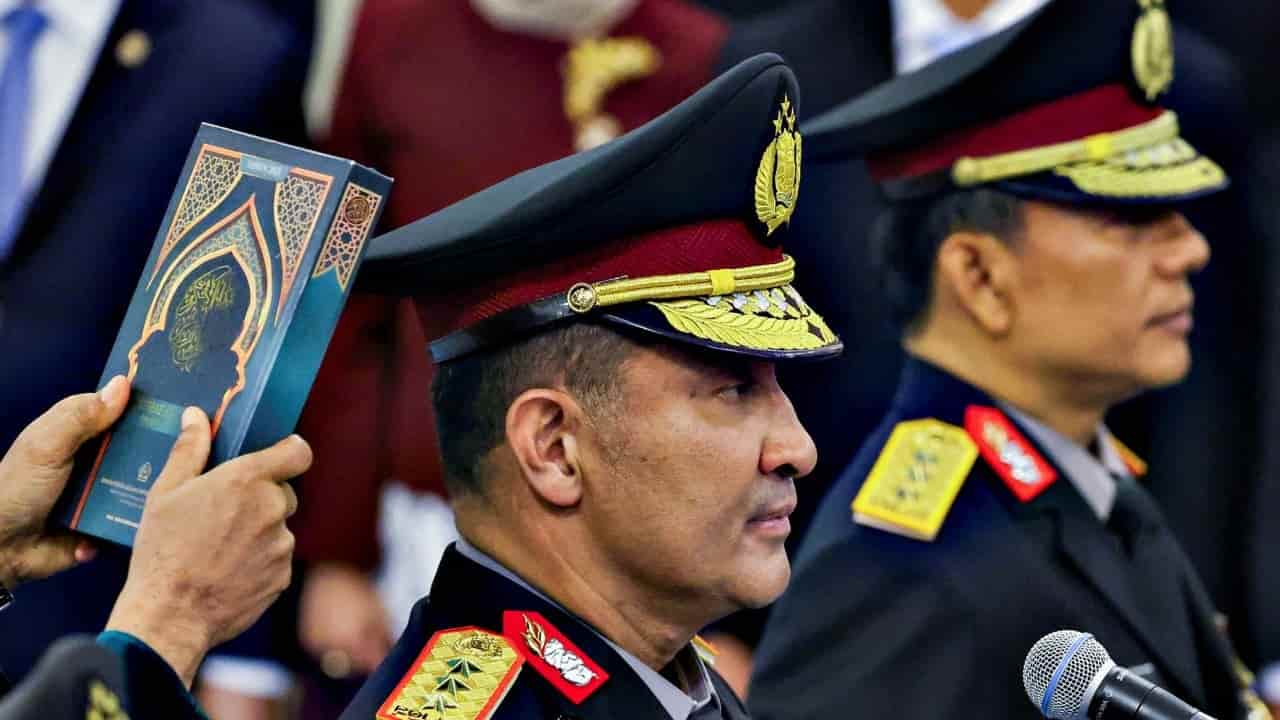
- Indonesia's new police chief, Suyudi Ario Seto, was appointed on Thursday.
- The government is considering reforms for the police force, including changes to its work culture and limits on officers holding public positions.
- Ferdy Sambo was sentenced to death for the premeditated murder of Police Brigadier Nofriansyah Yosua Hutabarat.
- Putri Candrawathi was sentenced to 20 years in prison for the murder.
- Richard Eliezer Pudihang Limiu, a junior officer, was sentenced to 18 months for his role in the murder.
Indonesia's new police chief, Suyudi Ario Seto, faces significant challenges in reforming the national police force, known as Polri, which has been plagued by scandals and a reputation for violence. Seto replaced Listyo Sigit Prabowo on Thursday as the government considers recommendations for reform, including changes to the force's work culture and limitations on officers holding external public positions.
The murder case of Police Brigadier Nofriansyah Yosua Hutabarat, 27, who was shot dead at the home of Ferdy Sambo, a high-ranking officer and head of internal affairs, brought the state of the police force into sharp focus. Following a four-month trial, Sambo was sentenced to death for premeditated murder. His wife, Putri Candrawathi, received a 20-year sentence, while her personal assistant Kuat Ma’ruf was sentenced to 15 years, and Chief Police Brigadier Ricky Rizal Wibowo to 13 years.
Richard Eliezer Pudihang Limiu, a junior officer and Sambo's bodyguard who admitted to firing shots into Hutabarat on Sambo's orders, received an 18-month prison sentence. He was later permitted to remain in the police force after an ethics committee review.
Jacqui Baker, a lecturer in Southeast Asian politics, noted that while a death sentence for a police officer was shocking, the judiciary likely responded to public sentiment. She highlighted the pivotal role of Hutabarat's family in raising awareness and pushing for accountability, stating, "The public saw themselves in that family." The family defied orders to bury their son and shared footage of his injuries on social media, demanding answers about the events at Sambo's house. Andreas Harsono, a researcher at Human Rights Watch, commented that prosecuting and convicting a police general is rare in Indonesia, with fewer than 10 such cases in recent history, suggesting that Sambo's conviction serves as a public reminder that "even a general is not above the law in Indonesia."