Key facts
- Houthi forces advanced rapidly along Yemen's Red Sea coast, capturing territory.
- Iran's IRGC congratulated the Houthis on their gains, calling it a 'divine triumph'.
- Over 200 prisoners were freed by Houthis in newly captured regions.
- Nearly 50,000 Yemeni civilians have been displaced by the fighting.
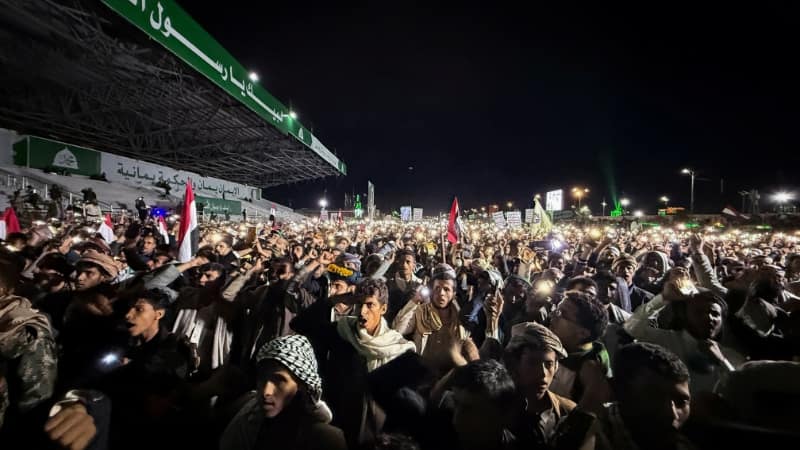
Iran-aligned Houthi forces have made significant advances along Yemen's Red Sea coast, capturing territory and raising concerns about their ability to control the crucial Bab al-Mandeb Strait. The offensive, which Iran's Islamic Revolutionary Guard Corps (IRGC) has hailed as a 'divine triumph,' puts U.S. President Donald Trump in a difficult position as he navigates the ongoing conflict with Iran and faces pressure from rising oil prices. Houthi fighters reached the island of Perim on Friday, situated in the middle of the strait between Yemen and Africa. This development is concerning for Saudi Arabia, which has been rerouting much of its oil from Red Sea ports since the war effectively closed the Strait of Hormuz. The advance also occurs as Trump grapples with low approval ratings and seeks a resolution to the conflict, having recently implemented an economic pressure campaign against Iran. The U.S. administration views the potential closure of the strait as a threat to global trade and energy prices. However, engaging in direct military conflict with the Houthis, who have withstood previous attacks, presents a dangerous new mission for a U.S. military already stretched by the war with Iran. Saudi Arabia's Crown Prince Mohammed bin Salman reportedly requested U.S. military assistance, but Washington indicated it would not intervene directly for now, offering intelligence support instead. If the Houthis were to close the Bab el-Mandeb, it could constrain an additional 7% of global petroleum supplies and about 12% of global trade, compounding the disruption caused by earlier actions in the Strait of Hormuz. Analysts suggest Trump faces a choice between committing U.S. forces and air-defense munitions to push back the Houthis or allowing Saudi Arabia and its allies to confront them alone. Taking on the Houthis would also mean ending a previous deal where the U.S. agreed to halt bombing in exchange for a cessation of strikes on Red Sea shipping. Yemen's Houthis said on Saturday that they had freed more than 200 of their members detained by Saudi-backed pro-government forces in areas they captured in recent days. Houthi official Abdelkader al-Murtada said they were prisoners of war who had spent up to eight years in jail before the Iran-backed group launched a rapid offensive to take over areas bordering the Bab al-Mandab Strait. The Houthis had already controlled large parts of northern Yemen, including most of the country's populated areas and the major cities of Sanaa and Hodeida, before making dramatic advances last week.