Key facts
- Elite PhD graduates in China are increasingly choosing high school teaching roles.
- This trend is driven by an oversupplied academic job market and competition for university posts.
- Shenzhen Middle School hired five PhDs, including graduates from Tsinghua and Cambridge.
- China's annual PhD graduates increased 82% to 97,200 in 2024.
- Annual domestic university job openings are estimated at 35,000, creating a three-to-one supply-to-demand ratio.
- Top high schools offer stability, social respect, and professional growth, making them attractive to PhDs.
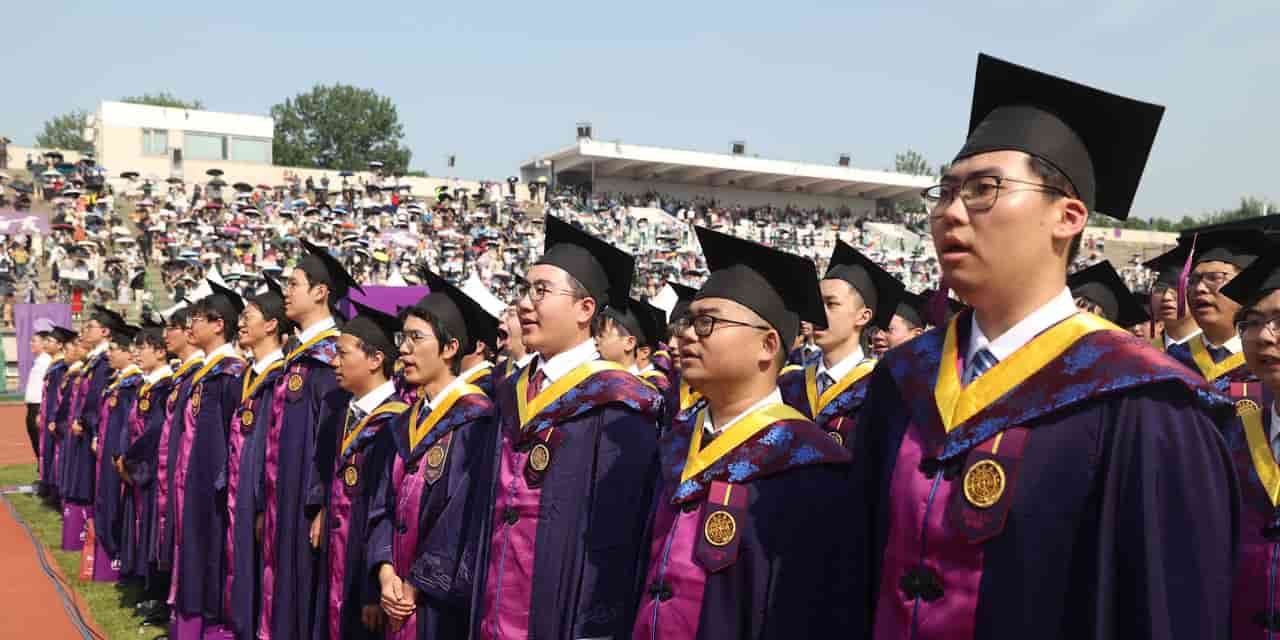
A growing number of doctoral graduates from elite global and domestic universities are bypassing traditional careers in academia and research to take jobs as secondary school teachers in China's major cities. This trend is driven by an oversupplied labor market and fierce competition for university posts.
At Shenzhen Middle School, all 21 prospective hires hold master's degrees or higher, including five PhDs. These hires include a Tsinghua electrical engineering PhD teaching math, a Cambridge electrical engineering PhD teaching physics, a Fudan materials physics PhD for chemistry, and a University of Chinese Academy of Sciences PhD recruited as a math Olympiad coach. The school currently employs more than 100 teachers with doctoral degrees.
This phenomenon extends to other tier-one and tier-two cities. In 2021, the Affiliated High School of South China Normal University hired nine PhDs or postdocs from top institutions, and in 2025, Suzhou High School hired 10 Tsinghua/Peking graduates and eight with doctorates.
Qi Yifan, a Tsinghua optical engineering PhD joining Tianjin No.1 High School, defended his decision on social media, stating that helping hundreds of students enter top universities could yield a greater societal contribution than working in an isolated research post.
Lucrative compensation is a major factor. In 2019, Shenzhen’s Longhua District offered starting annual salaries of 260,000–280,000 yuan, plus a 200,000 yuan bonus for full-time PhDs and priority access to talent housing. Guangzhou offers settlement subsidies of 100,000 to 200,000 yuan for incoming PhDs, while Shengzhou in Zhejiang provides housing subsidies up to 1.05 million yuan for PhDs from Tsinghua and Peking.
Behind this trend is a stark macroeconomic reality: China’s annual PhD graduates surged 82% from 53,700 in 2014 to 97,200 in 2024, while enrolled doctoral students more than doubled from 312,700 to 676,300. Traditional employment avenues like universities and research institutes face severe imbalance; an estimate in 2023 put domestic university jobs at only about 35,000 annually, resulting in a supply-to-demand ratio of nearly three to one for academic posts.
Universities widely enforce an up-or-out tenure-track system, subjecting young PhDs to intense pressure to publish papers and secure grants within a 3-6 year evaluation period, with failure leading to transfer or dismissal. While private sector jobs in tech offer high volatility, positions at premium high schools provide stability, social respect, and professional growth, making them an attractive safe haven for elite PhDs.
Xiong Bingqi, director of the 21st Century Education Research Institute, said the public should respect this mutual choice, noting that securing a teaching job at a top high school is now a strong career outcome for elite PhDs. He also cautioned that as local governments reduce teacher recruitment due to shifting demographics, high-credentialed graduates will inevitably face underemployment unless demand for R&D roles increases. For basic education, attracting top-tier PhDs aligns with a push for higher quality schooling, as these educators bring robust research backgrounds, broad perspectives, and rigorous analytical skills.