Key facts
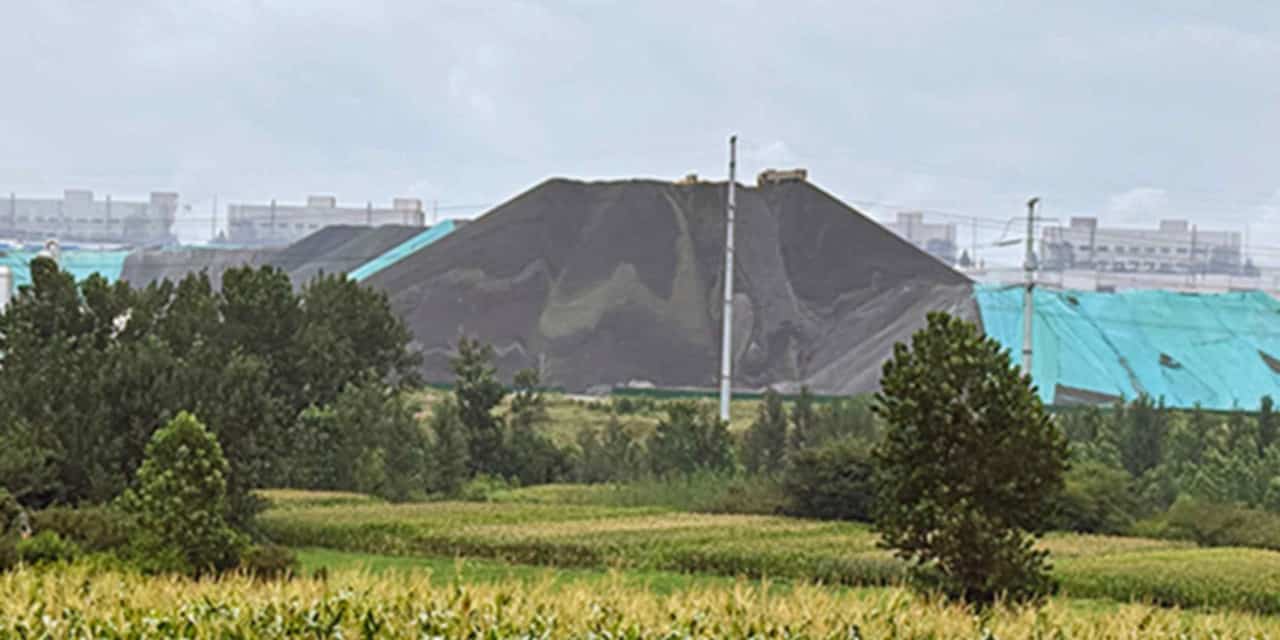
- A mountain of nickel slag, covering over 200,000 square meters and reaching 40 meters high, looms over Jiaoshan village in Shandong province.
- The slag is a byproduct of smelting operations by Shandong Xinhai Technology Co. Ltd., China's largest nickel-iron alloy producer.
- The stockpile is located 1.2 kilometers from the Jiaoshan Reservoir, a primary irrigation source.
- Villagers report black ash coating their property and yellow-brown runoff during downpours.
- Xinhai Technology General Manager He Zhongyu estimated the stockpile at roughly 5 million tons.
- Environmental documents suggest nearly 6 million tons of annual slag output, casting doubt on the company's total estimate.
A colossal mountain of industrial waste, primarily nickel slag, looms over Jiaoshan village in China's eastern Shandong province, posing environmental risks to local communities and farmland. The stockpile, a byproduct of smelting operations by Shandong Xinhai Technology Co. Ltd., China's largest nickel-iron alloy producer, covers over 200,000 square meters and reaches 40 meters high.
Villagers report that black ash frequently coats their roofs and farmland, and yellow-brown runoff flows down during downpours, raising fears of a catastrophic landslide. The slag heap sits just 1.2 kilometers from the Jiaoshan Reservoir, a primary irrigation source for local communities.
Local authorities contend the land is designated for industrial use and the slag is temporary storage, exempting it from environmental impact assessments. He Zhongyu, Xinhai Technology's General Manager, estimated the stockpile at roughly 5 million tons and claimed proper hardening and anti-seepage treatments were implemented. However, environmental documents showing nearly 6 million tons of annual slag output cast doubt on the company's total estimate.
Notably, neither Xinhai Technology nor the Junan county ecology branch provided acceptance documents or verification for their anti-seepage claims. The company also failed to publicly disclose storage location and environmental testing data, a requirement under the Ecological Environment Code effective August 15, which mandates protective measures and transparency for solid-waste disposal. Authorities are now requiring the company to explore alternative uses and monitor heap height and surrounding impacts.
This crisis follows prior violations. In June 2025, Shandong's environmental watchdog reported public complaints about an open-air waste dump lacking anti-seepage measures that discharged wastewater directly into a river. The site belonged to Xinhai subsidiary Linyi Rongfa New Material Co. Ltd., which was fined and ordered to build compliant facilities in late 2024. Over 100 trucks reportedly worked around the clock for a month in early 2025 to relocate millions of tons of slag to the current site.
Xinhai relies on subsidiaries to crush the slag into machine-made sand for concrete, with a combined processing capacity of 11 million tons per year. He attributed the backlog to a downturn in real estate and infrastructure, but deeper market examination reveals that the nickel-slag sand boom (2018–2020) spawned illicit practices, including adulteration with steel slag, an unstable byproduct forbidden in concrete aggregates. The processing of nickel smelting waste has long been an environmental pain point, and while industry efforts to convert waste into construction materials have been made, a lack of unified execution standards led to volatile product quality and rampant adulteration. In 2024, the Ministry of Industry and Information Technology approved two distinct industry standards for nickel-slag sand use, sparking a technical debate.