Key facts
- Nth Cycle signed a $1 billion offtake agreement with Glencore for recycled battery minerals.
- The deal aims to bolster Western supply chains for critical battery materials.
- Nth Cycle plans a public listing later this year.
- The company previously announced a $1.1 billion offtake agreement with Trafigura.
Metals refining startup Nth Cycle has secured a $1 billion offtake agreement with Glencore for critical minerals derived from recycled batteries, according to a Reuters report. The deal, signed on Tuesday, aims to bolster Western supply chains for essential battery materials ahead of Nth Cycle's planned public listing later this year.
The US Export-Import Bank plans to fund up to $7 billion worth of critical minerals and energy projects in Argentina, as part of a push to deepen economic cooperation between Washington and Buenos Aires. This funding, to be announced during the United Nations General Assembly, seeks to increase US access to Western Hemisphere energy and critical minerals.
Under Argentine President Javier Milei, ties between the US and Argentina have deepened, supported by US backing for Milei's market-oriented reforms and a preferential trade and investment agreement announced in February. Argentina possesses significant deposits of lithium, shale oil, and other commodities, and the US funds will enable companies operating there to purchase equipment from American manufacturers.
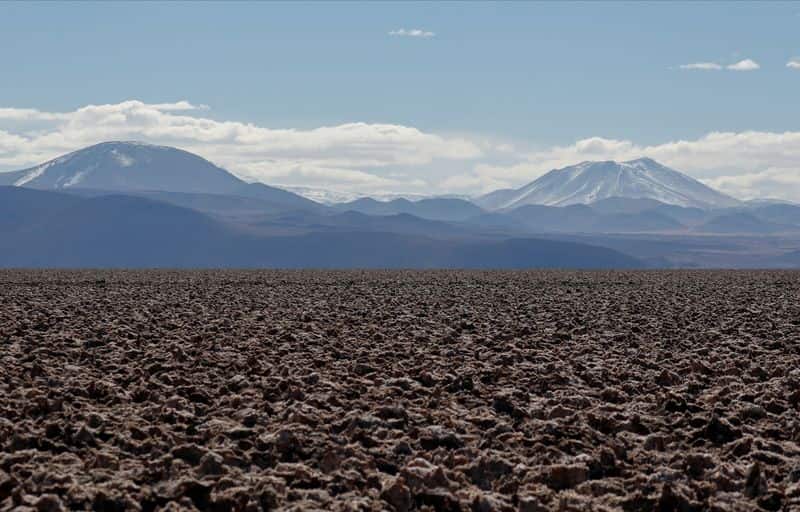
Argentina, along with Chile and Bolivia, forms the "lithium triangle," holding substantial global reserves of lithium. Major companies like Rio Tinto, BHP, and Chevron are already active in Argentina. Milei's government has introduced an incentive regime known as RIGI to attract foreign capital into strategic sectors.
This new agreement with Glencore follows a previously announced 10-year offtake agreement with Trafigura, valued at approximately $1.1 billion, for refined nickel and lithium carbonate from black mass. Nth Cycle's proprietary Oyster system technology is designed for modular deployment to reduce capital intensity and build times compared to traditional refineries. The company is positioning itself to address the critical minerals bottleneck, currently dominated by China's purification dominance.