Key facts
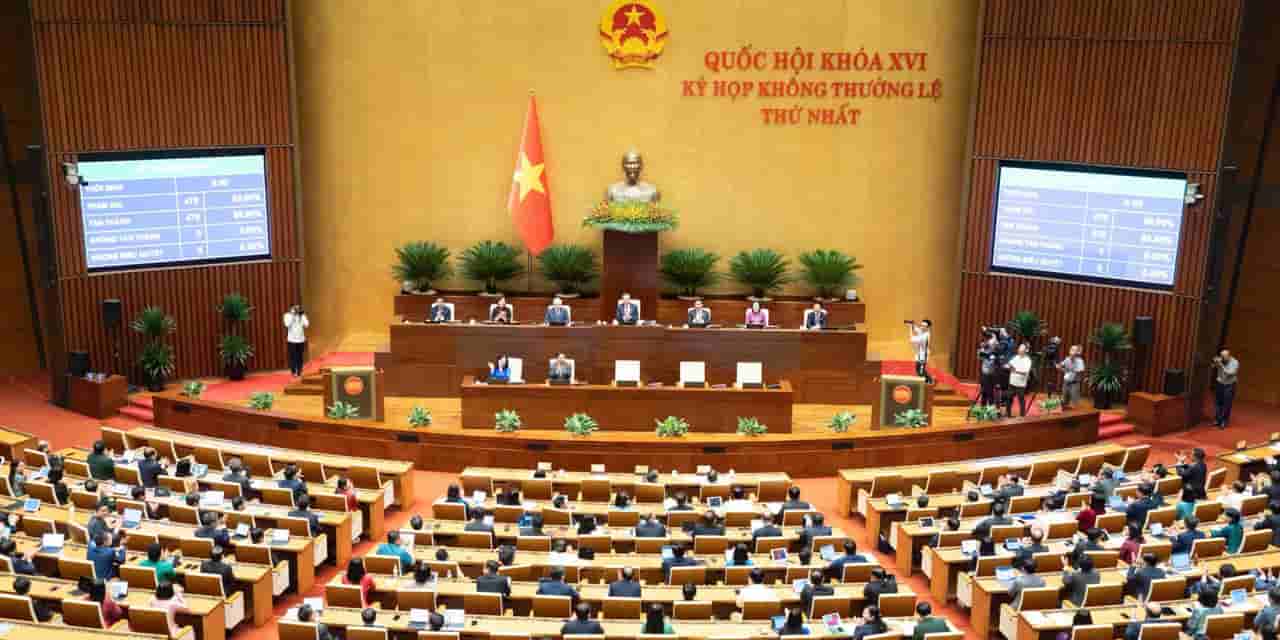
- Vietnam's parliament approved an agreement for its first nuclear power project, Ninh Thuan 1.
- Russia's Rosatom will build the 2.4-GW plant, featuring two VVER-1200 reactors.
- The project was revived after an eight-year suspension due to cost and safety concerns.
- The government aims to bring initial nuclear capacity online by 2030-2031.
- The decision is driven by energy security needs and commitments to achieve net-zero emissions by 2050.
Vietnam's parliament has approved an agreement for its first nuclear power project, the Ninh Thuan 1 plant, marking a significant step in the country's revived nuclear energy ambitions. The project, assigned to Russia's state nuclear corporation Rosatom, will feature two VVER-1200 reactors with a combined capacity of 2.4 gigawatts. This development comes as Vietnam seeks to bolster its energy security amid surging electricity demand driven by rapid industrial growth and faces challenges from power supply disruptions and rising fossil fuel costs.
The intergovernmental agreement was signed in Moscow on March 23, 2026, during an official visit by Vietnamese Prime Minister Pham Minh Chinh, in the presence of Russian Prime Minister Mikhail Mishustin. The deal establishes the legal framework for the construction, which will be based on the Leningrad Nuclear Power Plant-2 design in Russia. The VVER-1200 is a Generation III+ pressurized water reactor known for its enhanced safety systems.
Vietnam initially approved a nuclear power development program in 2009, planning two plants (Ninh Thuan 1 with Russia and Ninh Thuan 2 with Japan) for a combined capacity of 4 gigawatts. However, this program was suspended in 2016 due to budget constraints and safety concerns following the Fukushima Daiichi accident. The program was formally revived in late 2024 through a National Assembly resolution, driven by long-term energy security requirements, industrial expansion, and commitments to achieve net-zero emissions by 2050. While Russia agreed to proceed with Ninh Thuan 1, Japan declined participation in Ninh Thuan 2 due to tight construction timelines set by Vietnam. The country is targeting the commissioning of its first nuclear units between 2030 and 2035.