Key facts
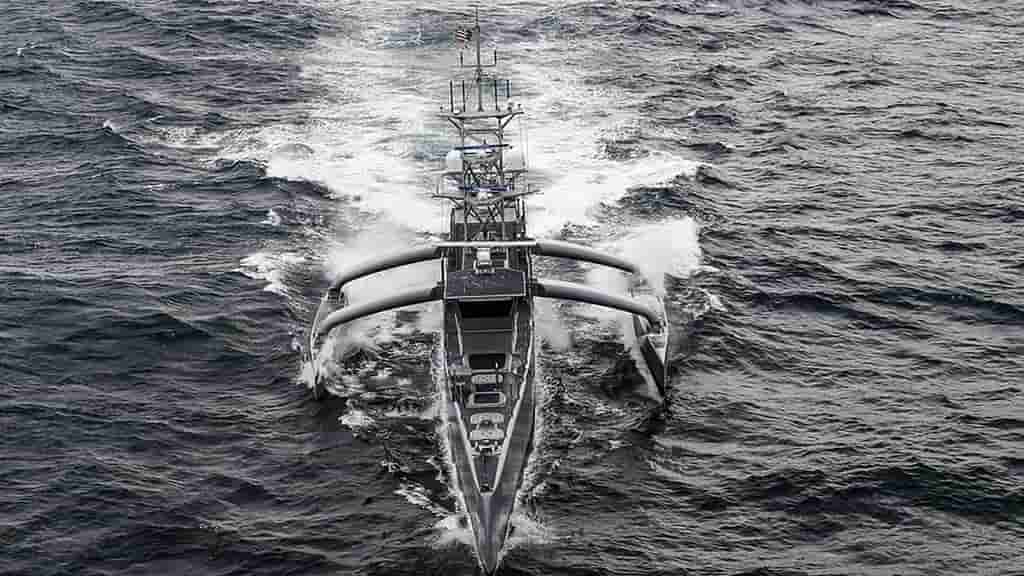
- The US Navy has created a new command to integrate its drone systems into a fighting force.
- The new command, established September 24, will develop doctrine and tactics for unmanned systems.
- The US aims to deploy swarms of lethal autonomous drones in the Taiwan Strait by August 2025.
- US officials have referred to this drone deployment strategy as an 'unmanned hellscape'.
- The Pentagon has allocated approximately $1 billion to fund the initial phase of the 'Replicator' initiative.
- The US Navy's Unmanned Surface Vessel Squadron 3, 'Hell Hounds,' received its first four Global Autonomous Reconnaissance Crafts (GARC).
The US Navy has established a new command dedicated to integrating its growing fleet of aerial, surface, and underwater drones into a cohesive fighting force. This initiative, known as the Robotic and Autonomous Systems Warfighting Development Centre, was formally established on September 24 in Virginia. Its purpose is to develop doctrine and tactics for unmanned systems, train sailors, and test their operational capabilities under realistic conditions.
This development is closely linked to the US's 'Replicator' initiative, which aims to deploy swarms of lethal autonomous drones in the Taiwan Strait by August 2025. US officials have described this strategy as creating an 'unmanned hellscape' intended to deter a potential Chinese attack on Taiwan. Captain Alex Campbell, maritime portfolio director of the Defense Innovation Unit, confirmed the target date, emphasizing that the program is focused on production and fielding systems to support the US Indo-Pacific Command.
The strategy involves networking these unmanned systems to form a powerful deterrent. The Navy's long-term goal is to develop a hybrid fleet of manned and unmanned craft, with the Replicator initiative's command and control software informing this effort. The sheer number and adaptability of the drones are designed to overwhelm adversaries.
The Pentagon has allocated approximately $1 billion for the initial phase of Replicator. The Navy has also created specialized units, such as Unmanned Surface Vessel Squadron 3, nicknamed the 'Hell Hounds,' which has received its first four Global Autonomous Reconnaissance Crafts (GARC). These vessels are expected to be integral to the Replicator network.
Beyond offensive capabilities, Replicator also includes developing counter-drone technologies, reflecting the anticipated interplay between offensive and defensive unmanned systems in future conflicts. The US and China are heavily investing in drone technology, potentially leading to an arms race. The success of Replicator could significantly shift the balance of power in the Indo-Pacific region.