Key facts
- The US Army is testing counter-drone technology at the US-Mexico border.
- Cartels are increasingly using drones for surveillance linked to smuggling and human trafficking.
- The military detected 378 drone incursions in the 30 days prior to the exercise.
- The US military has used lasers to down 11 cartel drones since August.
- The exercise aims to replicate rapid innovation cycles observed in the Ukraine war.
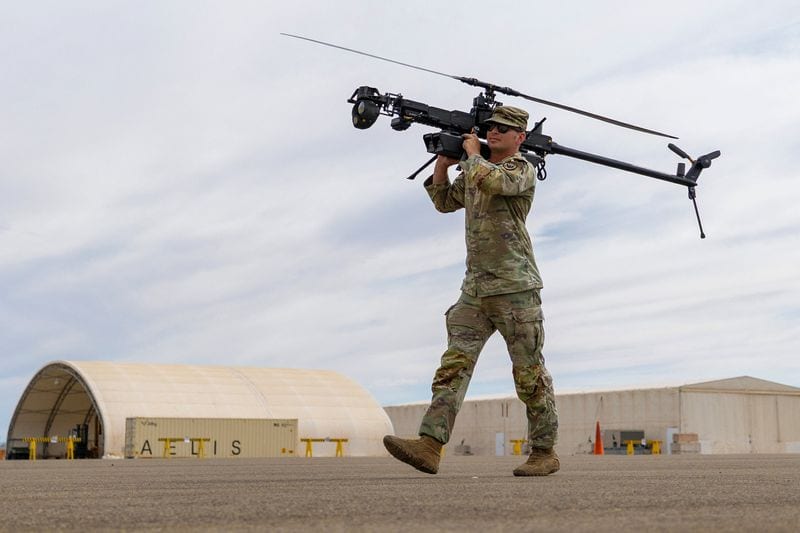
The US Army is conducting tests of counter-drone technology near the US-Mexico border, responding to a growing threat from cartels utilizing unmanned aircraft for surveillance and illicit activities. The exercise, held in September at Falcon Peak, Arizona, involved demonstrations of various technologies including radars, interceptor drones, and automated gun systems aimed at detecting, tracking, and neutralizing small drones.
Brigadier General Brian Filler, deputy commander for operations at Joint Task Force Southern Border, stated that the military had detected 378 drone incursions in the 30 days preceding the exercise, indicating an increasing trend. These drones are typically commercially available systems used by criminals for surveillance related to smuggling and human trafficking operations. Earlier in October, the military announced it had downed 11 cartel drones using lasers since deploying such technology along the southern border in August.
Military planners are drawing lessons from the conflict in Ukraine, where drones have significantly altered battlefield dynamics and spurred rapid innovation in both offensive and defensive capabilities. While acknowledging that cartel drones are less sophisticated than those used in active war zones, officials view the border as a critical environment for testing equipment and training soldiers under realistic conditions. The Pentagon's increasing reliance on venture-backed defense technology firms, which have seen substantial investment since Russia's invasion of Ukraine, was also highlighted. Companies like Anduril, Shield AI, and Saronic are developing and demonstrating technologies for military applications.