Key facts
- China's Z-10 attack helicopter is being prepared for operations at sea.
- Crews are training to fly the Z-10 from ships.
- The Z-10 entered Taiwan's air defense identification zone and crossed the median line.
- The Z-10 can carry up to 16 HJ-10 anti-tank missiles.
- The Z-10's design emphasizes low maintenance needs and sustainment costs.
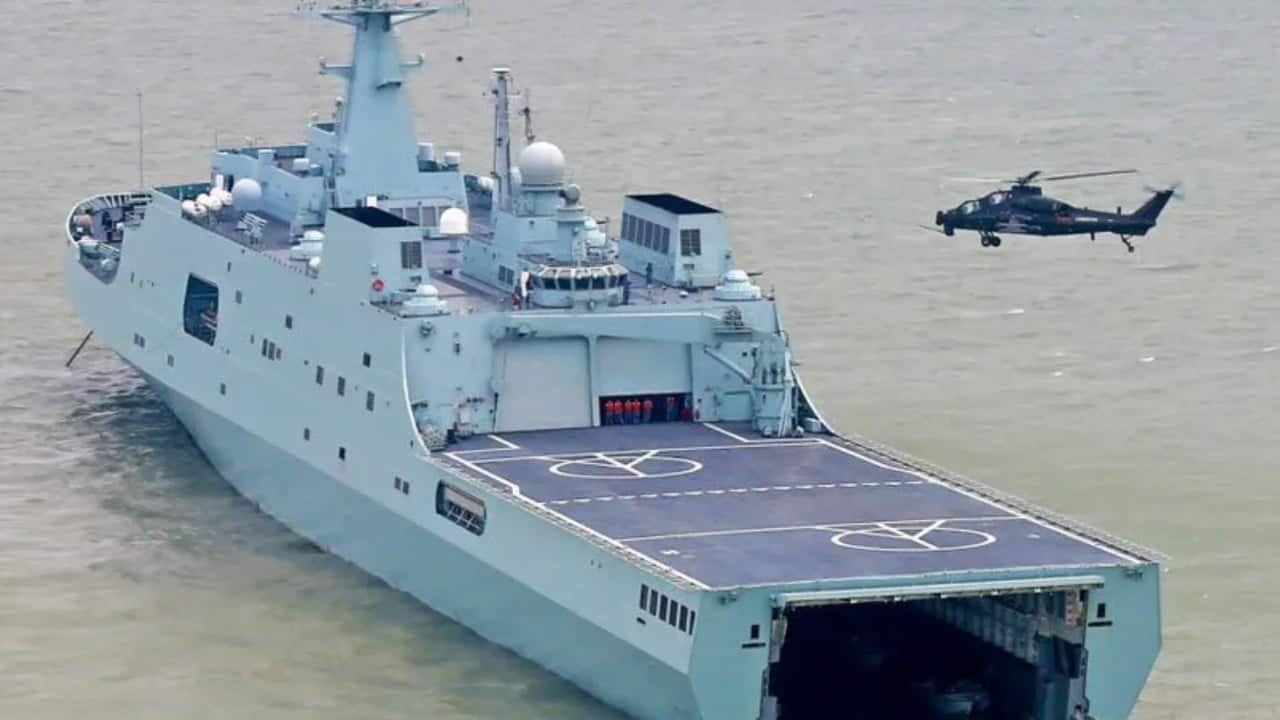
China's Z-10 attack helicopter, originally designed for tank hunting and ground troop support, is increasingly being adapted for naval operations. This strategic shift involves training crews to fly from ships and operate in sensitive maritime areas, potentially bolstering Beijing's capabilities for amphibious assaults, particularly concerning Taiwan.
The Z-10, manufactured by AVIC subsidiary Changhe Aircraft Industries Corporation, entered PLA Army service in late 2010. Its transition towards naval roles was evidenced by documented shipboard trials commencing in 2014. More recently, a Z-10 reportedly entered Taiwan's air defense identification zone (ADIZ) and crossed the informal median line dividing the Taiwan Strait, a move also accompanied by the presence of Ka-28 anti-submarine warfare helicopters from the PLA Navy Air Force.
This increased activity around Taiwan coincides with a U.S. Navy cruiser's transit through the Taiwan Strait. The Z-10's flight path suggests a possible launch from a major military heliport in Fujian Province, which has undergone significant expansion since 2019 and is strategically positioned for operations in the Strait and against Taiwanese-controlled islands.
Concurrently, the PLA Ground Force is conducting intensive low-altitude penetration training exercises with the Z-10, focusing on terrain-masked maneuvers to enhance survivability in contested airspace. These exercises are seen as preparation for potential Taiwan Strait scenarios. The Z-10, capable of carrying up to 16 HJ-10 anti-tank missiles, is complemented by the developing Z-21 heavy attack helicopter and the Z-20T Assault Eagle gunship, which combines transport with air-to-ground capabilities.