Key facts
- Ukraine's military is implementing changes to empower frontline commanders with more decision-making authority.
- The initiative aims to dismantle Soviet-era rigid, top-down command structures.
- A recent three-month leadership course trained 103 battle-hardened squad commanders.
- The course, run by the Military Institute of Kyiv National University and financed by Come Back Alive, has trained over 1,200 officers since the war began.
- New commander-in-chief General Mykhailo Drapatyi is prioritizing better command practices and soldiers' lives.
- Drapatyi has promoted commanders known for embracing NATO-style command culture.
Ukraine's military is undergoing a significant cultural and leadership transformation, moving away from Soviet-era rigid, top-down command structures to empower frontline commanders with greater decision-making authority. This shift is seen as crucial for improving effectiveness, preserving manpower, and gaining an advantage against Russia's forces.
Staff Sergeant Vitalii Tomchyshak, a former software developer, believes that empowering leaders like himself, who understand specific battlefield situations, is essential for victory. He noted that combat commanders are too often overruled by senior officers lacking ground-level insight.
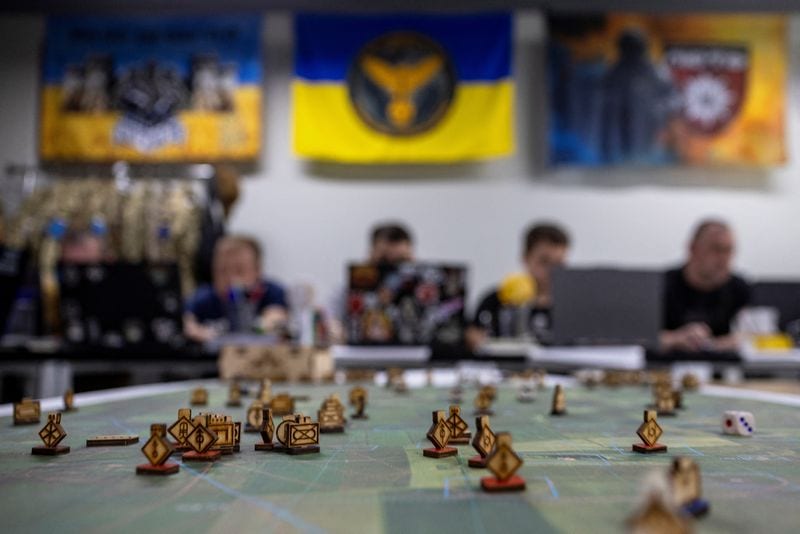
To foster this change, the Ukrainian military recently conducted an intensive three-month course for 103 battle-hardened squad commanders. This program, run by the Military Institute of Kyiv National University and partly financed by the charity Come Back Alive, aims to train a younger generation of leaders in infantry tactics, drone warfare, artillery, and logistics, enabling them to make autonomous decisions.
General Mykhailo Drapatyi, who took over as commander-in-chief in July, has pledged to promote better command practices and prioritize soldiers' lives. He recently met with senior sergeants to discuss empowering the non-commissioned officer (NCO) corps, recognizing their proximity to ordinary soldiers. Following the meeting, Ukraine's armed forces confirmed that work is underway to address issues including expanding NCO powers, clarifying command structures, and improving pay.
Critics of the previous commander-in-chief, Oleksandr Syrskyi, cited his tolerance for heavy losses and a heavy-handed style. In contrast, Drapatyi has promoted commanders known for embracing NATO-style command culture, such as Andriy Biletsky, who oversees critical parts of Ukraine's eastern defenses. The emphasis on preserving manpower is particularly important as Ukraine faces challenges in drafting frontline troops, a stark contrast to Russia's high human cost assaults.