Key facts
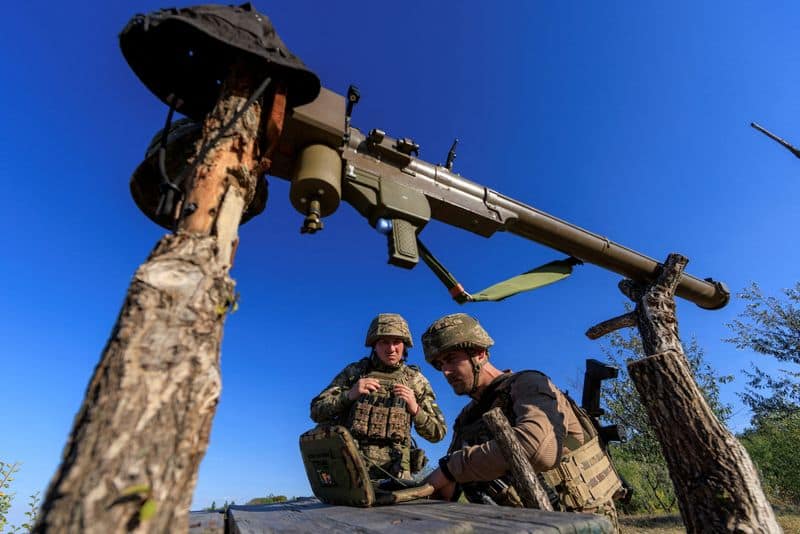
- Russia is deploying jet-powered Shahed drones that fly at altitudes of four to seven kilometers, making them difficult for Ukrainian portable rocket operators to intercept.
- These new drones fly at high speeds, reducing reaction time for Ukrainian air defense crews from minutes to seconds.
- Ukraine's air force spokesperson stated that only about 60% of these jet-powered drones are being intercepted, down from over 90% for earlier models.
- Russia launched 2,100 jet-powered attack drones and 136 missiles at Ukraine in the first three weeks of September, killing 288 people.
- Hundreds of thousands of square meters of warehouses and commercial properties have been destroyed in Ukraine due to drone and missile attacks.
- Ukraine faces a defense funding shortfall of $27 billion for the current year.
Russia has begun widely deploying jet-powered Shahed drones that fly at significantly higher altitudes and speeds, straining Ukraine's air defense capabilities. These drones, which can reach between four to seven kilometers above ground, are proving difficult for portable rocket operators to intercept, unlike previous propeller-driven models that flew at lower altitudes.
Since Russia started using these advanced drones this summer, hundreds have crashed into Ukrainian cities, causing widespread disruption to businesses, government operations, and daily life. In the first three weeks of September alone, Russia launched 2,100 jet-powered attack drones and 136 missiles, resulting in 288 civilian deaths, according to Prime Minister Sergii Koretskyi. In August, over 2,800 such drones were deployed.
Ukrainian air force spokesperson Yurii Ihnat stated that only about 60% of the new jet-powered drones are being intercepted, a sharp decline from the more than 90% interception rate for earlier models. The increased flight speeds also reduce reaction times for air defense crews from minutes to mere seconds. While more expensive than propeller versions, these drones are still cheaper than cruise missiles.
Russia has been systematically targeting Ukraine's economic infrastructure, including Black Sea grain ports, railways, and the steel and logistics sectors, destroying hundreds of thousands of square meters of property. This tactic comes as Russia's battlefield advances have stalled. Ukraine has also increased its own strikes on Russian oil and fuel infrastructure and weapon production companies.
Fedir Venislavskyi, a lawmaker on parliament's security committee, noted that efforts are underway to develop effective defenses against the new drones, but mass production and other solutions will require time and significant financial resources. President Volodymyr Zelenskiy recently announced an unexpected defense funding shortfall of $27 billion for the current year, and Kyiv is seeking assistance from partners to cover the gap.