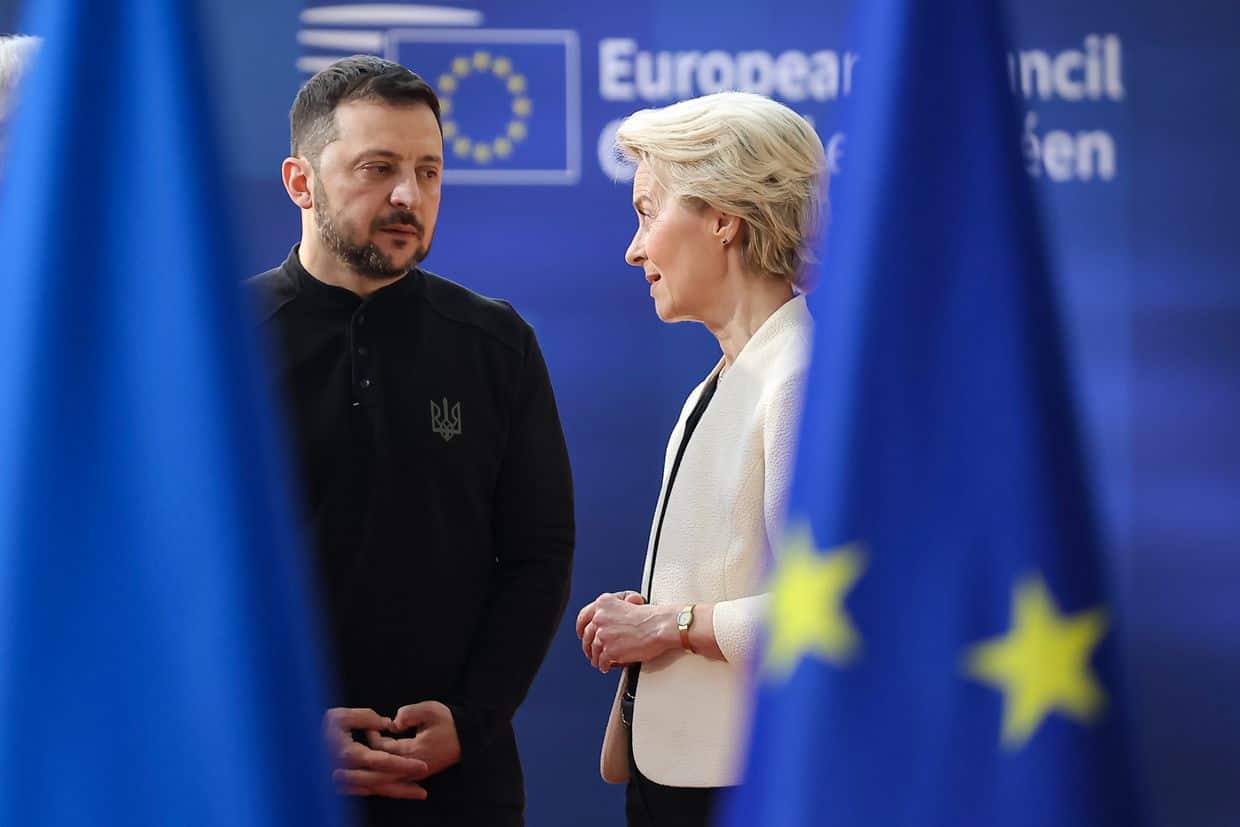
Key facts
- Ukraine completed 10 reforms required for EU funding.
- EU ambassadors approved 3 billion euros ($3.4 billion) for Ukraine on Sept. 23.
- The U.K. will not lift sanctions on Russian oligarchs Alisher Usmanov and Mikhail Fridman.
- The EU finalized a deal on Sept. 22 to extend sanctions against 3,000 individuals and entities, most of them Russian.
- Latvia pushed back against the delisting of Usmanov and Fridman.
- France reportedly backed efforts to delist the two Russian oligarchs after Azerbaijan made it a condition for releasing two French nationals.
The European Union has approved 3 billion euros ($3.4 billion) in financial support for Ukraine after Kyiv completed 10 reforms, part of the Ukraine Plan aimed at advancing EU membership and improving state institutions. EU ambassadors verified the reforms on September 23, clearing the way for the disbursement.
Separately, U.K. Prime Minister Andy Burnham informed Ukrainian President Volodymyr Zelensky that the U.K. will not follow the EU in lifting sanctions on Russian oligarchs Alisher Usmanov and Mikhail Fridman. Burnham emphasized during a meeting at the United Nations General Assembly that allies must maintain sanctions pressure on Russia to help end the war.
The EU finalized a deal on September 22 to extend sanctions against 3,000 individuals and entities, predominantly Russian, which include travel restrictions and asset freezes. However, the process faced internal divisions, with Slovakia and France initially delaying the unanimous decision. Latvia reportedly resisted the delisting of Usmanov and Fridman until the end, describing the situation as "unprecedented." France allegedly backed the delisting after Azerbaijan linked the release of two French nationals to this demand, though the reason for this specific condition remains unclear.