Key facts
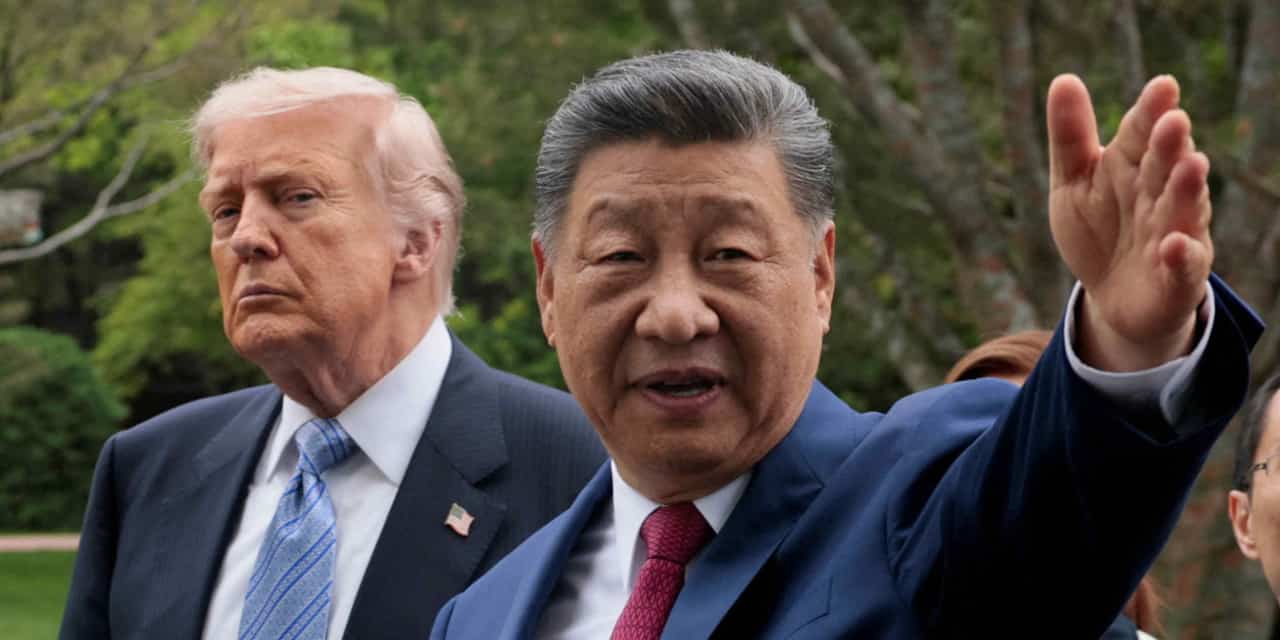
- Chinese President Xi Jinping is traveling to Washington for a summit with U.S. President Donald Trump.
- The summit follows an earlier meeting between the two leaders in Beijing.
- Tensions over tariffs, rare earth materials, and artificial intelligence are testing a trade truce.
- China's ambassador to the U.S., Xie Feng, stated that China's sovereignty, security, and development interests cannot be violated.
- Xie Feng outlined four "red lines" for China: the Taiwan question, democracy and human rights, development paths and systems, and development rights.
Chinese President Xi Jinping is en route to Washington for a summit with U.S. President Donald Trump, with the meeting scheduled for September 23, 2026. The summit comes as significant tensions over tariffs, rare earth materials, artificial intelligence, and other issues strain a trade truce set to expire in November. This marks the second summit between the two leaders this year, with the venue shifting from Beijing to Washington.
The White House is preparing a ceremonial welcome for Xi, including a state dinner. However, expectations for substantial outcomes are reportedly modest, following their previous meeting which was seen by many experts as prioritizing symbolism over concrete results. Discussions surrounding Taiwan, which China claims as its territory, are anticipated to be closely monitored, particularly given Trump's past description of arms sales to the island as a "very good negotiating chip."
Commentary from China's Communist Party newspaper, People's Daily, offered an upbeat perspective, calling head-of-state diplomacy the "guiding star" of the bilateral relationship and emphasizing "constructive strategic stability." In a separate piece, China's ambassador to the U.S., Xie Feng, delineated clear boundaries, stating that "China's sovereignty, security, and development interests cannot be violated" and that four "red lines"—the Taiwan question, democracy and human rights, development paths and systems, and development rights—cannot be challenged.
According to Chinese state news agency Xinhua, Xi is traveling with his wife, Peng Liyuan, along with top aide Cai Qi and Foreign Minister Wang Yi. He is expected to land at Joint Base Andrews in the early evening, where Trump himself is slated to greet him, a rare diplomatic gesture. Oxford Economics noted that the trip signals a move toward a more predictable U.S.-China relationship but suggested both sides are "buying time." The firm anticipates "narrow" and "reversible" outcomes, such as limited tariff relief, potential expansion of agricultural and aircraft purchase commitments, and pledges on AI safety and Iran, while leaving more contentious issues like tech rivalry and Taiwan unresolved.