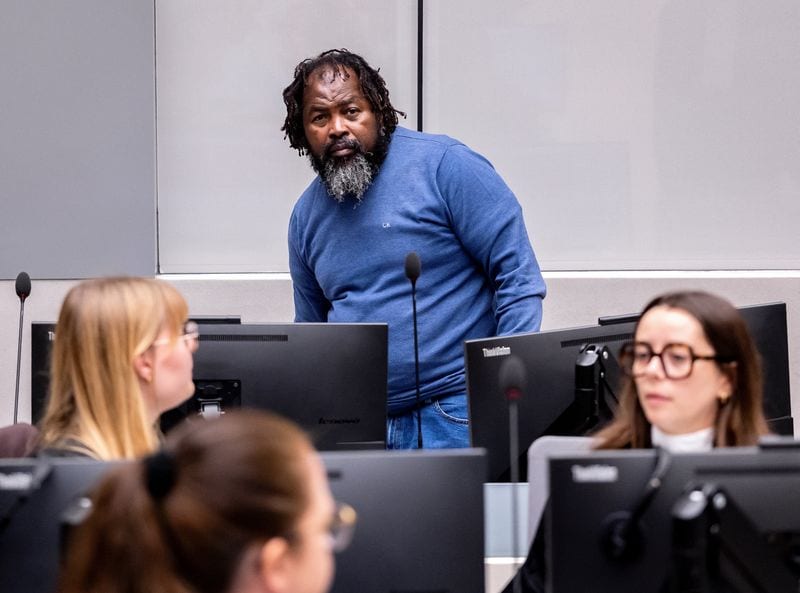
Key facts
- Mahamat Said Abdel Kani, a former Seleka militia leader, was convicted of torture as a crime against humanity by the International Criminal Court.
- Prosecutors alleged Kani ran a prison where suspected supporters of then-President Francois Bozize were beaten and tortured.
- Kani denied all charges.
- Two former militia leaders, Alfred Yekatom and Patrice-Edouard Ngaïssona, were convicted of war crimes and crimes against humanity by the ICC.
- Yekatom and Ngaïssona were sentenced to 15 and 12 years in prison, respectively, for attacks on civilians during the 2013-14 civil war.
- The ICC found Yekatom responsible for murder, torture, and persecution, among other crimes.
Judges at the International Criminal Court on Wednesday convicted Mahamat Said Abdel Kani, a former Seleka militia leader from the Central African Republic, for torture as a crime against humanity. Prosecutors had stated that Kani ran a prison where suspected supporters of then-President Francois Bozize were beaten and tortured. Kani denied all charges.
In a separate case, two former leaders of the predominantly Christian Anti-Balaka militia in the Central African Republic, Alfred Yekatom and Patrice-Edouard Ngaïssona, were convicted of multiple war crimes and crimes against humanity by the International Criminal Court. They received prison sentences of 15 and 12 years, respectively, for their roles in brutal attacks against civilians, primarily from the country’s mainly Muslim Seleka population, during the 2013-14 civil war. The ICC's Trial Chamber V found Yekatom responsible for crimes including murder, torture, forcible transfer and deportation, directing an attack against a building dedicated to religion, and persecution. Ngaïssona was convicted for aiding and abetting many of the same crimes, including persecution, forcible displacement, and cruel treatment, and for targeting Muslims based on the Anti-Balaka's perception of collective guilt for Seleka abuses.