
Key facts
- AUO and Innolux are developing glass-core substrates for advanced AI chip packaging.
- Nvidia is reportedly investigating glass substrates for future AI processors.
- Glass offers greater flatness, better dimensional stability, and favorable electrical characteristics compared to organic substrates.
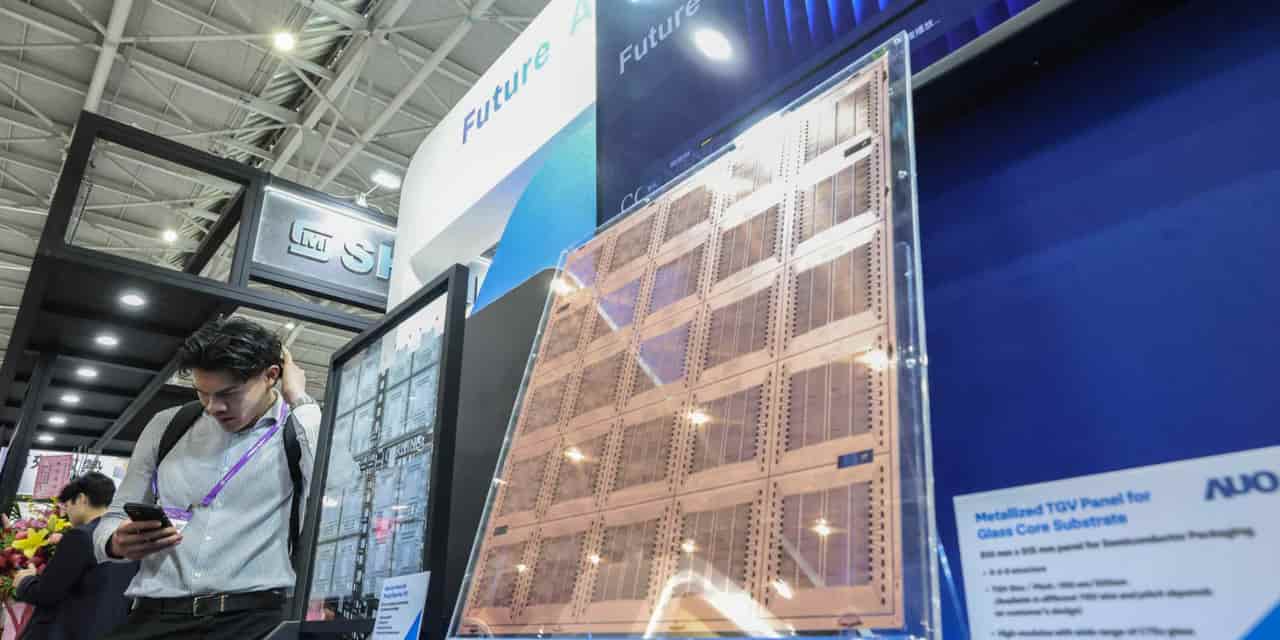
- AUO and Corning demonstrated a 510 × 515mm glass-core substrate at Semicon Taiwan.
- Glass substrates face manufacturing obstacles including process yields and via metallization.
Taiwanese display panel manufacturers AUO and Innolux are investing in glass-core substrates as a potential next-generation material for advanced AI chip packaging. This development comes as Nvidia is reportedly exploring the use of glass substrates for its future AI processors, aiming to overcome the limitations of current organic packaging materials.
Glass offers advantages such as greater flatness, better dimensional stability, and favorable electrical characteristics, which could enable larger and more powerful AI accelerators with densely packed components. Its lower signal losses are also beneficial for increasing data transfer speeds.
AUO showcased a glass-core substrate at Semicon Taiwan, a demonstration that combined Corning's semiconductor-grade glass with AUO's redistribution-layer technology. The company is developing pilot production lines for through-glass vias and redistribution layers as part of an NT$8.6 billion capital expenditure program. Innolux is also working on through-glass via technology and product validation.
However, significant manufacturing challenges remain for glass substrates, including achieving reliable process yields and customer qualification, before they can be widely adopted in commercial AI accelerators. Nvidia is reportedly targeting production as early as 2028, though this remains a reported goal.