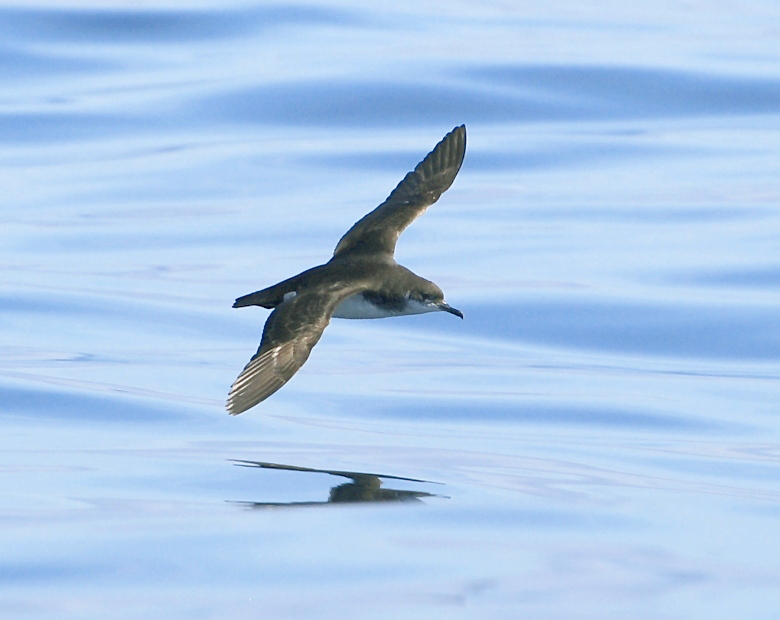
Key facts
- Manx shearwaters experience jet lag due to shifts in their internal clocks.
- Jet lag causes navigational errors by skewing their Sun compass.
- The study analyzed 3,688 foraging trips from 1,045 birds over 20 years.
- Observed time shifts were typically 10-15 minutes, with a maximum of about an hour.
- Navigational biases matched predictions for Sun compass errors.
- The average error for a bird flying 1,000 km east in a day was about seven degrees.
A new study published in Science reveals that Manx shearwaters, seabirds known for their long flights over the North Atlantic, experience jet lag. This occurs when their internal biological clocks become desynchronized with local time due to extensive travel across time zones. The research, led by Patrick Lewin of the University of Oxford, analyzed two decades of GPS tracking data from thousands of foraging trips. The findings indicate that this temporal disorientation affects the birds' ability to navigate using the Sun as a compass, leading to measurable deviations from their intended course.