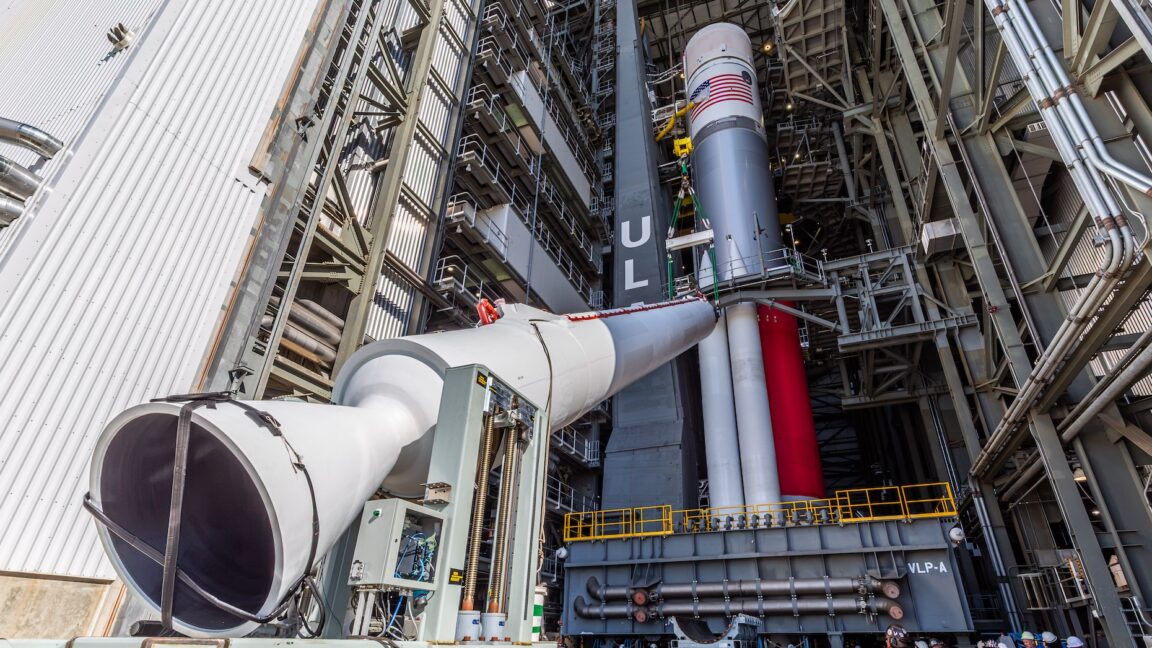
Key facts
- ULA plans to return its Vulcan rocket to flight on November 13.
- The mission will carry 40 satellites for Amazon's Leo broadband constellation.
- The launch will utilize six solid rocket boosters, an improved nozzle design, an extended payload fairing, and a shortened Centaur upper stage.
United Launch Alliance (ULA) announced on Wednesday that it plans to return its Vulcan rocket to flight on November 13, following a nine-month hiatus caused by a solid rocket booster anomaly. The upcoming mission is critical for ULA as it will launch 40 satellites for Amazon's Leo broadband constellation, the first of 38 Vulcan flights booked by Amazon. The rocket will fly with an improved nozzle design and a full complement of six solid rocket boosters. Space Force officials, ULA's primary customer, will closely scrutinize the mission after previous booster incidents impacted their confidence in Vulcan. The Pentagon has entrusted ULA's Vulcan rocket for roughly half of its major launches through the early 2030s.