Key facts
- UCLA analysis of Tanager-1 satellite data found 70 plumes at Turkey's 10 highest-emitting waste sites, Reuters reported.
- Average detected rates at those sites ranged from 841 kg to 7.4 metric tons an hour, per the UCLA analysis.
- Turkey ranks fifth globally for methane from solid waste, behind China, the US, Russia and Brazil, per Climate TRACE.
- Turkey's waste methane rose nearly 25% in the decade to 2024 versus 6.5% globally, per World Bank data.
- ISTAC head Fatih Ugur said about 30 hectares were left uncovered during pipe work on the measurement day.
- Turkey is not listed among participants in the 2021 Global Methane Pledge, Reuters reported.
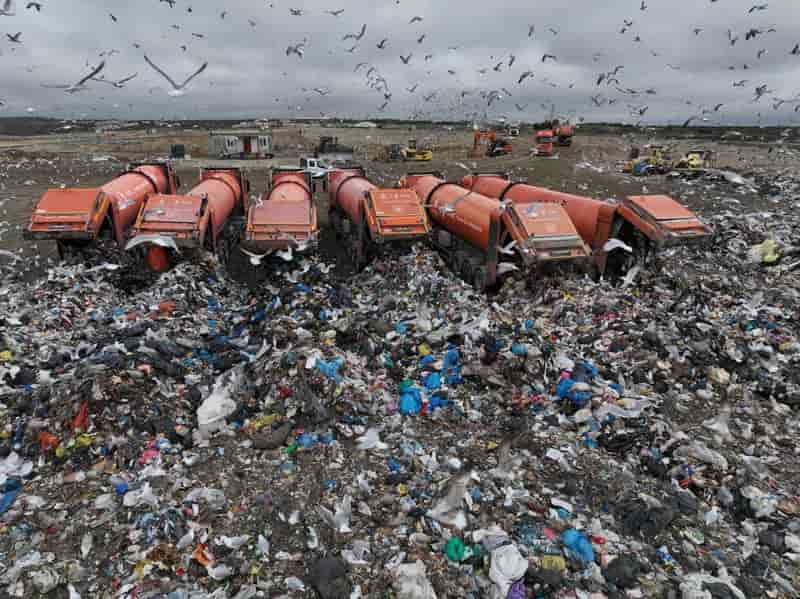
Satellite observations analyzed by researchers at the University of California, Los Angeles identified 70 methane plumes from Turkey's 10 highest-emitting waste sites, with average detected rates ranging from 841 kg to 7.4 metric tons an hour, Reuters reported on November 7, 2026. Three of the sites were around Istanbul, with others near Ankara, Izmir and Antalya, where Turkey hosts COP31 from November 9 to 20.
The analysis used public Carbon Mapper data from the Tanager-1 satellite between January 2025 and end-May 2026. It showed an average detected rate of about 7.4 tons an hour from the landfill west of Istanbul near Seymen, just below the highest-emitting landfill on a global list from 2025. Gas capture is widespread at Turkey's larger municipal landfills, indicating that collection systems alone do not prevent large releases.
Turkey's Environment Ministry said in response to a request for comment that the data were not from continuous measurements and could not be used to measure annual emissions at the Seymen landfill. It said the Zero Waste Initiative aims to reduce waste going to landfills, and that the national recovery rate for waste rose to 37.53% in 2025 from 13% in 2017.
At Seymen, ISTAC collects gas produced as buried organic material decomposes, while an energy company burns the gas to generate electricity at a plant opened in 2020. The facility produces about 22,000 megawatt-hours of electricity a month, according to a 2025 report by energy news website Enerji Gunlugu. The ministry said ISTAC benefits economically from efficient methane capture.
ISTAC official Aysen Erdincler disputed whether the satellite observations were representative, saying emissions typically ranged between 4 and 6 tons per hour, while a satellite reading of 12 tons per hour on one day had raised the average. ISTAC head Fatih Ugur said about 30 hectares of the landfill had been left uncovered on the day of that measurement while work was carried out on methane-collection pipes, and that low atmospheric pressure had also contributed to a higher concentration of methane. The site takes some 8,500 tons of household waste daily, from Istanbul's average total of 20,000 tons, according to ISTAC. Erdincler said methane leaks at the site were usually around 25%.