Key facts
- A Palestinian art center named Rommana, meaning pomegranate, operates in the occupied West Bank near Hebron.
- The center was founded in 2020 by artist Sarah Abu Madi to help children process experiences of settler violence and Israeli military raids.
- Children at the center use drawing to express feelings about the Israeli occupation, military raids, and settler violence.
- One child, 10-year-old Talia Sabah, drew birds flying from a cage to represent freedom.
- Another child, 11-year-old Karam Sabah, described how settlers took land his grandfather owned.
- The Rommana center serves approximately 600 children, with a goal to reach all 3,000 children in the neighborhood.
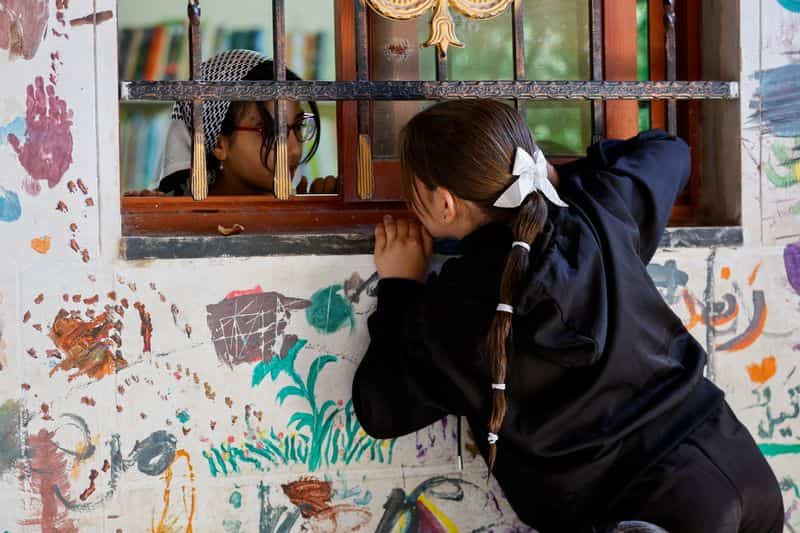
On the outskirts of Hebron in the occupied West Bank, a Palestinian artist named Sarah Abu Madi has established the Rommana art center, transforming her home into a space where children can process their experiences of settler violence and Israeli military raids through drawing. Founded in 2020, the center aims to provide a creative outlet for children to express their feelings and discuss the realities of living under Israeli military occupation.
Abu Madi guides the children by asking them about their emotions and thoughts following incidents such as settler actions or home raids. This week, the children were tasked with sketching their most important aspirations. Ten-year-old Talia Sabah depicted birds escaping a cage, symbolizing her wish for freedom from military presence and the ability to live life as she chooses. Eleven-year-old Karam Sabah shared a personal account of settlers occupying his grandfather's land, leading to arrests for anyone attempting to access it.
The Rommana studio is situated in Wadi Al-Samen, a Hebron neighborhood isolated by six military checkpoints, which frequently experiences military incursions and settler activity. The center, which began in a small storage room, now features colorful murals painted by the children. Its artwork has started to gain international exposure, with exhibitions held in Canada and another planned for Mexico. Abu Madi currently serves around 600 children and hopes to expand the program to include all 3,000 children in the neighborhood. She believes art offers a crucial space for children to dream and imagine a reality different from their current circumstances.