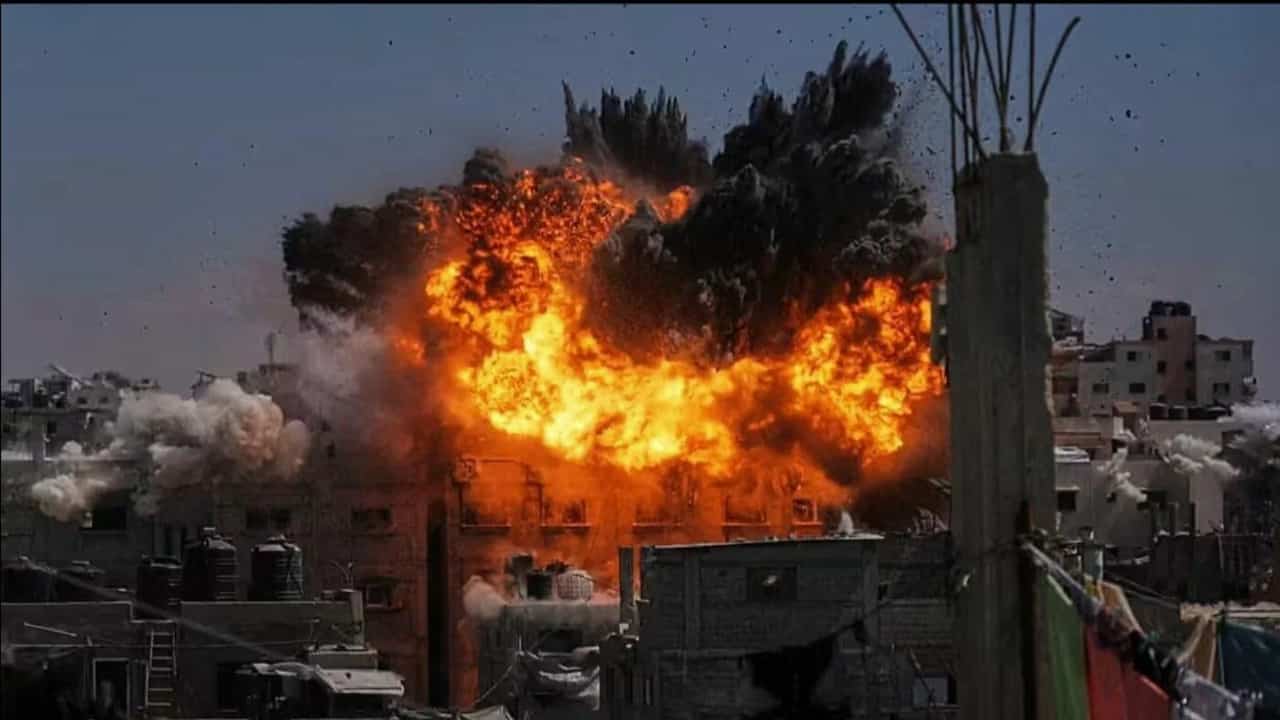
Key facts
- NAZA, a documentary by Israeli co-directors Yuval Abraham and Rachel Szor, details alleged Israeli military tactics in Gaza.
- The film features interviews with 24 intelligence personnel and soldiers whose identities are obscured.
- According to the film, Israeli military tactics allow for at least 20 civilian deaths per targeted Hamas operative.
- NAZA highlights the use of Lavender, an AI-powered database, to identify suspected Hamas operatives.
- The documentary won the Special Jury Prize at the Venice International Film Festival.
- Israeli Prime Minister Benjamin Netanyahu has called for the filmmakers to be stripped of their citizenship.
The documentary NAZA, co-directed by Israeli filmmakers Yuval Abraham and Rachel Szor, premiered at the Venice International Film Festival on August 24, nine days before the festival's start. The film, which received a 25-minute standing ovation and won the Special Jury Prize, aims to expose the systems behind alleged Israeli military actions in Gaza. It features interviews with 24 intelligence personnel and soldiers whose identities are concealed, with their voices digitally altered.
According to testimonies within the film, Israeli military tactics reportedly allow for at least 20 civilian deaths for each targeted Hamas operative. One whistleblower claims an approval for 500 civilian deaths for a single strike. The documentary also highlights the use of Lavender, an AI-powered database, to identify suspected Hamas operatives, despite an admitted margin of error.
NAZA's release has intensified interest, with mk2 films coming on board as sales agent and plans for its release in cinemas across Germany and the US. The film's content has sparked significant debate, particularly in Israel, where Prime Minister Benjamin Netanyahu and other politicians have demanded that Abraham and Szor be stripped of their Israeli citizenship. Prominent Israeli journalist Gideon Levy described the film as eliciting a "nationwide uproar" after years of "repression, denial and lies."
The filmmakers have stated that the violations covered in NAZA have been reported by Palestinians for years, but are now attracting attention due to the film's cinematic power. They aim to reach Israelis who deny the extent of the conflict, Zionists worldwide, and indifferent global audiences. The film focuses exclusively on Gaza, depicting what it calls an "industrialised targeting system founded on collective punishment."