Key facts
- NASA's Nancy Grace Roman Space Telescope has enough fuel for at least 22 years of potential science operations.
- The observatory's original plan was to load enough propellant for a minimum of five years, with a potential five-year extension.
- A precise launch and first course correction maneuver consumed significantly less fuel than allocated.
- The telescope launched nine months ahead of schedule and lighter than planned.
- The Roman telescope is designed to be refuelable, though this is now less likely to be needed soon.
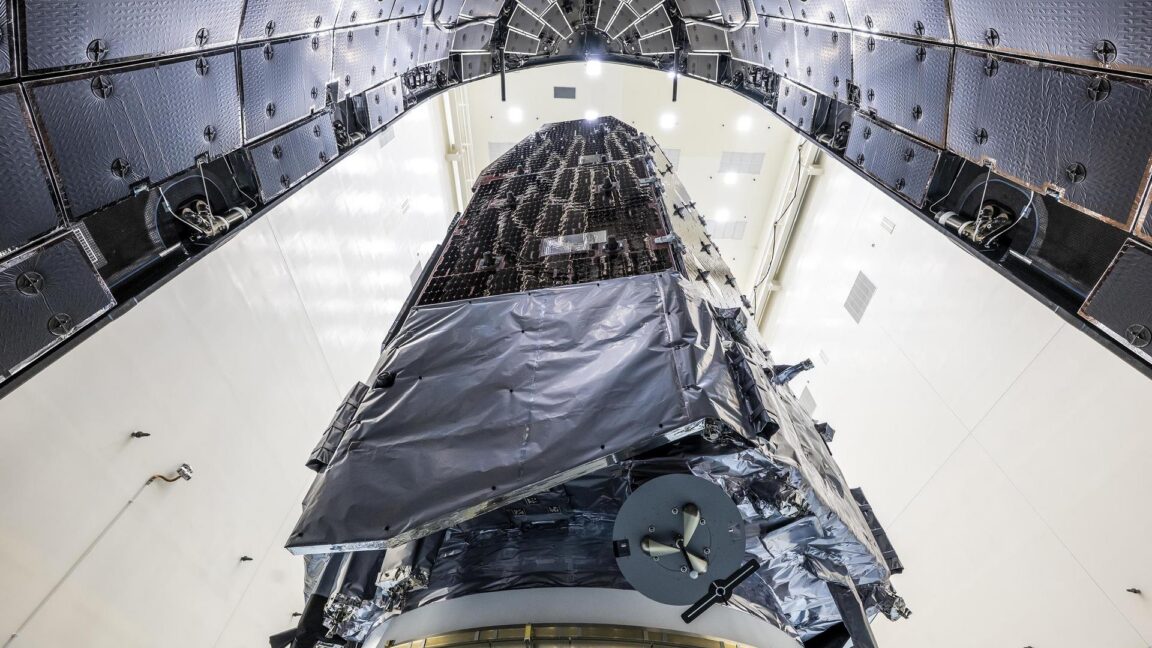
NASA's Nancy Grace Roman Space Telescope is on a trajectory so precise that its fuel is expected to last at least 22 years, more than double the initial five-year plan plus a potential five-year extension. This extended mission life is a result of a highly accurate launch by SpaceX and a first post-launch course correction maneuver that consumed significantly less propellant than anticipated.
Originally designed with enough propellant for a minimum of five years, with a conservative estimate for a five-year extension, the observatory's fuel load was boosted by a perfect launch and execution of maneuvers. Jamie Dunn, center director at NASA’s Goddard Space Flight Center, stated that the spacecraft has fuel for at least 22 years of potential science operations due to "exquisite planning by our orbital dynamics team, brilliant execution by the operations team, and a precise launch from SpaceX."
The Roman telescope launched August 30 from NASA’s Kennedy Space Center aboard a SpaceX Falcon Heavy rocket. Its trajectory will take it to a "quasi-halo" orbit around the Sun-Earth L2 Lagrange point, which it will reach in about three months. The first major thruster burn, conducted one day after launch, used only 40 pounds (18 kilograms) of hydrazine fuel, far less than the preflight allocation of 441 pounds (200 kilograms). Amit Kshatriya, NASA’s associate administrator, credited SpaceX for the precise placement, which will aid in long-duration performance and positioning capabilities.
The observatory's launch was nine months ahead of schedule and its final weight was approximately two tons less than the maximum allowable, allowing ground crews to load more hydrazine than initially anticipated. The telescope's total fueled weight was 20,224 pounds (9,173.5 kilograms), still below its weight limit. Alison Rao, the Roman propulsion lead at NASA Goddard, explained that propellant budgets are based on maximum values, but Roman's lower actual mass allowed tanks to be filled to capacity rather than just the amount needed for the 10-year requirement.
Future course corrections are also projected to use less fuel than planned, potentially saving even more for future science operations. The telescope's thrusters will perform station-keeping burns approximately every 28 days and will also be used to unload momentum from its reaction wheels. The mission's exceptional fuel savings reduce the immediate likelihood of needing a refueling mission, although the spacecraft was designed to be refuelable.