Key facts
- LandSpace achieved China's first successful land recovery of a reusable space launch rocket booster on August 19, 2026.
- The ZhuQue-3 rocket successfully delivered the Honghu 03 satellite into orbit.
- The ZhuQue-3 rocket is approximately 66 meters long and 4.5 meters in diameter.
- The ZhuQue-3 can reportedly loft up to 14.2 metric tons of payload into low Earth orbit.
- US intelligence officials are concerned about China's rapid progress in reusable launch technology.
- SpaceX has achieved 500 landings of its Falcon 9 first stage booster.
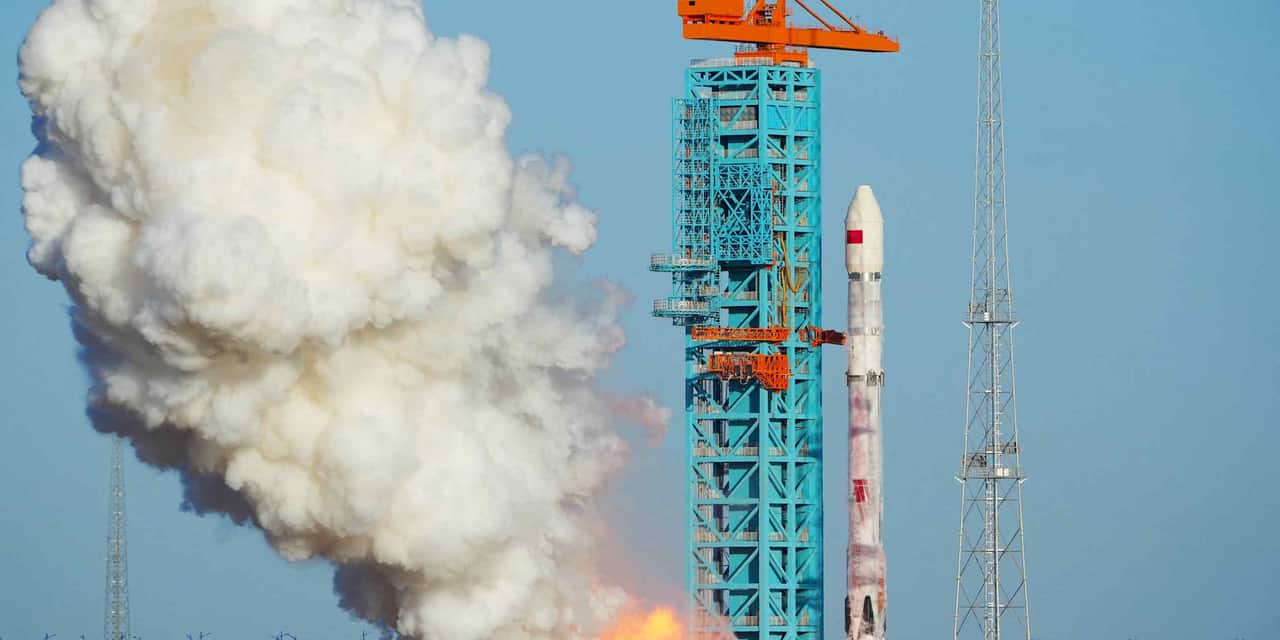
LandSpace, a Chinese firm, achieved a significant milestone on August 19, 2026, with the first successful recovery of a reusable space launch rocket booster on land. This event followed China's initial sea recovery of a reusable booster last month, conducted by the state-owned China Aerospace Science and Technology Corporation (CASC). The ZhuQue-3 (ZQ-3) Y2 reusable launch vehicle lifted off from the Dongfeng Commercial Space Innovation Pilot Zone in northwestern China, successfully deploying the Honghu 03 satellite into orbit. Approximately 137 seconds after liftoff, the first stage performed a soft touchdown at the LandSpace Landing Site#1 in Minqin County, Gansu Province.
This marks China's first successful recovery of an orbital-class launch vehicle's first stage using landing legs and its first booster recovery on land. LandSpace stated this mission verified the ZhuQue-3 system's reliability and its first-stage recovery capability. The ZQ-3 is approximately 66 meters long and 4.5 meters in diameter, capable of lofting up to 14.2 metric tons of payload into low Earth orbit. Its design, featuring fold-out landing legs and stabilizing fins, is notably similar to SpaceX's Falcon 9, which pioneered reusable booster technology. LandSpace claims the ZQ-3's stainless steel construction makes it cheaper to produce than its American counterpart.
US intelligence officials, including Brig. Gen. Brian Sidari of the Space Force, have expressed concern about China's rapid advancements in reusable launch technology, citing its potential to increase launch tempo and capability on orbit. SpaceX, the current global leader in space launch, has achieved 500 landings of its Falcon 9 first stage boosters. While other US companies are also developing reusable rocket technology, China's progress is seen as a significant factor in the growing competition between the two nations in space.