Key facts
- Margaret Hamilton, who coined the term "software engineering", died at 90.
- She led the development of on-board flight software for NASA's Apollo program.
- Her software safeguarded the Apollo 11 lunar module's landing.
- Hamilton received the Presidential Medal of Freedom in 2016.
- She was honored with a LEGO minifigure in the "Women of NASA" set.
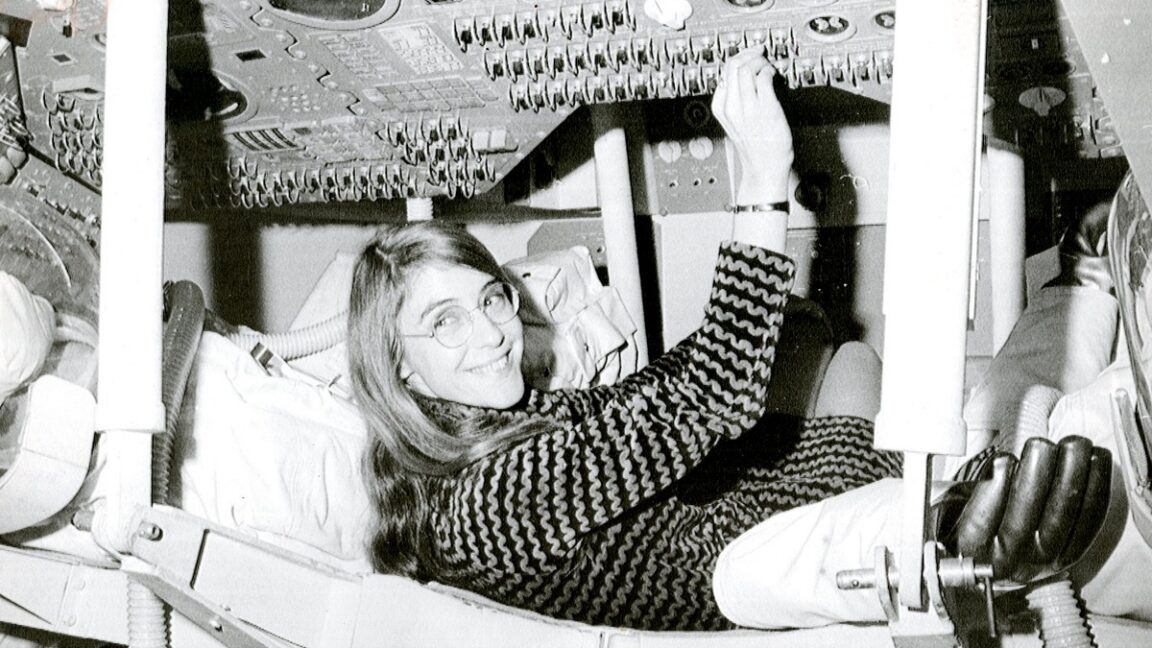
Margaret Hamilton, a computer scientist renowned for her pivotal role in the Apollo 11 moon landing, has died at the age of 90. Hamilton not only coined the term "software engineering" but also led the development of the critical on-board flight software for NASA's Apollo program in the 1960s.
Born in 1936, Hamilton graduated with a degree in mathematics. Her early work included programming for Edward Lorenz, a mathematician who pioneered chaos theory. Hamilton developed innovative methods for debugging, even manually editing code with a pencil. She later worked on the SAGE project for the U.S. Air Force, focusing on software reliability.
In 1965, Hamilton joined MIT's Instrumentation Lab, becoming the first programmer hired for the Apollo program. She was responsible for weaving copper wires around cores to store binary code, earning her the nickname "rope mother." Her daughter's accidental input of a pre-launch sequence during a simulator test led Hamilton to develop a safeguard, later dubbed the "Lauren bug," to prevent similar errors during actual missions.
During the Apollo 11 mission in 1969, Hamilton's foresight proved crucial. As the lunar module approached the Moon, the onboard computer became overloaded with tasks. Her implemented failsafe allowed the computer to prioritize essential functions, preventing the mission's abort and ensuring a safe landing on the Sea of Tranquility. For her contributions, Hamilton received the Presidential Medal of Freedom in 2016 and was later immortalized as a LEGO minifigure.