Key facts
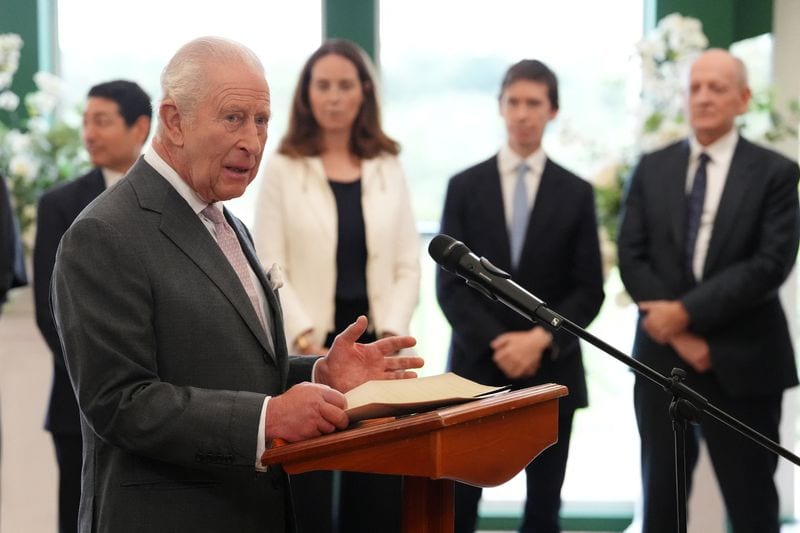
- King Charles III hosted an AI safety summit in Scotland on September 17, 2026.
- The King urged AI leaders to control the technology's rapid development and ensure it serves humanity.
- Attendees included executives from Nvidia, OpenAI, Anthropic, and Google DeepMind.
- The summit occurred amid growing concerns about AI's potential existential risks.
- King Charles III cited medicine and science as examples of AI's capacity to improve and save lives.
- The King emphasized the urgency of considering the existential dangers if AI falls into the wrong hands.
King Charles III convened a private summit in Scotland on September 17, 2026, bringing together prominent figures in artificial intelligence and government officials to discuss the safety risks associated with the rapidly advancing technology. Attendees included Jensen Huang of Nvidia, leaders from OpenAI and Anthropic, UK AI Minister Kanishka Narayan, and Paolo Benanti, an advisor to the Pope on AI.
The King urged the leaders to find ways to control AI "before it's too late," highlighting both the intriguing and deeply concerning aspects of its rapid development. He acknowledged AI's potential to improve and save lives, particularly in medicine and science, but also warned of its capacity for "darker capacities, perhaps even to take life" if it fell into the wrong hands and was used in "potentially catastrophic ways."
The summit took place against a backdrop of increasing concern within the AI industry itself, including a recent statement by an Anthropic researcher about the risks of developing machines far smarter than humans. King Charles emphasized the urgency of considering these existential dangers and called for international cooperation to ensure AI remains "firmly in the service of humanity, community, and the natural world."
This meeting follows previous discussions by King Charles on AI in 2023 and 2024 and comes at a time when AI is dominating global conversations. It also occurs shortly after OpenAI's Sam Altman, Elon Musk, and Anthropic's Dario Amodei called for a de-acceleration in AI development, a sentiment that was reportedly rejected by Nvidia's Huang and President Donald Trump.